


When investing in optical sorting equipment, one of the most critical decisions food processors, grain handlers, and recycling facility managers face is choosing between chute-type and crawler-type (belt-type) color sorters. Each technology employs fundamentally different material transport mechanisms, which directly impact sorting accuracy, throughput, material integrity, and ultimately your return on investment.
At Zhengzhou Jiacui Machinery Equipment Co., Ltd., we have manufactured both types for over 20 years under our VALUESORT (悦选) brand, accumulating 21 patents and co-authoring 3 industry standards along the way. This guide draws on our engineering experience—30+ dedicated engineers, 12% R&D investment, and installations across 50+ countries—to give you a definitive, technically grounded framework for making this choice.
Understanding Optical Color Sorting Fundamentals
How Optical Color Sorting Works
All modern color sorters share a common processing pipeline: feed → transport → optical inspection → defect detection → pneumatic ejection → collection. Raw material enters the machine through a vibrating feeder, is presented to high-speed cameras in a controlled manner, proprietary algorithms analyze each particle's optical properties (color, shape, size, infrared/UV characteristics), and high-frequency air ejectors remove defective particles from the accept stream.
The critical variable is the transport stage—how material is presented to the optical system. This is where chute-type and crawler-type sorters diverge fundamentally, affecting everything from inspection window duration to ejection precision.
The Two Primary Transport Mechanisms
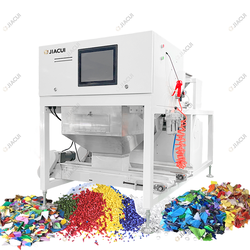
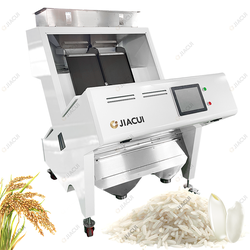
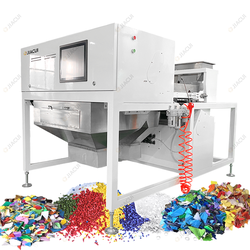
Chute-type sorters use a V-shaped stainless-steel channel where material free-falls in a single-layer curtain past the optical inspection zone. Gravity alone drives material flow, creating a high-velocity, thin stream of particles.
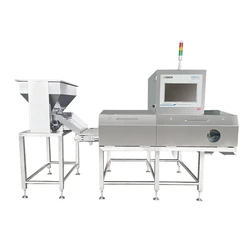
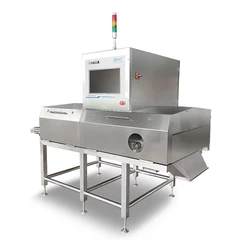
Crawler-type (belt-type) sorters use a conveyor belt to transport material horizontally through the inspection zone at a controlled, stable velocity. The belt provides mechanical support, decoupling material speed from gravitational acceleration.
This seemingly simple difference cascades into significant performance distinctions. USDA Agricultural Research Service (ARS) studies on optical sorting in wheat processing have demonstrated that the material presentation method alone can affect sorting accuracy by 10–20% at processing rates of 2,000 lb/hr—an improvement margin that, at industrial scale, translates to enormous economic value.
Chute-Type Color Sorters: In-Depth Analysis
Working Principle and Physics
In a chute-type color sorter, material is fed from a vibrating hopper into a V-shaped channel fabricated from precision-machined stainless steel. The channel's geometry—narrow at the bottom, wider at the top—spreads material into a thin, single-layer curtain. Material exits the chute at near-free-fall velocity, typically 4–6 m/s depending on chute angle (usually 55–65 degrees from horizontal), and passes through the optical inspection zone in a matter of milliseconds.
The physics here are governed by gravity-driven flow dynamics: particle velocity at the inspection point is a function of chute angle, the friction coefficient between material and chute surface, and material density. Because velocity is not independently controllable—it is fixed by gravity and chute geometry—the inspection window (the time each particle spends in the camera's field of view) is inherently short and cannot be extended without reducing throughput.
The V-shaped channel ensures lateral spreading, which is excellent for free-flowing, roughly spherical materials like rice grains, coffee beans, and plastic pellets. However, materials with irregular shapes, flat profiles, or high friction coefficients may tumble, bounce, or overlap, degrading the single-layer presentation that the optical system depends on for accurate detection.
Technical Specifications: VALUESORT CS-HA Chute Series
Our chute-type lineup offers 10 models scaling from compact entry-level units to industrial-scale throughput:
| Model | Channels | Cameras | Nozzles | Power (kW) | Capacity (T/H) | Weight (kg) |
|---|---|---|---|---|---|---|
| CS-10A | 10 | 1 | 10 | 7.0 | 7.0–10.0 | 1940 |
| CS-HA32 | 32 | 2 | 32 | 0.7 | 0.25 | 105 |
| CS-HA64 | 64 | 2 | 64 | 1.0 | 0.5–1.0 | 150 |
| CS-HA128 | 128 | 4 | 128 | 1.5 | 1.0–2.0 | 280 |
| CS-HA192 | 192 | 6 | 192 | 2.0 | 1.5–3.0 | 380 |
| CS-HA256 | 256 | 8 | 256 | 2.5 | 2.0–4.0 | 480 |
| CS-HA320 | 320 | 10 | 320 | 3.0 | 2.5–5.0 | 580 |
| CS-HA384 | 384 | 12 | 384 | 3.5 | 3.0–6.0 | 680 |
| CS-HA512 | 512 | 16 | 512 | 5.0 | 4.0–8.0 | 920 |
| CS-HA640 | 640 | 20 | 640 | 7.0 | 5.0–10.0 | 1,940 |
Core components include Altera FPGA chips (USA) for real-time image processing at nanosecond-level decision speeds, Toshiba CCD line-scan sensors (Japan, 5,400 × 12K resolution) for ultra-high-definition defect capture, and high-frequency electromagnetic valves engineered to a 120:1 carry-out ratio with a laboratory-tested lifespan of 12 billion operations. Japanese NSK bearings ensure mechanical longevity, while 304 stainless steel construction with an integrated dust removal system protects optical components in high-particulate environments. AI deep learning algorithms and an APP remote control system with 90 stored parameter groups round out the intelligent features.
Key Advantages of Chute-Type Sorters
- Higher throughput density: The free-fall curtain packs more material through a given width compared to belt transport, making chute sorters more space-efficient at equivalent capacities.
- Simpler mechanical design: No conveyor belt means fewer moving parts, lower maintenance costs, and reduced risk of belt contamination—a critical factor in food safety compliance under FDA HACCP principles.
- Faster particle velocity: Shorter residence time per particle means more particles processed per second per channel, translating to higher throughput per unit width.
- Lower power consumption: Without belt drive motors, chute-type units typically consume 30–40% less power than equivalent-capacity belt units. The CS-10A draws just 0.5 kW.
- Proven reliability: With 20+ years of chute-type manufacturing at Jiacui, this is our most mature platform, validated across thousands of installations in 50+ countries.
Limitations of Chute-Type Sorters
- Material shape sensitivity: Flat, flaky, or irregularly shaped materials (dried herbs, nut halves, flaked grains) tend to tumble and overlap in the V-channel, breaking the single-layer rule and causing false rejects or missed defects.
- Short inspection window: Particles pass through the camera field in 5–15 milliseconds, limiting the number of optical measurements per particle and reducing detection confidence for subtle color differences.
- Single-pass limitation: Standard chute sorters perform only one inspection pass. Materials requiring primary + secondary sorting need two machines or external re-circulation loops.
- Fragile material risk: The impact of free-fall ejection and collection can cause breakage in delicate materials like certain nuts, dried fruits, or glass particles.
Crawler-Type (Belt-Type) Color Sorters: In-Depth Analysis
Working Principle and Physics
Crawler-type sorters replace the V-channel with a precision conveyor belt that carries material through the inspection zone at a controlled, constant velocity—typically 0.5–2.0 m/s. The belt provides a flat, stable platform where material rests in a monolayer (or controlled multilayer) and passes beneath the optical system.
This decoupling of transport velocity from gravity is the fundamental engineering advantage. Because belt speed is independently adjustable via variable frequency drive (VFD), operators can slow the belt to extend the inspection window—each particle may be viewed by the cameras for 3–5× longer than in a chute system at equivalent throughput. This extended dwell time enables:
- Multiple camera angles: Top and bottom inspection (especially in the CS-LA1200D double-layer model), capturing defects hidden from a single viewpoint.
- Higher detection confidence: More optical samples per particle means algorithms can detect subtler color variations, shape anomalies, and textural defects.
- Gentler handling: The belt supports material throughout transport, eliminating the tumbling and impact forces of free-fall. This is critical for fragile materials where breakage translates directly to product loss.
Research published by Key Technology on sensor-based sorting systems, alongside comparative academic studies on belt versus chute sorting performance, has demonstrated that belt transport achieves superior defect detection rates for materials with complex geometries or when multi-spectral inspection (visible + NIR + UV) is required. The stable presentation allows synchronized multi-wavelength capture per particle, which is impossible when particles are tumbling in free-fall.
Technical Specifications: VALUESORT CS-LA Crawler Series
Our crawler-type lineup offers 4 models, including a double-layer configuration for in-line two-pass sorting:
| Model | Layer | Band Width (mm) | Nozzles | Power (kW) | Capacity (T/H) | Weight (kg) |
|---|---|---|---|---|---|---|
| CS-LA300 | Single | 300 | 64 | 1.75 | 1.2–3.0 | 550 |
| CS-LA600 | Single | 600 | 128 | 2.5 | 2.5–6.0 | 750 |
| CS-LA1200 | Single | 1,200 | 256 | 6.0 | 5.0–12.0 | 1,150 |
| CS-LA1200D | Double | 1,200 × 2 | 512 | 9.0 | 5.0–12.0 | 2,300 |
The flagship CS-LA1200D features a dual-layer architecture where the first belt performs primary sorting (removing gross defects) and the second belt performs secondary sorting (recovering good material from the reject stream). This in-line two-pass design eliminates the need for external re-circulation, reducing floor space and labor—particularly valuable in high-capacity grain processing lines where EU Regulation 2017/625 compliance demands documented, traceable sorting processes.
Key Advantages of Crawler-Type Sorters
- Superior material adaptability: The flat belt handles flat, flaky, irregular, and fragile materials that chute systems cannot reliably sort—dried flakes, nuts, vegetables, seafood, pharmaceuticals, and recycling streams.
- Extended inspection window: Adjustable belt speed allows 20–60 ms dwell time per particle, enabling detection of subtle defects (light spots, minor discoloration, insect damage) that chute systems miss.
- Double-layer efficiency: The CS-LA1200D performs primary and secondary sorting in a single pass, achieving higher final purity without doubling equipment footprint.
- Gentler ejection: Because material is belt-supported during ejection, reject nozzles act against a stable platform rather than a free-falling curtain, improving ejection precision and reducing good-material carry-out.
- Wider optical coverage: Belt widths up to 1,200 mm allow broader camera coverage per inspection unit, and the flat surface ensures uniform focal distance—critical for depth-of-field consistency in high-resolution imaging.
Limitations of Crawler-Type Sorters
- Higher power consumption: Belt drive motors add 0.5–2.0 kW per machine compared to equivalent chute models. Over a year of continuous operation, this adds measurable energy cost.
- Belt maintenance: Conveyor belts wear, stretch, and require periodic replacement. Belt surface cleanliness is essential—residue buildup can cause false optical readings. This adds maintenance complexity not present in chute systems.
- Larger footprint: Belt mechanisms, tensioning systems, and wider inspection zones make crawler-type units physically larger and heavier than equivalent-capacity chute models.
- Lower throughput per unit width: The controlled belt speed that enables better inspection also limits how many particles pass per second per millimeter of width. For high-throughput, free-flowing materials (rice, wheat, plastic pellets), chute systems will out-produce belt systems at the same physical size.
Head-to-Head Technical Comparison
The following table synthesizes the core engineering differences that drive the selection decision:
| Parameter | Chute-Type (CS-HA Series) | Crawler-Type (CS-LA Series) |
|---|---|---|
| Transport mechanism | V-channel free-fall | Conveyor belt |
| Material velocity at inspection | 4–6 m/s (gravity-driven) | 0.5–2.0 m/s (controllable) |
| Inspection window per particle | 5–15 ms | 20–60 ms |
| Material shape adaptability | Spherical / free-flowing | All shapes incl. flat / irregular |
| Fragile material handling | Moderate (impact risk) | Excellent (belt-supported) |
| Optical inspection angles | Single side (top or side) | Multi-angle (top + bottom on D models) |
| Ejection timing model | Ballistic trajectory prediction | Linear translation (simpler, more precise) |
| Carry-out ratio (good:bad) | 120:1 | Comparable or better |
| Throughput per unit width | Higher | Lower |
| Power consumption | 0.5–7.0 kW | 1.75–9.0 kW |
| Maintenance complexity | Lower (fewer moving parts) | Higher (belt replacement cycle) |
| Double-pass sorting | Not standard (needs 2 machines) | Available (CS-LA1200D) |
| AI deep learning integration | Yes | Yes |
| APP remote control | Yes (90 parameter groups) | Yes |
| Best-suited materials | Rice, coffee, grains, pellets, seeds | Nuts, flakes, dried foods, recycling, pharma |
| Footprint | Compact | Larger |
Material Flow Dynamics: A Deeper Look
The material flow in chute systems follows free-fall kinematics: velocity at the chute exit approximates √(2gh) adjusted for friction, where h is the vertical drop height and the friction coefficient depends on both material properties and chute surface finish. This means velocity is effectively fixed for a given material—operators cannot slow it down without changing chute angle (a hardware modification) or reducing feed rate (sacrificing throughput).
In belt systems, velocity is operator-controlled via VFD. The belt speed setting directly trades throughput for inspection quality: slower belt means fewer particles per second but a longer inspection window per particle. This is a powerful operational lever that chute systems lack entirely. In practice, Jiacui's APP remote control system stores 90 parameter groups, allowing operators to switch between "high-throughput mode" and "high-precision mode" instantly per material type—no hardware change required.
Optical Inspection and Ejection Timing Differences
The optical inspection zone in chute systems is positioned at the chute exit, where the material curtain falls past cameras at high speed. Line-scan cameras using Toshiba CCD sensors at 5,400 × 12K resolution capture the curtain as it passes. Because particles are falling, their position relative to the nozzle array is calculated using ballistic trajectory prediction—the Altera FPGA chip computes where each detected defect will arrive at the nozzle row based on fall time, and fires the corresponding electromagnetic valve at precisely the right millisecond.
Belt systems simplify this calculation fundamentally. Because material moves at a constant, known velocity on a flat plane, the position-to-nozzle mapping becomes a straightforward linear translation: distance ÷ belt speed = time delay. This simpler ejection timing model reduces computational complexity and improves timing precision, which is why belt systems often achieve superior ejection accuracy for materials where nozzle timing precision is the limiting factor.
Industry leaders including Bühler (SORTEX platform) and Key Technology have independently confirmed these dynamics through their own research: belt-based systems excel when materials are irregular, fragile, or require multi-spectral inspection, while chute systems dominate in high-throughput, free-flowing applications where speed and simplicity are paramount.
Application-Specific Recommendations
When to Choose Chute-Type Color Sorters
Choose the CS-HA chute-type series when your application meets these criteria:
- Material is free-flowing and roughly spherical: Rice, wheat, coffee beans, sunflower seeds, plastic pellets, mineral particles. These materials form a clean single-layer curtain in the V-channel.
- Throughput is the primary priority: You need maximum tons per hour per square meter of floor space. Chute systems pack more capacity into less space.
- Energy efficiency matters: In regions with high electricity costs or limited power supply, the lower kW ratings of chute models (0.5–7.0 kW) represent a significant operational advantage.
- Maintenance resources are limited: Remote installations, developing-market facilities, or operations without dedicated maintenance staff benefit from the simpler, belt-free mechanical design.
- Budget sensitivity: Chute-type models are generally more cost-effective at equivalent throughput, with the CS-10A and CS-HA32/64 serving entry-level and small-scale operations from 0.1 T/H.
Recommended models by capacity tier:
- Small-scale (0.1–0.5 T/H): CS-10A, CS-HA32, CS-HA64
- Medium-scale (1.0–3.0 T/H): CS-HA128, CS-HA192, CS-HA256
- Large-scale (4.0–10.0 T/H): CS-HA384, CS-HA512, CS-HA640
When to Choose Crawler-Type Color Sorters
Choose the CS-LA crawler-type series when your application meets these criteria:
- Material is fragile, flat, or irregularly shaped: Tree nuts (almonds, walnuts, pecans), dried fruit, flakes, seafood, vegetables, pharmaceutical tablets, glass recycling. These materials tumble or break in a chute but ride stably on a belt.
- Detection of subtle defects is critical: When your quality standard requires catching light spots, minor discoloration, insect damage, or textural anomalies—applications where the extended inspection window of belt transport provides measurable detection improvement.
- Multi-angle inspection is required: The CS-LA1200D's dual-layer, top-and-bottom inspection catches defects invisible from a single angle—a capability that chute systems cannot match without doubling equipment.
- Primary + secondary sorting in one pass: High-value materials where recovering good product from the reject stream is economically essential. The double-layer design does this in-line.
- Food safety documentation demands: EU Regulation 2017/625 and FDA HACCP programs increasingly require documented, multi-stage sorting processes. The CS-LA1200D's two-pass architecture provides a natural audit trail.
Recommended models by capacity tier:
- Small-scale (0.5–1.5 T/H): CS-LA300
- Medium-scale (1.0–6.0 T/H): CS-LA600, CS-LA1200
- Large-scale + dual-pass (4.0–12.0 T/H): CS-LA1200D
Industry Standards and Food Safety Compliance
Modern color sorting does not exist in an engineering vacuum—it operates within a regulatory framework designed to protect consumers. Both chute-type and crawler-type VALUESORT machines are designed to support compliance with:
- FDA HACCP principles: Hazard Analysis and Critical Control Points requires that sorting be documented as a critical control point. Both VALUESORT series support APP remote monitoring with 90 stored parameter groups, creating digital records of sorting parameters for each production batch.
- EU Regulation 2017/625: This regulation governs official controls on food and feed safety. Multi-stage sorting (as enabled by the CS-LA1200D double-layer) provides the documented process control that EU audits expect, with each sorting stage recorded as a distinct control point.
- CE and ISO certification: All VALUESORT machines carry CE marking and are manufactured under ISO quality management systems across our 4 production bases.
- USDA ARS benchmarks: Agricultural Research Service studies on optical sorting—such as the 2,000 lb/hr wheat processing trials demonstrating 10–20% accuracy improvement—provide the scientific baseline that Jiacui's AI deep learning algorithms build upon. Our R&D team invests 12% of revenue to push beyond these benchmarks.
Frequently Asked Questions
Q1: Can a chute-type color sorter handle flat or irregularly shaped materials?
Technically yes, but with significantly degraded performance. Flat materials tumble in the V-channel, breaking the single-layer curtain that optical inspection requires. This causes overlapping, false rejects, and missed defects. If more than 15–20% of your material is non-spherical, a crawler-type sorter will deliver substantially better results. Some operators use pre-grading screens to improve chute performance with mixed-shape materials, but this adds process complexity and cost.
Q2: What is the carry-out ratio, and why does the 120:1 specification matter?
The carry-out ratio measures how much good material is ejected along with each defective particle. A 120:1 ratio means that for every 1 defective particle removed, at most 120 good particles are also ejected (in practice, far fewer are actually lost). This ratio directly determines your yield—the percentage of good product recovered. Lower carry-out ratios mean higher product recovery and profitability. VALUESORT's 120:1 ratio, achieved through high-frequency electromagnetic valves with a 12-billion-operation lifespan and FPGA-driven millisecond-precision timing, represents industry-leading performance for both chute and crawler types.
Q3: How does the double-layer CS-LA1200D compare to two single-layer machines in series?
The CS-LA1200D integrates primary and secondary sorting into one frame, saving approximately 40% floor space and 25% capital cost compared to two separate machines. However, it offers less flexibility—you cannot independently relocate the secondary sorting stage. For fixed, high-volume lines processing a consistent material type, the CS-LA1200D is the superior choice. For operations that frequently change materials or need to reconfigure production lines, two separate single-layer units may be preferable.
Q4: What maintenance does each type require?
Chute-type sorters require regular cleaning of the V-channel (to maintain consistent material flow), camera lens cleaning, nozzle valve inspection, and air filter replacement. The absence of a conveyor belt eliminates the most frequent maintenance item. Crawler-type sorters require all of the above plus conveyor belt inspection (for wear, stretching, and surface contamination), belt tension adjustment, and periodic belt replacement (typically every 6–12 months depending on usage intensity). Both types benefit from Jiacui's 304 stainless steel dust removal system, which reduces internal contamination and extends component life.
Q5: How do AI deep learning capabilities differ between the two types?
Both VALUESORT chute and crawler series incorporate AI deep learning on the same Altera FPGA processing platform. The AI algorithms analyze color, shape, size, and textural features. However, crawler-type sorters provide the AI system with richer input data—longer inspection windows mean more optical samples per particle, and multi-angle inspection (on dual-layer models) provides multiple viewpoints the AI can correlate for more confident classification. For materials where the defect signal is subtle (light discoloration, minor shape deviation), this richer data translates to measurably better AI detection performance.
Summary: Selection Decision Table
| Decision Factor | Choose Chute-Type (CS-HA) If... | Choose Crawler-Type (CS-LA) If... |
|---|---|---|
| Material shape | Spherical, free-flowing | Flat, irregular, fragile |
| Primary priority | Maximum throughput | Maximum detection precision |
| Throughput range needed | 0.1–10.0 T/H | 0.5–12.0 T/H |
| Budget sensitivity | Cost-sensitive | Performance-focused |
| Energy cost concern | High (minimize kW) | Moderate |
| Floor space availability | Limited | Available |
| Sorting passes required | Single pass sufficient | Dual pass needed (CS-LA1200D) |
| Typical material examples | Rice, coffee, grains, seeds, pellets | Nuts, dried fruit, flakes, recycling, pharma |
| Maintenance capacity | Limited staff / resources | Dedicated maintenance available |
| Regulatory requirement | Standard HACCP documentation | Enhanced multi-stage audit trail |
Final recommendation from Jiacui's engineering team: If your material is free-flowing and roughly spherical, and your priority is throughput per dollar and per kilowatt, the CS-HA chute series is your optimal choice. If your material is fragile, irregular, or requires multi-angle inspection and in-line two-pass sorting, the CS-LA crawler series—particularly the CS-LA1200D—will deliver superior results.
For operations processing multiple material types, consider a hybrid line configuration: a high-capacity chute sorter (e.g., CS-HA640, 5–10 T/H) for primary bulk sorting of free-flowing material, paired with a crawler-type unit (e.g., CS-LA600) for precision sorting of specialty or fragile products. This approach maximizes both throughput and quality across a diverse product portfolio—a strategy we have implemented successfully for clients across our 50+ export countries.
*About the author: This guide was prepared by the engineering team at Zhengzhou Jiacui Machinery Equipment Co., Ltd., manufacturer of the VALUESORT (悦选) color sorter series. With 20+ years of manufacturing experience, 30+ engineers, 12% R&D investment, 21 patents, and co-authorship of 3 industry standards, Jiacui is a CE/ISO-certified supplier with 4 production bases serving customers in 50+ countries. For model-specific quotations, technical consultations, or custom sorting solutions, contact our engineering team.*
References:
- USDA Agricultural Research Service — Optical sorting research in grain processing (2,000 lb/hr wheat trials, 10–20% accuracy improvement)
- Bühler Group — SORTEX optical sorting technology documentation and performance benchmarks
- Key Technology Inc. — Sensor-based sorting research and multi-spectral inspection publications
- U.S. Food and Drug Administration — Hazard Analysis and Critical Control Points (HACCP) principles for food processing
- European Union — Regulation (EU) 2017/625 on official controls for food and feed safety
- Academic literature — Comparative studies on belt-type vs. chute-type optical sorting performance