


Walk through most color sorter manufacturers' product catalogs and you'll see the same three categories: rice, coffee, nuts. Plastic recycling barely gets a mention.
That's a gap worth exploiting. The plastic recycling market is growing faster than agricultural sorting, and the manufacturers who actually spec their machines correctly for plastic flake sorting are getting orders that the copy-paste crowd is missing.
Why a plastic color sorter is different from a food sorter
Sorting plastic isn't like sorting grain. The reasons are practical:
Plastic flakes aren't uniform — Rice grains are roughly the same shape and size. Shredded plastic flakes are random. That changes how they fall and how cameras see them.
Color variation is extreme — A batch of PET flakes ranges from crystal clear to dark green to blue. The spread is much wider than food-grade applications.
Contaminants are different materials, not just defects — A red flake in clear PET isn't just a color problem. It might be PP or PS mixed in, which ruins recycled pellet quality.
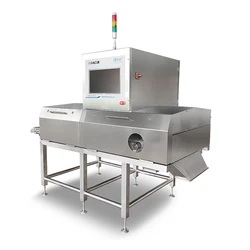
Belt type color sorters handle this better than chute type. The belt gives a stable, single-layer feed of irregular flakes, and the camera sees a clean, consistent background.
The three main plastic sorting applications
PET bottle flake sorting
This is the largest market. Clear PET flakes command bottle-to-bottle prices. Green and blue PET are less valuable but still recyclable. The problem is contamination that slips through washing:
PVC, which burns orange instead of clear when melted
Colored bottle caps that survived the pre-wash
Labels that didn't fully come off
In commercial operations, a plastic color sorter running at 3 to 5 tons per hour typically pushes PET purity from around 95 percent to above 99.5 percent. That 4.5-point gap is the difference between down-cycling price and bottle-to-bottle price.
HDPE and PP mixed plastics
Post-consumer HDPE and PP look similar and float similarly in water separation. Standard visible-spectrum cameras struggle to tell them apart.
This is where NIR (near-infrared) sensors change what's possible. NIR reads material signatures, not just color. A sorter with NIR can distinguish HDPE from PP by molecular structure. These machines cost more upfront, but they unlock plastic sorting applications that visible-spectrum-only machines simply can't handle.
E-waste and electronic scrap
Crushed circuit boards, wire scrap, and plastic housing are messy streams. But separating bright-colored plastics from dark ones in e-waste recovers value that usually goes to landfill. It's not clean sorting, but it's profitable.
What separates a plastic sorting machine that works from one that doesn't
For pure color separation, clear PET versus blue PET, a standard optical sorter handles it fine.
For material separation, PET versus PP versus PVC, you need multispectral or NIR capability. Visible-spectrum-only machines will frustrate you.
When evaluating a machine for plastic sorting:
Belt feed, not chute feed — Chutes jam with irregularly shaped flakes
5400 pixels or higher — Flakes are small and moving fast
Dual-side detection — Top and bottom cameras catch flakes that land either face-up or face-down
High-density air ejectors — Tightly spaced nozzles for small particle sizes
Quick-access cleaning — Plastic dust is static-prone. If the optics are hard to reach, they won't get cleaned regularly
When someone's trying to sell you a standard food-grade color sorter for plastic recycling, push back. The feed system, lighting, and sorting algorithm all need to be configured for flake sorting specifically. It won't work reliably without those changes.