


I've spent time talking to coffee roasters in Vietnam, Colombia, and Ethiopia. Almost every single one of them has the same blind spot: they think their eyes are good enough.
Coffee people care deeply about quality. You're not just processing a commodity. You're handling something with origin, character, and flavor. The idea of trusting a machine to judge your beans feels wrong somehow.
The roasters who did switch to mechanical sorting found out the hard way what they're missing.
What does a coffee color sorter actually catch?
A human inspector can spot the obvious ones: black beans, moldy beans, insect-damaged beans. But at production speed on a conveyor belt, you'll miss more than you catch:
Sour beans — greenish tinge that kills the cup
Faded beans — aged, lost color, dull flavor
Partial insect damage — three-quarters of the bean looks fine
Broken and chipped beans — same color, wrong shape
Stones that look exactly like beans — scarily common in washed processing
A CCD camera catches all of this at 500-plus beans per second. The reason isn't AI magic. It's that the machine inspects every single bean instead of a grab sample.
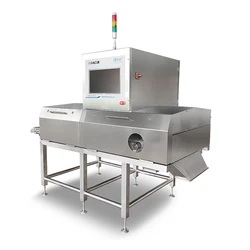
Mini coffee sorting machine for small-batch roasters
This is a market most equipment makers ignore. The big industrial sorters are built for five-ton-an-hour export facilities. But there's a real gap for smaller operations.
I've seen specialty roasters in Portland and Melbourne running 16-to-32-channel mini sorters on single-origin lots. They run the beans through two or three passes at slower speeds and get precision that grab sampling can't touch. Their defect rate went from "we check a sample" to "we check every bean."
For a specialty roaster processing less than 500 kilograms a day, a mini coffee sorting machine with shape recognition typically pays for itself in around four months, in cases where it replaces manual inspection. Your numbers will vary depending on labor costs and the baseline defect rate.
Green vs. roasted coffee: different sorting settings
One mistake I see constantly: roasters using the same machine settings for green beans and roasted beans.
Green beans are easier to sort because the natural color variation is smaller. The bad beans stand out.
Roasted beans are harder. Roast level changes the baseline color — a City roast looks completely different from a French roast under the same lights. Oily beans reflect light differently. Surface texture varies more from bean to bean.
Modern AI sorters can be retrained per batch. If your coffee color sorter machine supports batch profiles, use them. Don't load one "coffee" setting and leave it.
The real ROI of switching to a coffee sorting machine
A roaster in Indonesia ran a manual sorting line with 12 workers and processed 800 kilograms a day. After installing an automatic coffee color sorter, they got the same throughput with 2 operators. Their defect rate fell from roughly 5 percent to under 0.5 percent. Their export buyer stopped doing incoming inspections entirely.
In that specific case, the machine paid for itself in seven months. The other 10 workers moved into packaging and quality assurance roles. Nobody got laid off.
Coffee sorting isn't about replacing people. It's about catching what people can't catch.