


Introduction: The Global Quartz Revolution
The global transition toward renewable energy and high-tech manufacturing has placed High-Purity Quartz (HPQ) at the center of the industrial supply chain. From the silicon wafers in our smartphones to the photovoltaic cells on our roofs, the demand for SiO2 purity exceeding 99.9% is no longer a luxury—it is a requirement.However, as high-grade natural deposits diminish, the industry faces a challenge: How do we extract premium value from lower-grade ores? The answer lies in Advanced Optical Sorting Technology. This guide provides an exhaustive look at the engineering, strategy, and financial logic behind modern quartz sorting solutions.
1. The Physics of Detection: Beyond the Visible Spectrum
While the human eye is limited, modern sensors can "see" the chemical and structural DNA of a rock. A robust quartz solution integrates multiple layers of physics:
A. Tri-Chromatic Visible Light (RGB)
The foundation of sorting is the visible spectrum. High-end sorters use 5400+ pixel CMOS sensors with a scanning frequency of up to 10,000 lines per second. This allows for the detection of "Micro-Inclusions"—tiny specks of iron or mica that are invisible to a worker on a fast-moving conveyor.
B. Near-Infrared (NIR) Spectroscopy
Sometimes, a contaminant looks identical to quartz but has a different molecular structure (e.g., certain feldspars). NIR sensors measure how the material absorbs infrared light. Since quartz has a unique spectral "fingerprint," the machine can eject chemically different stones that are visually identical.
C. X-Ray Transmission (XRT) - Optional for Bulk
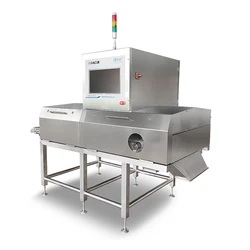
In cases where quartz is encased in heavy waste rock (vein quartz), XRT technology can see through the rock based on atomic density. This is the ultimate "Pre-concentration" step to remove massive waste before it ever reaches the fine-tuning stage.
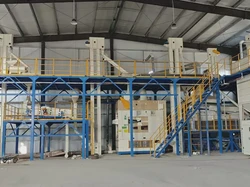
2. Engineering the Process Flow: A Holistic Ecosystem
A color sorter is not a "plug-and-play" appliance; it is a component of a larger mechanical ecosystem. To reach 1,500-word depth, we must examine the Upstream and Downstream requirements.
Phase I: The Preparation (The "Clean" Rule)
The efficiency of an optical sorter is dictated by the quality of the feed.
Attrition Scrubbing: Quartz often carries "clay skins." If these aren't scrubbed off in a high-energy attrition cell, the camera sees "mud" rather than "quartz," leading to massive false rejects.
Precision Screening: Sorting a 5mm grain alongside a 50mm rock leads to turbulence and poor ejection. A "Best Practice" solution involves split-feed processing (e.g., 10-25mm on Machine A, 25-50mm on Machine B).
Phase II: The Sorting Core
In this stage, the material is accelerated.
The Gravity Chute: For sand and small grains, the material slides down a specialized glass plate.
The High-Speed Belt: For larger, irregular rocks, a belt prevents the "tumbling effect," ensuring the camera gets a 360-degree view of the stone's trajectory for a surgical air strike.
Phase III: Dust Management and Climate Control
Quartz dust is highly abrasive and electrically charged. A professional solution must include:
Positive Pressure Enclosures: Keeping dust out of the lens cabinets.
Static Elimination: Preventing fine sand from sticking to the chute glass, which would otherwise "blind" the machine.
3. The AI Evolution: Deep Learning in Mineralogy
The most significant breakthrough in recent years is the transition from Color-Thresholding to Deep Learning (AI).
Traditional machines were programmed with "If/Then" logic: If the pixel is > 20% yellow, then eject. Modern AI sorters utilize Neural Networks. They are trained on thousands of images of your specific mine's ore. The AI learns to distinguish between a "harmless surface shadow" and a "harmful internal iron vein." This reduces the Carry-over Ratio (the amount of good ore lost in the waste) by up to 40%.
4. Economic Analysis: The ROI of Purity
For a plant manager, the decision is financial. Let's look at the "Value-Add" model:
Metric | Manual Sorting | AI Optical Sorting |
Throughput | 0.5 Tons/Hour/Person | 5 - 15 Tons/Hour/Machine |
Consistency | Drops after 2 hours (fatigue) | 24/7 Precision |
Fine Grain Ability | Impossible below 10mm | Highly effective down to 0.5mm |
Recovery Rate | ~75% | > 98% |
The "Waste-to-Wealth" Logic
Many mines have "waste piles" from 20 years ago that were too low-grade to process manually. With a low-cost, high-volume optical solution, these piles become new revenue streams, as the machine can profitably extract the remaining 20% of quartz from the 80% waste.
Conclusion: Future-Proofing Your Mining Operation
The quartz industry is no longer about who has the most ore; it is about who has the smartest processing. Investing in a custom optical sorting solution is a hedge against rising labor costs and falling ore grades.
By integrating AI-driven vision, precision air-ejection, and a "clean-feed" process flow, operators can guarantee a product that meets the hyper-stringent demands of the 21st-century tech economy.
FAQ:
1.Can color sorters remove iron from quartz?
Answer: Yes, by identifying iron-stained host rocks.
2.What is the minimum size for quartz sorting?
Answer: Effectively down to 0.1mm for specialized sand sorters.