


Introduction As high-grade iron ore reserves deplete globally, mining companies are forced to process lower-grade deposits with higher impurity levels. Traditional beneficiation methods—such as magnetic separation and heavy media separation (HMS)—are energy-intensive and water-dependent. Enter Sensor-Based Sorting (SBS). By integrating AI-driven optical sensors and X-Ray Transmission (XRT), iron ore producers can now reject waste rocks before they even reach the crusher, significantly lowering the cost per ton and increasing the overall iron (Fe) grade.
1. The Challenge: Why Traditional Sorting Falls Short
Iron ore deposits (Hematite, Magnetite, and Goethite) are often intermixed with silica (SiO2), alumina (Al2O3), and phosphorus.
Surface Camouflage: In many mines, a layer of iron-rich dust covers every rock, making visible light sorting (CCD cameras) difficult without extensive washing.
Density Overlap: Some waste rocks have a similar density to low-grade iron ore, making traditional gravity separation inefficient.
Energy Costs: Grinding waste rock is a "profit killer." Processing 30% waste through a ball mill wastes millions in electricity and wear-liner costs.
2. Advanced Technologies in Iron Ore Sorting
To provide a comprehensive solution, we must look at the two dominant sensor technologies:
A. X-Ray Transmission (XRT): The Game Changer
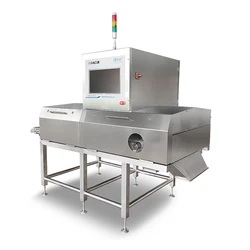
Unlike color sorters, XRT "sees" through the rock. It identifies the atomic density of the material.
How it works: An X-ray source beams through the ore as it moves on a conveyor. High-density iron absorbs more X-rays, while lower-density silica or shale allows more to pass through.
Key Advantage: It is moisture and dust independent. Whether the ore is muddy, dusty, or dry, XRT provides an accurate internal analysis, making it the primary choice for primary iron ore crushing circuits.
B. High-Resolution Color (CCD/CMOS)
Visible light sorting is used primarily for Lump Ore (e.g., Hematite) where there is a distinct color difference between the ore (dark/metallic) and the gangue (light/quartz/clay).
Application: Best used after a washing stage to ensure the cameras can detect surface characteristics accurately.
C. Multi-Spectral & Laser Sensors
Used to detect specific mineralogical variations, such as identifying high-phosphorus zones within an iron deposit, allowing for precise chemical grading.
3. The Industrial Process: A "Pre-Concentration" Strategy
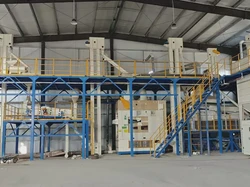
A professional iron ore sorting plant is typically integrated at the Primary or Secondary Crushing stage.
Step 1: Crushing and Sizing
Ore is crushed to a range suitable for sorting—typically 10mm to 100mm. Precision sizing is critical because the air-ejection system must be calibrated to the weight of the rock.
Step 2: Feed Stabilization
A high-speed vibrating feeder spreads the ore into a single layer. For iron ore, Belt-type sorters are preferred over chutes because they can handle heavy, high-velocity rocks without the "bouncing" that causes detection errors.
Step 3: Real-Time Analysis and Ejection
As the rocks fly off the end of the belt, the XRT or Optical sensor scans them in milliseconds. A bank of high-pressure air nozzles (acting as "air cannons") blasts the waste rocks out of the stream, while the high-grade iron ore continues along its natural trajectory.
4. Economic Impact: The ROI Calculation
In the iron ore sector, the Return on Investment (ROI) is driven by Mass Pull and Grade Increment.
Case Study Example:
Input Grade: 52% Fe (Marginal/Low grade)
Sorter Action: Rejects 30% of the mass as "Waste" (averaging 15% Fe).
Output Grade: The remaining 70% of the ore is upgraded to 58-60% Fe.
Result: The mine can now sell this "Upgraded" ore at a premium "62% Fe Index" price, or save 30% on transport and smelting costs.
Metric | Without Sorting | With XRT/Optical Sorting |
Logistics Cost | High (Moving 100% mass) | Low (Moving 70% mass) |
Water Usage | High (Wet processing) | Zero (Dry processing) |
Tailings Volume | Large | Small (Waste is dry rock) |
Plant Capacity | Limited by Mill throughput | Increased (Mill only processes "Good" ore) |
5. Environmental and ESG Benefits
In 2026, "Green Mining" is a major SEO and corporate keyword. Sorting technology is a key pillar of Sustainable Mining:
Dry Beneficiation: No water required. This is vital for mines in arid regions (e.g., Western Australia, parts of Brazil, and Africa).
Reduced Carbon Footprint: Less grinding means less electricity. Since comminution (crushing/grinding) consumes up to 3% of global electricity, sorting has a massive impact on $CO_2$ reduction.
Tailings Management: Producing dry waste rock instead of wet tailings "sludge" reduces the risk of tailings dam failures.
6. Conclusion: The Future of Iron Ore
The iron ore industry is moving toward "Intelligent Mining." The ability to "Digitalize" every rock that leaves the pit is no longer a fantasy. By implementing a custom-engineered sorting solution, mines can transform marginal deposits into highly profitable assets while significantly reducing their environmental footprint.