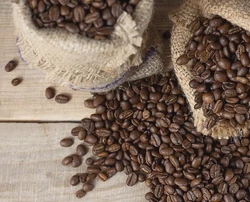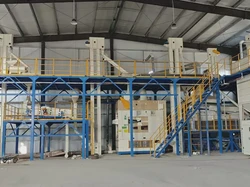


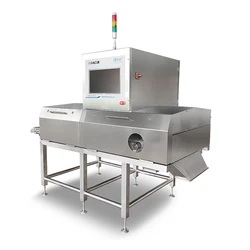

Legumes are the world's second most important plant-based food source. With growing demand and a focus on sustainable production, we are advancing optical sorting technology to improve efficiency, quality, and safety at every stage of processing.
JIACUI optical sorters remove a wide range of foreign materials and defects — including stones, glass, rotting kernels, pest-damaged grains, and discolored product — delivering clean, consistent output ready for packaging or further processing.
Powered by multiple detection technologies working in combination, JIACUI optical sorting machines handle the full spectrum of legume varieties with equal precision: from the smallest lupins and peas to the largest bean cultivars, every batch is sorted to specification.
Why pulses are harder to sort than grain
Most rice color sorters struggle with pulses. The reasons are specific:
Wide color range within one grade — A single load of red lentils runs from bright orange to pale yellow to brown. "Good" and "bad" isn't a fixed color. It's a range, and the range shifts depending on origin and season.
Size variation in one shipment — Split chickpeas vary by two to four millimeters. That's enough to create inconsistency in air ejection — lighter pieces fly differently than heavier ones at the same pressure.
Surface texture differences — Mung beans are smooth. Whole chickpeas are rough. Rough surfaces scatter light differently, which means camera calibration that works for one product fails on the other.
Subsurface defects — Bruising under the skin, early-stage mold, insect eggs — none of these show as visible color changes, but all of them affect shelf life and buyer acceptance.
What a bean color sorter machine actually needs
Per-channel sensitivity control
In a chute-fed optical sorter, the product flows thicker in the center than at the edges. If your machine has one global sensitivity setting, you'll oversort the edges and undersort the middle. A pulse sorting machine needs adjustable sensitivity by zone.
Backlighting
For legumes, backlighting — illuminating the product from behind — is more useful than front lighting alone. It lets the camera see through translucent defects: the green patch in a yellow split pea that signals under-maturity, or the void in a bean that indicates insect damage from inside.
Shape recognition
Color alone catches color defects. A broken bean that's the same color as a good one gets through without shape detection. Whole beans versus split beans, intact skin versus cracked skin — these require a separate sensing layer.
Two-pass sorting
Running pulses through two passes recovers accuracy without sacrificing throughput. The first pass removes obvious defects at full speed. The second pass runs at slower speed with higher sensitivity on the borderline-quality fraction, which is typically ten to fifteen percent of total volume. Overall output stays high because most product only goes through once.
Mung bean color sorter: a category most buyers overlook
Mung beans are a high-volume commodity — bean sprouts, glass noodles, and flour across East and Southeast Asia. A significant share of processing is still done manually, because buyers assume machines can't reliably distinguish good from bad mung beans.
The difference is actually well-defined: bright green, uniform, intact skin is acceptable. Dull color, cracked skin, insect holes, shriveled kernels are not. A calibrated AI optical sorter with shape recognition handles mung bean sorting at above 99 percent accuracy on cracked skin and insect damage in commercial operations I've observed.
Export buyers and the defect rate gap
If you're exporting chickpeas to the Middle East, lentils to Europe, or soybeans to Japan, the defect tolerance is tighter than what a manual sorting line delivers.
European importers typically reject containers with more than one percent defective beans. A well-run manual team achieves two to three percent on a good day — which means containers regularly fail on arrival.
An exporter in Ethiopia lost a 500-ton chickpea contract because incoming inspection found 1.8 percent defects in the container. They installed a pulse color sorter the following month. Two years later, that machine has covered its purchase price several times over, and they haven't had a container rejection since.
That's why European importers have been requiring color sorters from their suppliers for the past several years. The defect gap between manual and machine isn't theoretical.
What to expect from a bean sorting machine in practice
For pulse processing, a properly configured color sorter typically brings defect rates below half a percent and runs at three to five tons per hour with one operator. The payback period depends heavily on your labor costs, the value of your product, and your baseline defect rate — but in markets where manual sorting is expensive or contract requirements are strict, the economics work out quickly.
The harder question for most processors isn't whether to install a bean color sorter. It's choosing the right configuration for the specific legumes you're running.