


Imagine thousands of pounds of valuable minerals being lost down the belt, mis-identified, mis-classified and ultimately misplaced. That was the problem that the lead-zinc ore processing plants had to solve for years. Much of the traditional sorting equipment was based on manual labor and the sorting processes such as density separation and flotation were expensive, variable and had negative environmental impact. But today a quiet revolution is taking place in mining technology, transforming the industry from within.
Lead-zinc ore is now being revolutionized by AI color sorters. These sophisticated systems utilize high-resolution cameras, machine learning techniques and real-time data processing to achieve separation of valuable ore from gangue at an accuracy never seen before. Whether you run a low-capacity zinc producer, or a large-scale integrated lead plant, if I had to pick one piece of technology that could make this the most profitable decade of your life, this would be it: Understanding your lead in this technology could be the single most valuable decision you make this decade. Here’s why. Let’s dive right in.
What Is the AI Color Sorter for Lead-Zinc Ore?
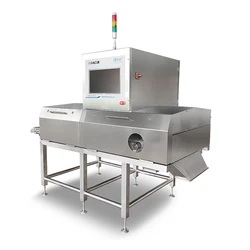
AI color sorter is a kind of automatically sorting machine, it is based on the combination of high resolution camera, X-ray transmission sensors, near infrared (NIR) spectroscopy and artificial intelligence algorithm that can recognize the shape, color, texture, density and chemical composition of object in real-time.2 The lead-zinc ore processing machine examines every single piece of ore on a high-speed conveyor belt and uses pinpoint air jets to decide in an instant whether to throw it away or keep it. The whole procedure runs in milliseconds. Unlike human inspectors, who get tired and make mistakes, AI systems are consistent 24/7.
7 Reasons That Make the AI Color Sorter a Market Game-Changer
1. Much greater sorting precision
Conventional mechanical separators can only reach sorting precision around 70-80%. In contrast AI-based color sorter technology achieves consistent accuracy >95% (source multiple reports industry leading equipment manufacturer). For lead-zinc plants operating on a scale of hundreds of tons per day, a 10% increase in ore recovery means huge revenue.
2. Reduction Of Processing Costs By An Order Of Magnitude
AI sorters are also contributing to a reduction in the amount of energy used to produce metal as they also minimize the delivery of low-grade waste rock to energy-intensive downstream activities like crushing, grinding, and flotation. Mineral processing engineering research has indicated that optical sorter based pre-concentration may eliminate 20–40% of the mill feed, resulting in a significant reduction in energy and reagent consumption.
3. Enhanced Environmental Monitoring and Reporting
Increasingly stringent regulations are being imposed on the mining industry globally. AI color sorters also enable facilities to curtail water use, reduce use of chemical reagents and minimize volumes of tailings — three of the most tightly regulated environmental indicators. Cleaner processing is no longer a matter of an ethical decision, but an act required by regulations and a differentiating factor in the market.
4. Real-Time Data and Process Intelligence
With today’s AI sorting systems, that’s far from all they do. They generate a constant flow of spectral and imaging information that enables metallurgists and plant managers to acquire a deeper understanding of variability in ore grade across multiple mine areas . This information is used to refine the blast design, scheduling and downstream processing activities, adding the capability of intelligent ore characterization to a simple sorting machine.
5.Less Reliance on Human Labor
Labor shortages are an ongoing issue in remote mining sites. AI sorters perform independently with minimal supervision, they just need to be maintained and calibrated from time to time. An entire automated sorting line can supersede many manual inspection stations, allowing artisans to concentrate on more valuable work.
6. Higher rate of return on investment
Although the initial capital cost of an AI colour sorter may be as high as between $200,000 and $800,000 USD based on capacity and configuration, the majority of mining operators state that they recoup their investment within 12 to 24 months. The combination of better ore recovery, lower processing costs, and reduced labor significantly speeds up the payback.
7. Flexible for use across ore types
Today’s AI color sorters are not designed for one mineral only. Thanks to its software-defined nature, the identical machine can be reprogrammed for zinc ore, lead ore, silver-bearing ores, and even polymetallic ores with several valuable components. This flexibility means that the investment is future proof as mine plans change.
Frequently Asked Questions About AI Color Sorters for Lead-Zinc Ore
Can AI sorters handle fine-grained ore particles?
Yes — while early optical sorters struggled with particles below 10mm, modern AI-enabled systems effectively process particles as small as 3–5mm using enhanced imaging resolution and multi-sensor fusion.
How does the AI learn to distinguish valuable ore from waste?
The system is trained using labeled ore samples representative of the specific deposit. Machine learning models are developed and validated before deployment, and they can be updated as ore characteristics change over time.
What maintenance does an AI sorter require?
Routine maintenance typically involves cleaning optical lenses and cameras, inspecting air jets, and performing software updates. Most manufacturers offer remote diagnostics and cloud-based monitoring, reducing on-site downtime significantly.
Is the technology suitable for existing processing plants?
Absolutely. AI color sorters are modular and can be integrated into existing processing flowsheets with relatively minor civil and mechanical modifications.
What happens when ore characteristics change due to mining in different zones?
The AI model can be retrained using new ore samples, and many advanced systems feature adaptive learning — automatically adjusting classification thresholds based on ongoing performance data.
The Future Is Intelligent Sorting
The global AI in mining market is projected to grow at a compound annual growth rate (CAGR) of over 19% through 2030, driven largely by automation adoption across mineral processing. Early adopters of AI color sorting technology are already outperforming competitors in recovery rates, operational efficiency, and environmental metrics.
For lead-zinc ore producers specifically, the window to gain a first-mover advantage is narrowing rapidly. Equipment lead times are increasing as demand grows, and regulatory frameworks governing energy and waste in mining are tightening globally.
Conclusion
AI color sorters represent one of the most transformative investments available to lead-zinc ore processing operations today. They deliver higher accuracy, lower costs, improved sustainability, and richer operational data — simultaneously. The question is no longer whether this technology works. It works. The real question is how much longer your operation can afford to compete without it.
The mining companies that act decisively today will define industry benchmarks tomorrow. Now is the time to evaluate, pilot, and deploy AI color sorting technology before your competitors do.