


Tea people have strong feelings about hand-sorting. "Hand-sorted" is a quality signal in specialty tea markets, and I understand the instinct. Good tea is about craft.
But after visiting tea processing facilities in China, India, and Sri Lanka, the pattern is consistent: hand-sorting doesn't scale, and it misses more than most processors realize.
What manual tea sorting actually catches — and what it doesn't
On a typical sorting floor, you'll see twenty to thirty workers at tables picking through dried leaves. They're trained to spot stems and stalks, yellow or brown discolored leaves, and obvious foreign material like string or plastic.
What they regularly miss:
Bourbon-treated leaves — low-quality leaves dyed to resemble higher grades
Early-stage mold that hasn't fully discolored yet
Grade blending — cheaper leaves mixed into your batch before it reaches you
Micro-plastics and equipment fiber from processing machinery
Wrong-sized particles — same color, wrong grade, wrong price
One mis-graded batch shipped to a premium buyer can end the account.
Which tea type needs which sorting machine setup
Tea is not one product. Each type presents different defects and requires different optical sorter configurations.
Tea type | Key defects to remove | Recommended setup |
|---|---|---|
Green tea | Stems, yellow leaves, white tips | High-resolution chute sorter |
Black tea (CTC) | Stalks, fiber, over-fermented particles | Belt sorter + shape recognition |
Oolong | Browning edges, stems, rolled vs. unrolled | Dual-camera chute sorter |
White tea | Silver vs. brown tips, oversized leaves | Gentle belt, low air pressure |
Herbal tisanes | Flower vs. stem separation, color uniformity | Multi-pass belt sorter |
Matcha (pre-grinding) | Dark specks, stems, foreign material | Fine-particle chute sorter |
The "don't break the leaf" requirement in tea leaf sorting
In tea processing, gentleness is a functional spec. Broken leaves are worth less than whole leaves. Whole-leaf tea commands a higher price than broken leaf, which is worth more than fannings, which is worth more than dust.
In practice:
Belt-type tea color sorters handle whole-leaf teas better — slower, gentler feed
Chute-type sorters work for CTC teas where the leaf is already broken by design
Air ejection pressure needs to be calibrated lower than for grain or bean sorting
Multiple gentle passes consistently outperform one aggressive pass for leaf integrity
A tea processor in Anhui Province switched from a chute to a belt sorter and recovered fifteen percent more whole-leaf yield. Throughput dropped slightly. The price premium on whole-leaf made the trade worthwhile.
Tea fraud and the case for multispectral optical sorting
In 2023, European food safety authorities seized multiple green tea shipments that had been treated with copper chlorophyllin — a coloring agent that makes low-grade leaves look fresher and greener. Under standard visible-light cameras, the treated leaves appeared normal.
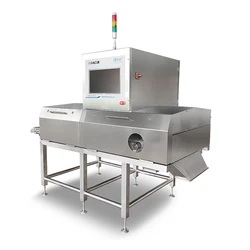
A multispectral tea sorting machine — one that includes NIR or hyperspectral imaging alongside visible-light cameras — can detect the chemical signature that separates treated leaves from untreated ones. Visible-spectrum-only sorters cannot. For processors and importers handling high-value green tea, this is a real risk with a specific technical solution.
Tea color sorter ROI: where the savings come from
Most tea processors I've talked to see payback in eight to fourteen months in cases where manual sorting labor is the primary cost. The gains come from multiple directions:
Labor — Twenty to thirty manual sorters replaced by two or three machine operators
Grade improvement — Recovering whole-leaf product that was previously lost to breakage or misclassification
Export rejection reduction — Fewer containers failed at destination for grade or contamination issues
Consistency — Repeat buyers can verify your grade standard instead of relying on sampling
A Darjeeling estate I visited had an export rejection rate of twelve percent before installing a tea sorting machine. It dropped to 0.3 percent within the first year. That improvement alone covered the machine cost in ten months.
Tea sorting is not about removing the human element from the process. It's about being able to tell your buyer with confidence that every single leaf that leaves your facility was inspected — not just a sample.