Guía de Precios de Clasificadoras por Color en 2026: Costos, Factores Clave y Retorno de Inversión (ROI)
Actualizado a julio de 2026 · Datos de informes de mercado, presentaciones financieras y lanzamientos de productos hasta el segundo trimestre de 2026.
Las máquinas clasificadoras por color han dejado de ser un lujo exclusivo para las grandes plantas industriales. En 2026, la oferta del mercado abarca desde unidades compactas desde $3,000 USD para pequeños procesadores de grano, hasta sistemas multicanal de más de $200,000 USD para líneas de reciclaje de alta capacidad. La pregunta clave para los compradores ya no es solo cuánto cuesta una máquina, sino qué nivel de inversión ofrece el rendimiento adecuado para la escala y exigencia de su operación.
Esta guía analiza la estructura de precios actual, los principales factores de costo y el retorno de inversión (ROI) estimado al adquirir una clasificadora óptica en 2026.
Factores que Determinan el Precio de una Clasificadora Óptica en 2026
Los precios de las clasificadoras por color pueden variar considerablemente. La diferencia de costo se explica principalmente por cuatro variables tecnológicas y operativas:
1. Tecnología de Detección
Tecnología | Aplicaciones Principales | Impacto en el Precio |
CCD (Luz Visible) | Granos, arroz, legumbres, frutos secos | Línea base |
NIR (Infrarrojo Cercano) | Plásticos, nueces, materiales complejos | +30% a +60% sobre CCD |
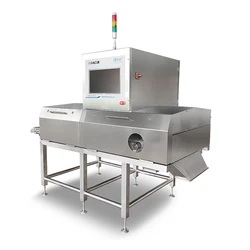
Rayos X | Defectos internos, contaminantes de alta densidad | 2x a 3x sobre CCD |
Multiespectral con IA | Clasificación compleja, impurezas de hasta 0.1 mm | +50% a +100% sobre CCD |
En 2026, aproximadamente el 57% de los nuevos sistemas integra algoritmos de Inteligencia Artificial capaces de procesar más de 10,000 imágenes por segundo. Aunque representan una inversión mayor, los equipos con IA detectan defectos de hasta 0.1 mm, alcanzando niveles de precisión inalcanzables para los sistemas ópticos convencionales.
2. Número de Canales y Capacidad
El número de canales determina directamente el caudal de procesamiento (throughput). Una máquina de 32 canales procesa aproximadamente 500 kg/h de arroz, mientras que un sistema industrial de 768 canales alcanza capacidades de hasta 20 toneladas por hora.
32 a 128 canales (Nivel de entrada): $3,000 – $10,000 USD
192 a 384 canales (Gama media): $10,000 – $50,000 USD
512 a 768 canales (Escala industrial): $50,000 – $200,000+ USD
Nota: La capacidad varía según la densidad del material. Un equipo de 500 kg/h para arroz puede reducir su rendimiento a unos 150 kg/h para café debido a las diferencias de tamaño y forma de los granos.
3. Origen y Respaldo de Marca
Los fabricantes chinos (como Meyer Optoelectronic, AMD, TAIHO y Jiacui Machinery) dominan los segmentos de entrada y gama media, ofreciendo equipos con costos entre un 40% y 70% menores comparados con las marcas europeas o japonesas.
Una clasificadora CCD de 128 canales de un fabricante chino cotiza habitualmente entre $3,000 y $8,000 USD (FOB). Una máquina de especificaciones equivalentes de firmas como Satake o Bühler (línea SORTEX) suele situarse en el rango de $20,000 a $50,000 USD.
4. Servicio Posventa y Garantía
La garantía de dos años se ha consolidado como estándar entre los exportadores chinos. Las marcas internacionales suelen incluir la instalación en planta, calibración e instrucción en el precio inicial. Por su parte, diversos fabricantes chinos ofrecen asistencia técnica remota 24/7 mediante plataformas conectadas a la red, solucionando incidencias y reduciendo tiempos de parada sin requerir la presencia física inmediata de un especialista.
Rangos de Precio Actualizados (Datos de Mercado 2026)
La siguiente tabla refleja los valores promedio de referencia reportados por proveedores e informes del sector en 2025-2026:
Categoria | Canales / Módulos | Capacidad (Arroz) | Precio Promedio (USD, FOB) |
Entrada / Laboratorio | 32 canales | ~500 kg/h | $2,980 – $5,000 |
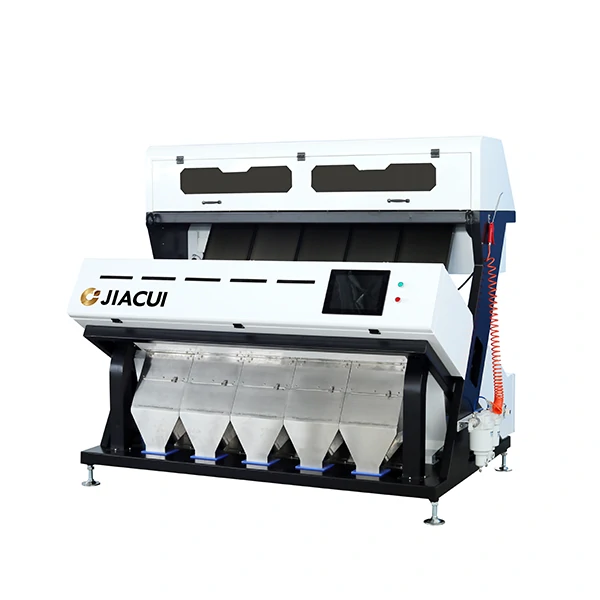
Compacta / Inicial | 128 canales (2 bajantes) | 1.5 – 4 t/h | $5,000 – $10,000 |
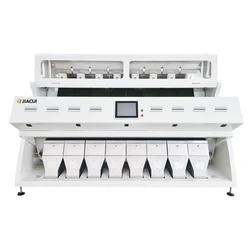
Gama Media | 192–256 canales (3–4 bajantes) | 3 – 10 t/h | $10,000 – $30,000 |
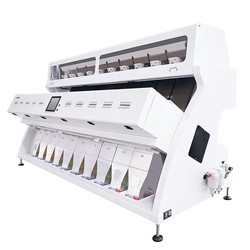
Alto Rendimiento | 320–512 canales (5–8 bajantes) | 6 – 15 t/h | $30,000 – $80,000 |
Industrial / Alta Capacidad | 640–768 canales (10–12 bajantes) | 13 – 25 t/h | $80,000 – $200,000+ |
Consideraciones sobre los precios:
Los precios indicados son FOB en puerto de origen. Flete internacional, aranceles de importación e instalación local añaden habitualmente entre un 15% y 30% al costo final.
La integración de tecnología de Inteligencia Artificial incrementa el costo base CCD entre un 30% y 50%.
Como referencia de marcas internacionales, un equipo nuevo Bühler SORTEX A MultiVision se sitúa entre $80,000 y $250,000 USD según su configuración, mientras que las líneas para reciclaje TOMRA FINDER alcanzan valores superiores.
Fabricantes Chinos vs. Marcas Internacionales: Comparativa de Inversión
El mercado opera con dos dinámicas diferenciadas. Las tres principales marcas globales (Satake, TOMRA y Bühler) concentran el 29.8% de los ingresos, enfocadas en el segmento premium. Paralelamente, la cuota de mercado de los fabricantes chinos continúa en aumento constante.
¿Cuándo elegir un fabricante chino?
Procesamiento de granos convencionales, arroz, legumbres o escamas de plástico.
Presupuesto de inversión por debajo de los $30,000 USD.
Capacidad técnica interna para realizar mantenimiento de rutina.
Gestión autónoma de la logística de importación.
¿Cuándo optar por una marca internacional premium?
Operaciones continuas 24/7 con caudales superiores a 20 t/h.
Requerimientos de clasificación multiespectral compleja (Visible + NIR + Rayos X simultáneos).
Exigencias estrictas de homologación en la UE (normativas PPWR).
Alto costo de oportunidad por paradas de planta (superiores a $500 USD/hora).
Retorno de Inversión (ROI) y Amortización
La viabilidad financiera de una clasificadora óptica se fundamenta en la automatización y la optimización de la materia prima. Una línea manual requiere múltiples operarios para la inspección visual. Una clasificadora de 256 canales reemplaza la labor directa de 3 a 8 personas, garantizando una precisión del 99.99% y reduciendo significativamente el costo de mano de obra. La amortización para equipos de gama media se logra habitualmente entre 6 y 12 meses.
Factores adicionales que aceleran el ROI:
Recuperación de producto: La reducción de falsos rechazos permite recuperar entre un 2% y un 5% de producto bueno que de otro modo iría a desperdicio.
Valor agregado: El producto final libre de impurezas obtiene un sobreprecio de entre el 5% y el 15% en el mercado mayorista.
Mitigación de riesgos: Previene devoluciones de lotes o penalizaciones comerciales por contaminación de materia prima.
Ejemplo: Para una planta procesadora de arroz de 3 t/h, una inversión de $10,000 USD se recupera en un plazo de 8 a 14 meses únicamente considerando el ahorro en mano de obra.
Tendencias del Mercado que Impactan en los Precios
Suministro de semiconductores: La demanda de procesadores avanzados para visión por computador mantiene ajustada la cadena de suministro de componentes de IA. Se aconseja prever plazos de entrega de 10 a 12 semanas para modelos avanzados.
Escala de producción en Asia: La concentración industrial en centros de fabricación como Hefei y Zhengzhou en China ha permitido optimizar los costos de producción, situando los modelos de entrada CCD por debajo del umbral de los $3,000 USD.
Exigencias de reciclaje (Normativa UE): Regulaciones como la PPWR (que exige un porcentaje mínimo de plástico reciclado en envases) impulsan la demanda de clasificadoras para reciclaje. Esto mantiene firmes los precios de los equipos NIR y con IA para polímeros.
Recomendaciones para Solicitar una Cotización
Especificar el material exacto y el caudal requerido: La capacidad declarada para arroz no es directamente aplicable a materiales de menor densidad como escamas de plástico o granos de café.
Solicitar pruebas de clasificación con muestra real: Los fabricantes consolidados ofrecen pruebas de laboratorio sobre muestras enviadas por el cliente, entregando informes de rendimiento y video explicativo.
Verificar el ratio de arrastre (carry-over ratio): Una tasa de precisión del 99.99% debe complementarse con una buena relación de rechazo (aceptable a partir de 80:1), garantizando que no se descarte producto sano.
Calcular el Costo Total en Destino (Landed Cost): Considere fletes, impuestos arancelarios, gastos de despacho y adecuación eléctrica local (220V/50Hz vs. 110V/60Hz).
Confirmar los términos de garantía por escrito: Asegúrese de revisar la cobertura de componentes principales y si el soporte técnico remoto está incluido sin costos adicionales.
Preguntas Frecuentes (FAQ)
¿Cuál es el precio de una máquina clasificadora por color básica en 2026?
Los modelos compactos CCD de 32 canales para nivel de entrada se comercializan desde $2,980 a $3,500 USD (FOB). Son idóneos para pequeñas plantas o laboratorios con capacidades inferiores a 1 tonelada por hora.
¿Cuánto cuesta una clasificadora por color para arroz?
El rango oscila entre los $3,000 USD (unidades de 32 canales) y más de $80,000 USD (sistemas industriales de 640+ canales). Un equipo intermedio de 128 a 256 canales (3 a 6 t/h) se sitúa entre los $8,000 y $20,000 USD.
¿Vale la pena la inversión adicional en una clasificadora con IA?
Si el producto presenta variaciones sutiles de tono o forma (por ejemplo, granos dañados por hongos vs. variaciones naturales de madurez), la IA reduce los falsos rechazos entre un 15% y un 30% frente a sistemas CCD estándar. La inversión extra se amortiza rápidamente en productos de alto valor como café, frutos secos o plásticos de ingeniería.
¿Qué garantía suelen ofrecer estos equipos?
El estándar internacional es de 2 años de garantía sobre componentes mecánicos y ópticos. Varias marcas internacionales ofrecen planes extendidos de mantenimiento con un costo anual de entre el 3% y el 8% del valor total del equipo.