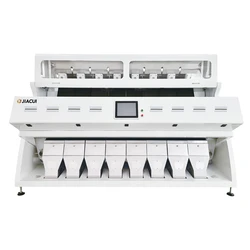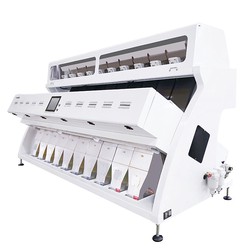


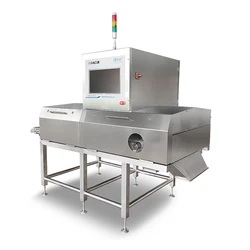

Color sorter machines are no longer a luxury reserved for mega-processing plants. By 2026, the market will span from $3,000 compact units for small-scale grain processors to $200,000+ multi-chute systems for industrial recycling lines. The real question is no longer “What’s the price?” but rather, “What price point delivers the performance your operation actually needs?”
This guide breaks down real price data, key cost drivers, and the ROI buyers can expect when investing in an optical color sorter in 2026.
What Determines Color Sorter Machine Prices in 2026
Pricing for color sorters varies by a factor of 50x or more. Here are the four variables that explain the spread.
1. Sensing Technology
Technology | Typical Use | Price Impact |
|---|---|---|
CCD (visible light) | Grains, rice, beans, nuts | Baseline |
NIR (near-infrared) | Plastics, nuts, difficult-to-distinguish materials | +30%–60% over CCD |
X-ray | Internal defect detection, high-density materials | 2x–3x over CCD |
AI-powered multi-spectral | Complex sorting scenarios, 0.1mm impurities | +50%–100% over CCD |
In 2026, approximately 57% of new color sorter systems integrate AI algorithms, capable of processing over 10,000 images per second. These AI-driven units command a premium but offer sub-0.1mm defect detection — accuracy levels that purely optical systems cannot achieve.
2. Number of Channels
Channels equate directly to throughput. A 32-channel machine processes roughly 500 kg of rice per hour; a 768-channel industrial system handles up to 20 tons per hour in the same time window.
32–128 channels: Entry-level, typical price 3,000–10,000
192–384 channels: Mid-range, 10,000–50,000
512–768 channels: Industrial, 50,000–200,000+
Capacities are material-dependent: a machine rated at 500 kg/h for rice might only handle 150 kg/h for coffee beans, where size and density differences slow sorting speed.
3. Origin and Brand
Chinese manufacturers (Hefei Meiya, Anhui Zhongke, Hefei Taihe, zhengzhou Jiacui) dominate the entry-to-mid-range segment, producing units at 40%–70% lower cost than Japanese and European equivalents. A 128-channel CCD color sorter from a Chinese factory at the Made-in-China.com or Alibaba level quotes between 3,000 and 3,000 and 8,000 (FOB). The same specification from Satake or Bühler's SORTEX line typically starts at 20,000–20,000–50,000.
4. After-Sales and Warranty
Two-year warranties are standard among Chinese exporters ( Jiacui , HT, and others). International brands often bundle on-site installation, calibration, and training into the base price — a significant hidden cost absorbed by the sticker price. Some Chinese manufacturers now offer 24/7 remote troubleshooting via Windows-based OS that allows phone-to-machine direct connection, reducing downtime without requiring an on-site engineer.
Color Sorter Machine Price Ranges: Real 2026 Data
The table below is drawn from publicly listed supplier prices and market reports published in 2025–2026.
Category | Channels | Rice Capacity | Typical Price (USD, FOB) |
|---|---|---|---|
Entry-level | 32 | 500 kg/h | 2,980–5,000 |
Compact / Startup | 128 (2 chutes) | 1.5–4 t/h | 5,000–10,000 |
Mid-range | 192–256 (3–4 chutes) | 3–10 t/h | 10,000–30,000 |
Performance | 320–512 (5–8 chutes) | 6–15 t/h | 30,000–80,000 |
High-capacity industrial | 640–768 (10–12 chutes) | 13–25 t/h | 80,000–200,000+ |
Notes:
Prices are FOB China port. Shipping, duties, and local installation add 15%–30%.
Capacities listed are for rice. For coffee beans, divide by roughly 3. For plastic flakes, consult the manufacturer's calibration data.
AI-equipped models add 30%–50% to the baseline CCD price.
For reference: a brand-new Bühler SORTEX A MultiVision (mid-to-high capacity) typically falls in the 80,000–80,000–250,000 range depending on configuration. TOMRA's FINDER series for metal and plastic recycling positions even higher.
Chinese Manufacturers vs. International Brands: What the Price Gap Buys You
The 2026 color sorter market is a two-speed race. The top three players — Satake, TOMRA, and Bühler — hold a combined 29.8% revenue share, concentrated in the premium tier. Chinese manufacturers collectively claim approximately 18.7% of the Asia-Pacific market, a number growing year on year.
When to choose a Chinese manufacturer:
You are processing standard grains, rice, beans, or plastic flakes
Your budget is under $30,000
You have in-house technical staff who can handle calibration
You are willing to manage logistics and installation independently
When to pay the premium for an international brand:
You need 24/7 continuous operation at 20+ tons per hour
Your material requires multi-spectral sorting (visible + NIR + X-ray)
You operate in the EU and need full PPWR compliance documentation
Downtime cost exceeds $500/hour
Color Sorter Machine ROI: What Payback Period to Expect
The ROI argument for color sorters has a simple math engine. A single manual sorter in a grain processing line costs 3,000–3,000–6,000 per year in wages (varies by region). A 256-channel color sorter replaces 3–8 manual sorters while operating at 99.99% accuracy and 80% labor cost reduction — payback within 6–12 months for mid-range units, according to manufacturer HT's published data.
Beyond labor savings:
Yield improvement: reducing false rejects (good product sent to waste) recovers 2%–5% of throughput
Price uplift: sorted product commands a 5%–15% premium in wholesale grain markets
Contaminant risk reduction: a single rejected shipment from a buyer can cost 10,000–10,000–50,000 in penalties and lost contracts
For a small rice mill processing 3 tons/hour, a $10,000 color sorter typically recovers its cost within 8–14 months through labor savings alone. The yield improvement and quality premium accelerate that timeline further.
2026 Market Trends That Affect Pricing
Upward Pressure: Chip Supply Constraints
AI color sorters depend on high-performance imaging chips. U.S. semiconductor export controls continue to create procurement friction for certain Chinese manufacturers. Buyers placing orders for AI-equipped units should budget for 10–12 month hardware lead times — a constraint that is now widely acknowledged in the market and likely to keep prices firm through 2027.
Downward Pressure: Manufacturing Scale in China
Hefei, Anhui Province, has emerged as a color sorter manufacturing cluster. Companies like Meiya Optoelectronics (publically listed, 2024 launch of MASTER 4.0 series) and Anhui Zhongke continue to scale production, pushing entry-level CCD prices below $3,000 for the first time in 2025-2026.
Regulatory Drivers
The EU's PPWR regulation (2025/40) mandates a minimum 30% recycled content in plastic packaging by 2030, directly fueling demand for color sorters in the recycling sector — a segment that grew 25% over the past five years. This creates a bifurcated market: grain-processing color sorters remain price-competitive, while recycling-grade NIR and AI sorters see stable or rising prices through the end of the decade.
How to Get an Accurate Quote
Specify your material and target capacity. A machine optimized for rice will underperform on plastic flakes, and vice versa.
Request video demos sorted with your actual sample material. Reputable manufacturers accept sample shipments and return sorted results with video documentation.
Clarify what "accuracy rate" means in the quote. The industry standard of 99.99% refers to sorting accuracy under ideal single-material conditions. Ask for the carryover ratio (bad-to-good rejection rate); a ratio above 80:1 is competitive.
Factor in total landed cost, not just FOB price. Freight, import duties, local installation, and electrical compatibility (220V/50Hz vs. 110V/60Hz) each add to the final figure.
Verify warranty terms in writing. Two-year mechanical warranties are standard; clarify whether remote technical support and spare parts are included or billed separately.
Frequently Asked Questions
What is the cheapest color sorter machine in 2026? Entry-level 32-channel CCD color sorters from Chinese manufacturers start at 2,980–2,980–3,500 (FOB). These suit small rice mills or startup grain processors with capacities under 1 ton/hour.
How much does a rice color sorter cost? Dedicated rice color sorters range from 3,000(32−channel)to3,000(32−channel) to 80,000+ (640-channel). A mid-range rice sorting machine with 128–256 channels, sufficient for 3–6 tons/hour, costs 8,000–8,000–20,000 in 2026.
Is an AI color sorter worth the extra cost? If your material contains subtle color variations (e.g., mold-damaged grains vs. healthy grains with natural color variance), AI reduces false rejection rates by 15%–30% compared to CCD-only systems. The premium breaks even faster for high-value commodities like coffee beans and nuts.
What is the warranty period for a color sorter? Two years is the industry standard for Chinese-manufactured color sorters. International brands often offer extended service contracts at additional cost, typically 3%–8% of the machine price per year.
Can I get financing for a color sorter purchase? Yes. Alibaba Trade Assurance and Made-in-China.com offer buyer protection for orders placed through their platforms. Some Chinese manufacturers offer payment terms (30% deposit, 70% before shipment). Equipment financing from third-party lenders is available in most markets for purchases above $20,000.