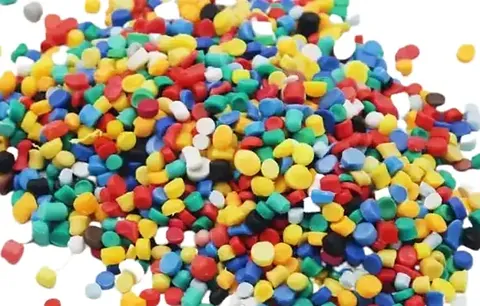
Industrial Plastic Color Sorter for Rigid & Post-Consumer Plastic
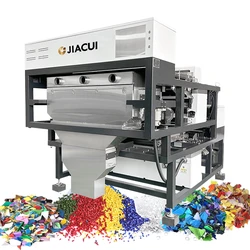
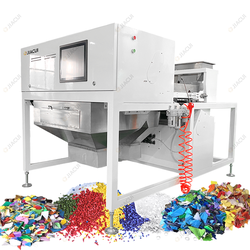
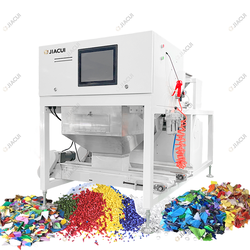
A dual-sided CCD optical sorter for PET, HDPE, PP, ABS and PVC regrind — separates off-colour parts, wrong-polymer contamination and metal at 2.5–12 T/H, with a carryover ratio better than 20:1.
Both sides of every flake — Dual-side CCD catches the defects that land face-down and fail incoming inspection
Same-colour wrong polymer — Optional NIR channel rejects PVC, PS and PLA hiding in a clear PET stream
>20:1 carryover — Low-pressure / high-frequency ejection moves the defect, not the good flake
Turn Mixed Regrind into a Named, Specification-Grade Fraction
A plastic color sorter does not just pick out dark pieces. On a recycling line the machine is
the last place where a batch can be turned from "mixed regrind" into a material a converter will
actually buy by name, and the economics are unforgiving: one PVC flake in a PET melt releases
hydrogen chloride and degrades the whole lot, while a handful of off-colour parts is enough to
lose a colour-critical customer for the season.
JIACUI builds this plastic sorting machine around a dual-side CCD platform with an optional
near-infrared polymer channel, so the machine can reject on colour and on chemistry in the same
pass. The same equipment handles PET bottles and trays, HDPE jerrycans and crates, PP woven bags
and automotive parts, ABS appliance shells and PVC profiles — from 5 mm regrind up to
50 mm shredded parts, at 2.5–12 T/H per unit.
Particle size5 – 50 mm
Throughput2.5 – 12 T/H
Sorting accuracy≥99.99%
Carryoverbetter than 20:1
ViewingDual-side CCD (top + bottom)
Polymer channelNIR option for same-colour mixes
See it running
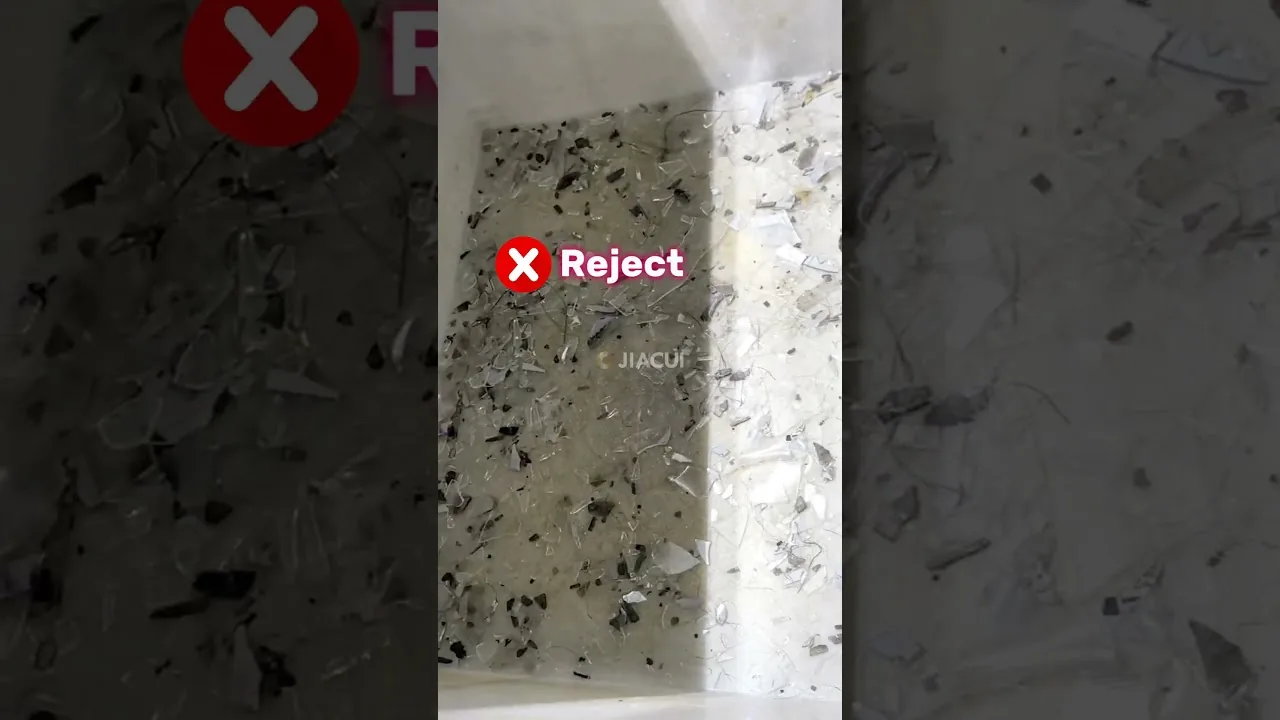
Watch Clear PV Sheet Get Sorted, Not Hand-Picked
Transparent scrap is the case where a normal colour sorter gives up. This is the same machine running it on a production belt, filmed at full line speed.
Clear sheet is the hard caseHazy, discoloured and contaminated parts are invisible to a camera hunting for colour contrast — light simply passes straight through the sheet.
Lit from behind, inspected on both facesA backlight turns every defect into a dark blot, and dual-side CCD catches the ones facing away from the lens.
Rejected in the same passThe nozzle fires on the detected coordinate immediately, so no second manual picking step is needed behind the sorter.
Flake, granule or shredded rigid scrap — the machine stays the same, the recipe does not. Camera gain, LED band and ejector timing are stored per stream, so a line running clear PET flake this morning can run coloured PVC pellet this afternoon without a mechanical rebuild.
PET
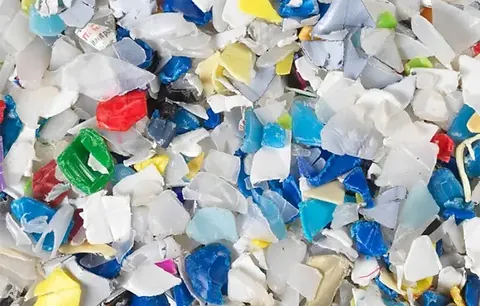
Clear PET bottle flake
Tinted and opaque flake, labels, glue, PVC chips
PET
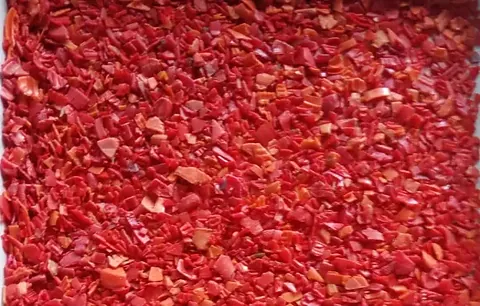
Coloured PET bottle flake
Red, blue and green flake split from the clear stream
PE
Blue PE flake
Black specks, film and stray PP
MIX
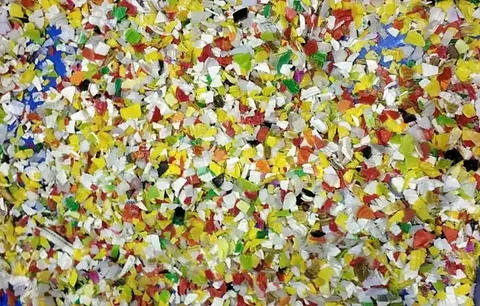
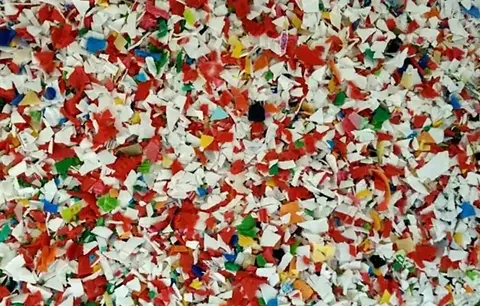
Mixed-colour regrind
Any colour family split into named fractions
PVC
Mixed PVC flake
Foreign colour, rubber seals, metal chips
MIX
Shredded rigid scrap
Stones, metal and wrong polymer out of the shred
PP
Natural PP granule
Discoloured granule and black-spec granule
PVC
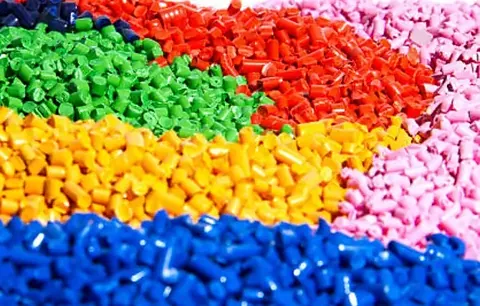
Coloured PVC pellet
Off-shade pellet with colour drag
PC/PS
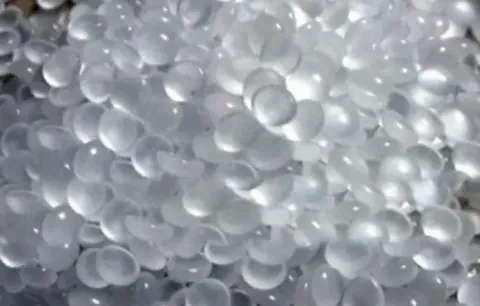
Clear PC / PS granule
Yellowed, opaque and foreign granule
MIX
Mixed-colour granule
Granule sorted back into single-colour lots
Recipes are set on a sample of your own material before shipment. Send 5–10 kg of the stream you actually run and we return the sorting result with the quotation.
What a Plastic Color Sorter Removes, Material by Material
Plastic recycling is not one market. A PET bottle line, an HDPE crate line and
a PVC profile line each fail on a different defect, and the price of failure is different too.
The matrix below shows which defects a JIACUI optical sorter rejects in each polymer stream and
what that rejection protects downstream.
Polymer / feed
Defects and contamination removed
Quality and value gained
PET — bottles, trays, strapping
Tinted and opaque pieces, label and glue residue, PVC / PS contamination, metal fragments.
Protects the IV and acetaldehyde figures that decide whether rPET can go back into food-grade sheet or fibre.
HDPE — jerrycans, crates, caps
Off-colour parts, PP and PS mixed in, sand and residual product inside the granulate.
Holds a single colour family so injection moulders get repeatable shade instead of blending around drift.
PP — woven bags, boxes, automotive
Black spots, filler agglomerates, discoloured parts, rubber and gasket inserts.
Keeps melt flow and colour difference inside the window a compounder will actually accept.
ABS / PS — appliance shells, toys
Wrong-colour parts, flame-retardant grades mixed with standard grades, embedded metal inserts.
Restores a saleable appliance-grade regrind instead of downcycling the whole lot to a filler use.
PVC — pipes, profiles, window frames
Yellowed and aged pieces, foreign colour, rubber seals and gasket scrap.
Maintains the whiteness and stabiliser balance a profile extruder needs for a visible surface.
Baled post-consumer mix
Non-target polymer, stones, glass, metal, film and labels.
Raises the price of a whole bale by turning an unsorted mix into named, specification-grade fractions.
Engineering
Four Design Points That Decide Plastic Sorting Performance
Two machines can quote the same belt width and the same camera resolution and
still return completely different results on regrind. The difference is almost always in these
four places.
Dual-side CCD viewing
Regrind flips as it leaves the feeder. A top-only camera misses every black speck, label fragment and metal chip that lands face-down, and those are exactly the defects that fail an incoming inspection. JIACUI plastic sorters image both sides of the stream in one pass.
Optional NIR polymer channel
Colour cannot separate a clear PET flake from a clear PVC flake — they look identical. A near-infrared channel reads the spectral fingerprint of the polymer itself, so same-colour wrong-material pieces are rejected on chemistry rather than on shade.
Low-pressure, high-frequency ejection
A plastic flake weighs a fraction of a grain kernel. Blunt, high-pressure air blows good material out with the defect and destroys the carryover ratio; short low-pressure pulses move only the piece that has already been located, which is how a 20:1 carryover is held.
Anti-static, dust-sealed optics
Regrind arrives with dust, paper fibre and a static charge that fogs the viewing window. Positive-pressure purging plus an anti-static feed section keeps sensitivity stable across a full shift instead of drifting downward hour by hour.
Why plastic is different
Why a Grain Sorter Cannot Simply Be Reused for Plastic
Buyers often assume an optical sorter is an optical sorter. On regrind the
physical behaviour of the material changes almost every machine setting, and three differences
show up directly in the carryover ratio.
01
Static and low mass
A flake can be lifted by the air used to eject its neighbour, so the pneumatics have to be tuned far softer than on grain. Machines built for agricultural seed simply cannot hold a carryover figure on plastic.
02
Specular highlights
Glossy, moulded surfaces throw bright reflections that read as white to a single-angle camera. Multi-angle diffuse lighting is what keeps a transparent or black part from being sorted by its glare instead of its colour.
03
Wide size window
A 5 mm regrind flake and a 50 mm shredded crate part behave completely differently on the belt. Layer thickness, belt speed and nozzle timing have to be re-set per cut size, which is a recipe recall rather than a hardware change.
Model selection
Which Plastic Sorting Machine Fits Your Tonnage
Capacity on plastic is quoted per particle-size band, because a thin layer of
small flake carries far less tonnage than a single layer of large shredded parts. All three
models reach ≥99.99% sorting accuracy and better than 20:1 carryover; the choice is belt width
and drive power.
Model
Power
5–15 mm
15–30 mm
30–50 mm
Weight
Dimensions (L×W×H)
CS-LA600
6 kW
2.5 – 3.5 T/H
3 – 5 T/H
4 – 6 T/H
750 kg
1400 × 2430 × 1200 mm
CS-LA1200
6 kW
5.0 - 7.0 T/H
6 - 10 T/H
8 - 12 T/H
1150 kg
2430 × 2000 × 1198 mm
CS-LA1200D
9 kW
5 – 7 T/H
6 – 10 T/H
8 – 12 T/H
2300 kg
2810 × 2000 × 2088 mm
FAQ
Plastic Sorting Questions Buyers Actually Ask
Can a plastic color sorter separate clear PET from clear PVC?
Not on colour — they are optically identical. It takes the optional near-infrared channel, which identifies the polymer by spectral signature instead of by shade. If your feed carries PVC, PS or PLA in the same colour as the PET you are recovering, specify the NIR channel when you order; it cannot be retrofitted as a software update.
What throughput can I expect on plastic regrind?
Capacity depends on particle size, not only on belt width, because a thin layer of small flake passes far less tonnage than a single layer of large parts. On the CS-LA1200D the rated figures are 5–7 T/H at 5–15 mm, 6–10 T/H at 15–30 mm and 8–12 T/H at 30–50 mm. We confirm the number on your own material before quoting.
Does the machine need a compressed-air supply?
Yes. The ejector bank runs on plant air; the exact consumption depends on the number of nozzles and the reject rate. A dryer and a filter are strongly recommended on plastic lines, because condensation and oil carry-over are the fastest way to block a nozzle and lose a whole shift of sorting performance.
How do you keep the optics clean when the material is dusty?
The optical compartment is positively pressurised so dust is pushed away from the window rather than settling on it, and the viewing glass is a user-replaceable cassette. On very dusty regrind we add an anti-static feed section and a pre-cleaning air knife ahead of the belt.
Can one machine handle both 5 mm flake and 50 mm shredded parts?
Mechanically yes — belt speed, layer thickness and nozzle timing are stored as recipes. In practice most plants run flake and large rigid parts on separate shifts, because the two cuts want very different feed depths. For a dedicated flake line see our plastic flake color sorter.
Is a color sorter enough, or do I also need metal separation?
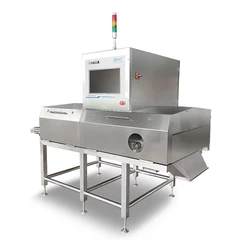
A colour sorter removes visually defective and wrong-colour pieces; it is not a metal detector. Most recycling lines keep a magnetic and eddy-current stage upstream, and use the colour sorter for colour and polymer clean-up. If tramp metal is a real risk in your feed, an X-ray sorting machine closes that gap.
Test Your Regrind Before You Commit to a Line
Send us a 5–10 kg sample of your PET, HDPE, PP or mixed bale material. Our lab runs
it through a plastic color sorter, weighs the accept and the reject, and returns a report with
the achievable purity, the carryover ratio and a factory-direct quotation — free of charge
and without obligation.
Free sample test with before / after purity figures
CCD-only or CCD + NIR configuration recommended for your feed
Belt width, nozzle count and air consumption specified for your tonnage