
X-ray inspection & sorting

X-Ray Sorting Machine for Foreign Body Detection and Rejection

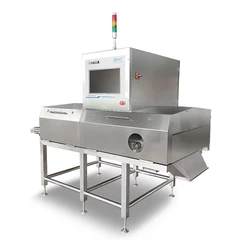
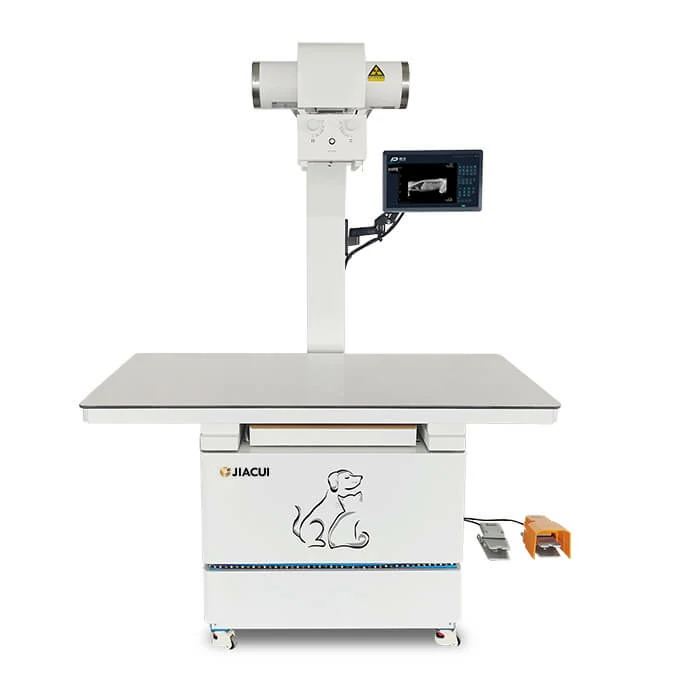
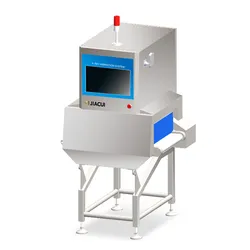
A dual-energy X-ray inspection and sorting system that finds stainless steel, glass, ceramic, stone and dense plastic inside product — then removes it automatically, at belt speeds of 60–120 m/min.

  • Finds what colour cannot — Stainless steel, glass, ceramic, stone and dense plastic inside product
  • In-line rejection, not just an alarm — Push plate or air jet diverts the contaminated item while the line keeps running
  • <1 µSv/h leakage — Interlocked SUS304 cabinet with an IP66 washdown product channel
X-Ray Intelligent Sorting Machine CS-XCB30

X-Ray Intelligent Sorting Machine CS-XCB30

MODEL: CS-XCB30

Discover the CS-XCB30 X-Ray Intelligent Sorting Machine for precise, multi-dimensional detection to enhance product quality and reduce costs.

View Details
X-Ray Intelligent Sorting Machine CS-XCB20

X-Ray Intelligent Sorting Machine CS-XCB20

MODEL: CS-XCB20

Discover the CS-XCB20 X-Ray Intelligent Sorting Machine for precise, multi-dimensional detection to enhance product quality and reduce costs.

View Details
X-Ray Intelligent Sorting Machine CS-XCA60

X-Ray Intelligent Sorting Machine CS-XCA60

MODEL: CS-XCA60

Discover the CS-XCA60 X-Ray Intelligent Sorting Machine for precise, multi-dimensional detection to enhance product quality and reduce costs.

View Details
X-Ray Intelligent Sorting Machine CS-XCA40

X-Ray Intelligent Sorting Machine CS-XCA40

MODEL: CS-XCA40

Discover the CS-XCA40 X-Ray Intelligent Sorting Machine for precise, multi-dimensional detection to enhance product quality and reduce costs.

View Details

X-ray sorting machine

Some Contaminants Have No Colour at All

Every optical sorter on the market works from the same premise: a defect looks different. That premise fails the moment the defect is a piece of clear glass in white rice, a chip of stainless steel in a pale granule, or a stone the exact shade of the product around it. There is no colour difference for a camera to find, so no amount of AI on top of that camera will find it either.

An X-ray sorting machine answers a different question. It measures how much each pixel attenuates a beam, which is a function of density and thickness rather than of shade. Dual-energy imaging goes one step further and separates dense inorganic material from organic product, so the machine can reject a 1 mm glass shard and leave the product next to it in the stream. JIACUI builds this inspection and sorting system for food, agricultural and plastic lines that have to document foreign-body control rather than simply hope for it.

Detection width≤600 mm
Product height≤100 mm
Belt speed60 – 120 m/min
Sensitivitysteel ball ≥φ0.3 mm
Radiation leakage<1 µSv/h
EnclosureSUS304, IP66 channel
X-Ray Sorting: Every Bad Seed Caught, Every Time

See inside the product

What the Camera Cannot See, the X-Ray Rejects

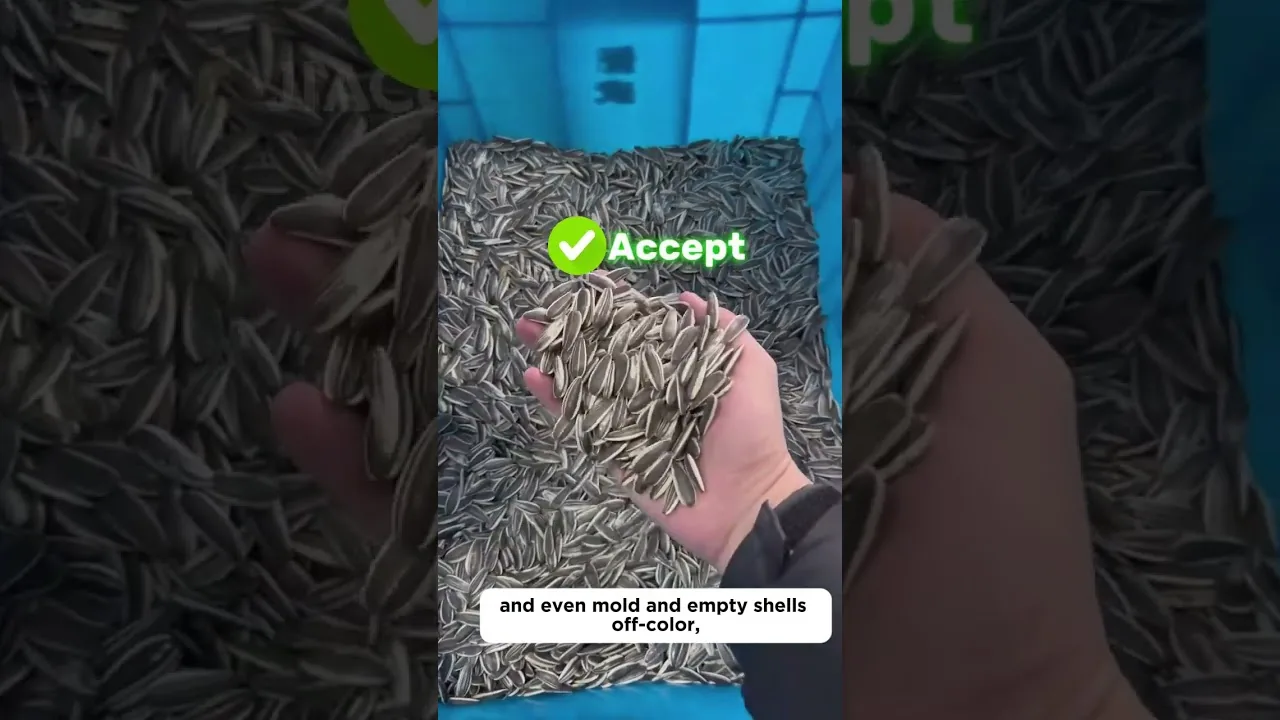
A colour sorter judges the surface. This clip shows what happens when the defect sits behind it — hollow, worm-damaged and denser material leaving the stream in the same pass.

  1. Density, not colourA hollow shell, a worm tunnel and a stone can share the exact colour of a good kernel. They differ in density, which is what dual-energy imaging reads.
  2. Rejected even when the outside looks perfectBecause the decision is made on internal structure, a flawless-looking surface no longer gets a defective piece through.
  3. No re-picking table behind the lineThe reject fires on the detected coordinate in the same pass, so the line does not need a second manual inspection station downstream.
Ask for a test on your own product →

Detection capability

What an X-Ray Sorting Machine Can Actually See

Suppliers of metal detectors talk about ferrous and non-ferrous. X-ray works on a different physical property — how much the material attenuates a beam — so the list of contaminants it can find is a different list. These are the no-load sensitivity figures published for the CS-XCA60.

ContaminantNo-load sensitivityWhere it comes from on a real line
Stainless steel ball≥ φ0.3 mmWire, mesh, worn screen fragments and machine swarf — the failures a magnet will not catch.
Stainless steel wire≥ φ0.2 × 2 mmFine wire from sieves, brushes and conveyor belting.
Glass ball / cullet≥ φ1.0 mmBottle glass, jar shards and gauge glass. Invisible to both magnets and colour cameras.
Ceramic ball≥ φ1.0 mmGrinding media, tile chips and kiln refractory fragments.
Stone & mineral grit≥ φ1.0 mmField stones, sand agglomerate and dense mineral inclusions.

Sensitivity inside product is always lower than the no-load figure and depends on product density, thickness and packing. We test on your own sample before quoting a number.

Engineering

Four Decisions That Separate a Working X-Ray Sorter from a Demo

Every X-ray line can produce an image. The hard part is deciding, at line speed, whether a grey blob is a glass shard or a lump of product — and then removing the right one without losing a kilo of good material.

Dual-energy X-ray imaging

Two detector energies per pixel give a density signature, not just a shadow. That is what separates a 1 mm glass shard from a 3 mm product lump of the same grey level — a single-energy system cannot make that call and compensates by either missing glass or rejecting far too much good product.

TDI line-scan detector array

A time-delay-integration detector accumulates signal along the belt direction, so resolution holds at 120 m/min instead of smearing. High belt speed matters more than most buyers expect: it is the difference between a machine that keeps up with a packing line and one that becomes the bottleneck in it.

Push-plate or air-blow rejection

Two rejection mechanisms, chosen by product value and by where the reject has to land. A push plate gives a hard, guaranteed diversion for bulk product; a short air jet is gentler on fragile or lightweight items and leaves a smaller reject fraction.

SUS304 frame with IP66 product channel

The product channel is IP66-rated stainless steel so the line can be washed down on a normal hygiene schedule without moving the machine. Leakage stays below 1 µSv/h at every surface, which is the figure your HACCP auditor will ask for.

X-ray vs. the alternatives

Why Neither a Magnet nor a Camera Can Do This Job

Food safety plans are usually written around whichever instrument the plant already owns, which is how a magnet ends up being asked to catch glass. Three gaps are worth stating plainly, because a retailer audit will ask about all of them.

01

A magnet only finds iron

Metal detectors and magnets are blind to stainless steel, glass, ceramic, stone and dense plastic — and stainless is exactly what wears off screens, pumps and conveyor parts on a food line. X-ray sees mass and density, not conductivity.

02

A colour camera only finds colour

Optical sorters reject a defect because it is a different colour. A clear glass shard inside white rice is the same colour, so the camera has nothing to work with, however good the AI is. The two technologies answer different questions and belong on the same line.

03

Full inspection, not sampling

X-ray sorting inspects 100% of the stream, in line, at production speed. That changes what you can promise a retailer: instead of a statistical sampling certificate you can document that every kilogram passed an inspection station with a recorded sensitivity.

Specifications

CS-XCA60 X-Ray Sorting Machine — Technical Data

The CS-XCA60 is the standard conveyor configuration: a 620 mm POM belt running through a SUS304 cabinet, inspecting a product layer up to 100 mm high across a 600 mm detection width. Wider channels and different rejection hardware are built to order.

X-ray outputMax 55 kV / 8.0 mA adjustable (max 350 W)
No-load sensitivityStainless steel ball ≥φ0.3 mm; steel wire ≥φ0.2×2 mm; glass ball ≥φ1.0 mm; ceramic ball ≥φ1.0 mm
Detection sizeWidth ≤600 mm, height ≤100 mm
Conveyor belt width620 mm
Conveyor belt speed60 – 120 m/min
Rejection devicePush plate / air blow (optional)
Loading capacity10 kg
Power supplySingle-phase AC 220±10% V, 50/60 Hz, 2.5 kVA
Air source0.6 – 0.8 MPa, ≤2500 L/min
Protection levelIP66 product channel, IP65 other areas
Working environment-10 ~ 40 °C, 30 – 90% RH, no condensation
Radiation leakage<1 µSv/h
Main materialSUS304 stainless steel
Conveyor belt materialPOM
Net weight700 kg
Dimensions2380 × 1350 × 1780 mm

Model range

Four X-Ray Configurations, One Inspection Principle

Every model below uses the same dual-energy X-ray source and the same rejection logic. What changes is the geometry — how wide the belt is, how deep the product layer can be, and how much weight it carries per metre. Choose the geometry that matches your line, not the largest number on the sheet.

SpecificationCS-XCA40CS-XCA60CS-XCB20CS-XCB30
X-ray output55 kV / 8.0 mA55 kV / 8.0 mA80 kV / 8.0 mA80 kV / 8.0 mA
Detection size (W × H)≤400 × ≤100 mm≤600 × ≤100 mm≤600 × ≤200 mm≤600 × ≤300 mm
Belt width400 mm620 mm450 mm660 mm
Belt speed60 – 120 m/min60 – 120 m/min10 – 90 m/min10 – 60 m/min
Loading capacity10 kg10 kg10 kg50 kg
Net weight600 kg700 kg450 kg450 kg
Suited tonarrow lanes, shallow layersstandard lanes, shallow layersnarrower lanes, deeper layerswide lanes, deep layers, heavier items
01

Start with layer depth

Up to 100 mm of product height the XCA series is enough. Above that, an 80 kV XCB source and a lower belt speed keep the image readable through a thicker bed.

02

Then match the belt

400, 450, 620 and 660 mm cover most conveyor take-offs. The belt width, not the X-ray power, is usually what decides whether a machine drops into an existing line.

03

Finally the weight per metre

The two heavy-duty positions carry 50 kg and run slower on purpose, because a deep bed needs dwell time in the beam rather than speed.

Tell us your belt width, product layer depth and throughput and we will point at one configuration instead of three.

FAQ

X-Ray Sorting Questions, Answered Without the Sales Language

What size of foreign body can an X-ray sorting machine actually detect?

On the CS-XCA60 the quoted no-load sensitivity is a stainless steel ball of φ0.3 mm, stainless wire of φ0.2×2 mm, and glass or ceramic balls of φ1.0 mm. Real sensitivity inside a product always depends on the product itself: a dense, thick or layered product attenuates more X-ray and hides smaller contaminants, so we always test on your own material rather than quote a bare laboratory figure.

Is an X-ray machine safe to run next to operators?

Yes. The machine is a shielded cabinet, not an open beam. Surface leakage is below 1 µSv/h, which is within the public-exposure limits used in food factories, and the enclosure is interlocked so the generator stops if a guard is opened. Standard practice is annual leakage verification as part of your HACCP documentation.

How is this different from the metal detector I already have?

A metal detector responds to conductive metal only, and it struggles with stainless steel, aluminium foil packaging and wet or salted product. X-ray responds to density, so it finds glass, ceramic, stone, bone, dense plastic and stainless regardless of conductivity. Many lines keep both: the metal detector is cheap and fast, the X-ray covers everything it misses.

Will it work as an in-line sorting machine, or only as an inspection station?

It sorts. Detection triggers either a push plate or an air jet that diverts the contaminated item or the contaminated slice of product into a reject bin, so the line keeps running instead of stopping for a manual check. That is the difference between an X-ray sorting machine and a pure inspection system that only alarms.

What throughput can the belt handle?

The belt runs at 60–120 m/min with a 620 mm belt and a 10 kg load rating, and inspects a product layer up to 100 mm high across a 600 mm detection width. Actual tonnage then depends on bulk density and layer depth; we size it against your line speed rather than quoting a single ton-per-hour number.

Does it replace an optical color sorter?

No, and it should not be sold as if it did. An optical color sorter removes discoloured product — mouldy kernels, black spots, off-colour granules — because those defects differ in colour. X-ray removes what has no colour difference at all. Food lines increasingly run both, in series.

Find Out What Your Line Is Currently Missing

Send us a production sample together with the contaminants you are worried about — glass, stainless swarf, stone, bone, dense plastic. We run it through an X-ray sorting machine, report what was detected at which size, and propose a configuration with a factory-direct price. No charge, no obligation.

  • Sample test with a detection report per contaminant type
  • Belt width, rejection method and air demand specified for your line speed
  • Radiation-safety and HACCP documentation supplied with the machine
whatsapp WhatsApp home Home product Product email Email top Top
WhatsApp WhatsApp