


A coffee color sorter uses optical detection and AI algorithms to separate defective beans from good ones at industrial speed — a task that manual sorting handles poorly at scale. For processors upgrading or buying their first machine in 2026, the selection process comes down to five measurable factors: camera resolution, processing capacity, variety compatibility, maintenance requirements, and smart features. This guide breaks down each criterion with specific numbers, compares capacity tiers, and references JIACUI's current coffee sorter lineup to ground every recommendation in real specifications.
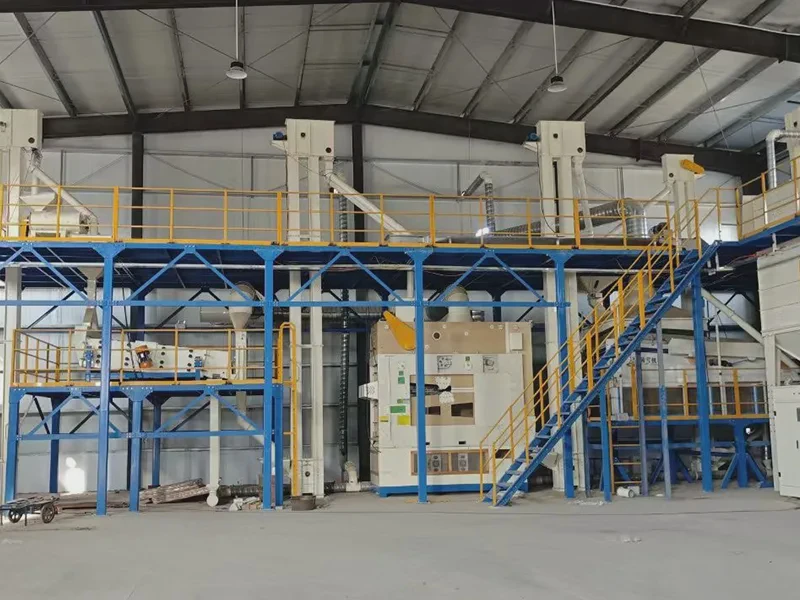
What Is a Coffee Color Sorter?
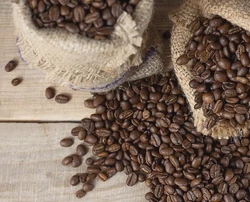
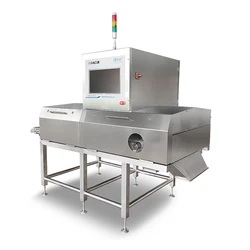
A coffee color sorter is an optical sorting machine that uses high-resolution cameras and AI-driven algorithms to identify and eject defective coffee beans — including black, sour, moldy, insect-damaged, and immature beans — as well as foreign materials like stones and glass. The machine evaluates each bean by color, shape, and internal composition at thousands of frames per second, then removes flagged beans using high-frequency air nozzles in under 2 milliseconds.
How Optical Sorting Works: 4 Stages
The sorting process follows four sequential stages, each critical to final accuracy:
Feeding — A vibrating feeder distributes beans in a single layer across the sorting chute. Overlapping or bunched beans reduce recognition accuracy, so uniform flow is the foundation of effective sorting.
Optical scanning — Industrial CCD cameras capture images of every bean at high frame rates. RGB spectrum technology distinguishes over 16 million color variations, comparing each bean against pre-set quality standards for the target variety (Arabica, Robusta, or Liberica).
Defect detection — The AI algorithm flags defective beans — black beans, moldy beans, green unripe beans, stones, shells — and tracks their exact position on the belt. Multispectral sensors can also capture near-infrared data to detect internal defects like hidden mold that surface-only cameras miss.
Ejection — High-frequency solenoid valves actuate when flagged beans reach the ejection zone, blowing them into a waste channel. Qualified beans pass through to the finished product area. The entire nozzle response happens in under 2 milliseconds.
Why Coffee Processors Need a Color Sorter in 2026
Manual coffee bean sorting requires 5–8 hours to process a single ton of beans, and 15–20% of defective beans still slip through. For operations of any size — from small roasteries to large plantations — a coffee sorting machine addresses two problems manual sorting cannot solve at scale: consistency and throughput.
Mycotoxin Control and Food Safety Compliance
Beans with mold and insect damage contain ochratoxin A, a mycotoxin that is not eliminated by roasting. For baked coffee and instant coffee beans, China’s GB 2761-2017 standard sets a maximum level of 5.0 μg/kg and 10.0 μg/kg respectively. Similar limits apply under the EU and Codex Alimentarius Commission (CAC). When tainted beans are sold, they create off-flavors and fines in regulated markets.
A coffee color sorter removes defective coffee beans at a rate that meets or exceeds SCA specialty grade requirements: 0 Category 1 defects and no more than 5 Category 2 defects per 350g sample. This provides the processors with a dependable, auditable means to meet the export quality standards.
Labor Cost Reduction and Throughput
Based on industry operational data, automated sorting reduces labor costs by 40% or more compared to manual lines. Most operations report recovering the equipment investment within 1–2 years, depending on throughput volumes and local labor costs. A medium-sized optical coffee sorter handles in hours what a full manual team processes over days.
5 Key Factors in Selecting a Coffee Color Sorter
Not every model suits every operation. Specifying the wrong capacity or camera type leads to wasted spend or production bottlenecks. Focus on these five criteria, each tied to a measurable specification.
1. Recognition Accuracy and Camera Technology
For specialty coffee producers, camera quality matters more than raw throughput. Look for these specific indicators:
Camera resolution — Industrial-grade 5400-pixel CCD cameras (such as those used in JIACUI sorters, equipped with Japanese CCD chips) capture subtle color differences that lower-resolution sensors miss.
Minimum detectable defect size — High-precision optical sensors can identify defects as small as 0.14 mm, enabling detection of mold spots and insect damage that affect cupping scores.
RGB spectrum range — Over 16 million color variations with real-time background adjustment. Single-color cameras only catch surface differences; multispectral systems add near-infrared for internal defect detection.
2. Processing Capacity Matching
Capacity is rated in tons per hour (T/H). Match the machine to actual daily output to avoid paying for unused capacity or creating a bottleneck. The three standard tiers:
Small roasteries (0.5–1 ton/day): 0.03–0.25 T/H compact models
Medium processors (1–5 tons/day): 0.5–1 T/H models with dual sorting capability
Large plantations (5+ tons/day): 3–5 T/H industrial-grade units for continuous operation
3. Coffee Variety Compatibility
Arabica, Robusta, and Liberica beans differ in size, color range, and defect profiles. A flexible coffee bean color sorter should support adjustable sorting modes:
Small Arabica beans — Adjustable feeder speed and nozzle pressure to prevent bean damage during ejection.
Dark-roasted Robusta beans — High-contrast recognition mode to distinguish subtle shade differences between normal dark roast and defective burnt beans.
Green vs. roasted — Multi-material machines (like the JIACUI CS-1A64) ship with pre-configured templates for green coffee, roasted coffee, and other grains, allowing quick switching between processing stages.
4. Maintenance and Uptime
For operations running double shifts, maintenance requirements directly affect output. Check these specifics before purchasing:
Self-cleaning camera housings — Dust and chaff from upstream processing contaminate lenses and trigger false rejections. Automatic cleaning reduces manual intervention.
Solenoid valve lifespan — Premium imported valves rated for 1 billion cycles (as used in JIACUI machines) minimize replacement frequency.
Modular design — Modular architecture allows component-level maintenance and upgrades without replacing the entire unit, extending equipment lifespan.
Spare parts availability — Confirm regional spare parts supply and recommended service intervals before committing.
5. AI and Smart Features
Modern coffee color sorters integrate AI deep learning algorithms that continuously optimize sorting parameters based on real-time results. Key smart features to look for:
AI deep learning — Algorithms that adapt to different materials and production environments without manual recalibration.
Cloud remote monitoring — Real-time parameter adjustment and equipment status tracking from anywhere, reducing on-site service calls.
Smart wireless control — Mobile app or tablet-based interfaces that lower the operator skill barrier and enable remote debugging.
Coffee Color Sorter Capacity Tiers Compared
Use this comparison to match machine specifications to your operation size. All data reflects JIACUI's current product line.
Model | Capacity (T/H) | Channels | Accuracy | Power (kW) | Weight (kg) | Best For |
|---|---|---|---|---|---|---|
0.03 | 16 | ≥99.99% | 0.2 | 66 | Small roasteries, sample testing, specialty micro-lots | |
CS-HA32 | 0.25 | 32 | >99.99% | 0.7 | 105 | Small-to-medium processors, growing roasteries |
CS-1A64 | 0.5–1.0 | 64 | ≥99.99% | — | — | Medium processors, multi-material operations |
Air pressure requirement for all models: 0.6–0.8 MPa. Carryover ratio: >10:1 (meaning less than 1 good bean rejected per 10 defective beans removed).
JIACUI Coffee Color Sorter Models for 2026
CS-QB16: Compact Solution for Small Roasteries
The CS-QB16 is JIACUI's mini coffee bean color sorter, designed for small-scale operations and sample testing. At 330×700×1000 mm and 66 kg, it fits in tight roastery spaces while delivering ≥99.99% sorting accuracy. The 0.2 kW power consumption keeps operating costs minimal. Equipped with a 5400-pixel CCD camera and AI deep learning algorithm, it handles green coffee beans, roasted beans, and other small grains with a single machine.
CS-HA32: Mid-Range Workhorse
The CS-HA32 steps up to 32 channels and 0.25 T/H capacity, processing roughly 2.5 tons per 10-hour shift. At 450×1100×1500 mm and 105 kg, it suits small-to-medium processors handling 1–2.5 tons per day. The 0.7 kW motor and 0.6–0.8 MPa air pressure requirement are compatible with standard facility utilities. ISO 9001 certified manufacturing ensures consistent build quality.
CS-1A64: Versatile Multi-Material Sorter
The CS-1A64 is JIACUI's best-selling model, featuring 64 channels and 500–1000 kg/h capacity. Each unit ships with pre-configured material templates for coffee beans, wheat, rice, and other grains, allowing operators to switch products without recalibration. Combined with an automatic feeding system, it handles medium-to-large operations processing 5–10 tons per day. Cloud remote service support enables real-time monitoring and parameter adjustment from any location.
Step-by-Step Selection Process
To select the right coffee color sorter for your operation, follow this six-step process:
Calculate your daily throughput — Measure current daily output in tons and project growth over the next 3–5 years. This determines your capacity tier (small, medium, or large).
Identify your critical defects — List the most common defects in your green coffee supply (black beans, sour beans, insect damage, foreign matter). Ensure the sorter's camera system can detect each type at your required precision.
Match capacity to output — Select a model whose T/H rating covers your daily volume with 20–30% headroom for peak seasons. Avoid oversizing — idle capacity wastes money.
Verify facility compatibility — Confirm floor space dimensions, power supply voltage (220V standard), and compressed air system capacity (0.6–0.8 MPa) match the machine's requirements.
Request a sample test — Send 5–10 kg of your actual green coffee to the manufacturer for a sorting test. This provides the most accurate assessment of defect removal rate and carryover ratio for your specific beans.
Evaluate after-sales support — Ask about warranty terms, spare parts availability in your region, remote service capabilities, and recommended maintenance intervals before finalizing.
Common Mistakes When Using a Coffee Color Sorter
Even a high-quality sorter underperforms when used incorrectly. Based on field experience across JIACUI's 5,000+ customer installations in 50+ countries, two pitfalls recur most often:
Skipping pre-cleaning. Dust, chaff, and small debris from upstream processing contaminate camera lenses and trigger false rejections. Always install a pre-cleaning device (such as a dust collector or vibratory sieve) before the sorter. In our testing, operations that skip pre-cleaning see false rejection rates increase by 8–12% within the first week.
Setting parameters too strict. Over-pursuing "zero defects" causes the sorter to eject qualified beans, increasing the carryover ratio and wasting good product. Adjust parameters based on your product positioning: set a higher defect removal rate for specialty coffee (where SCA compliance demands zero primary defects), and a balanced rate for commercial-grade coffee (where throughput and yield matter more).
Frequently Asked Questions
What is the typical ROI period for a coffee color sorter?
Most operations recover the equipment investment within 1–2 years. The exact period depends on daily throughput volume, local labor costs, and the price spread between sorted and unsorted beans in your target market. Operations processing 2+ tons per day typically see faster payback due to higher labor offset.
Can one machine sort both green and roasted coffee?
Yes. Multi-material machines like the JIACUI CS-1A64 ship with pre-configured templates for green coffee, roasted coffee, and other grains. Switching between materials requires selecting the appropriate template on the control panel — no hardware changes needed. For dark-roasted beans, switch to high-contrast recognition mode to handle the narrower color spectrum.
What air compressor specifications are required?
All JIACUI coffee color sorters require compressed air at 0.6–0.8 MPa with filtered, oil-free, dry air. The air consumption varies by model — the CS-HA32 requires ≥0.2 m³/min. Install a triple filtration system (water, oil, gas) upstream to protect the solenoid valves from contamination.
How accurate is the sorting compared to manual inspection?
JIACUI coffee color sorters achieve ≥99.99% sorting accuracy, compared to manual sorting's 80–85% effective defect removal rate. The optical sensor identifies defects as small as 0.14 mm — including mold spots and early-stage insect damage that human inspectors routinely miss under production-line conditions.
Conclusion
Selecting the right coffee color sorter in 2026 comes down to matching five measurable factors — camera resolution, processing capacity, variety compatibility, maintenance design, and smart features — to your operation's actual needs. The JIACUI lineup covers the full spectrum: the CS-QB16 for small roasteries and sample testing, the CS-HA32 for growing processors, and the CS-1A64 for medium-to-large multi-material operations.
With 15+ years of R&D experience, 20+ patents, ISO 9001 certified manufacturing, and 5,000+ installations across 50+ countries, JIACUI provides coffee processors with sorting solutions that meet SCA specialty-grade defect thresholds and international food safety standards. Contact the JIACUI team with your daily output, coffee variety, and quality goals for a customized sorting recommendation and free sample test.