


In the global food supply chain, contaminated product reaching consumers is a public health crisis. The FAO estimates that 14% of food produced globally is lost between harvest and retail, with a significant portion attributed to contamination and foreign matter. For processors, the challenge is maximizing yield while ensuring every batch meets stringent food safety standards.
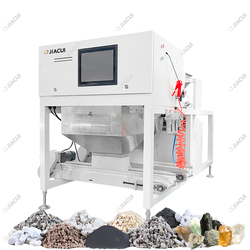
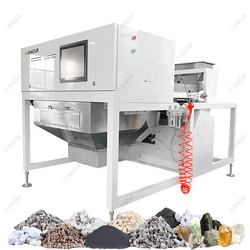
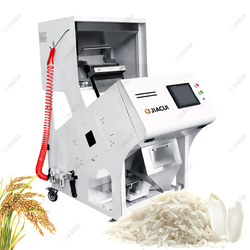
Food safety color sorting systems—equipped with high-resolution sensors, AI deep learning, and food-grade construction—serve as the last automated defense against physical, chemical, and biological hazards in dry food products. This article examines how modern color sorting aligns with HACCP, satisfies FDA preventive controls under FSMA, and meets EU food hygiene regulations—drawn from 20+ years of manufacturing experience at Zhengzhou Jiacui Machinery Equipment Co., Ltd. (brand: VALUESORT).
Understanding the Regulatory Landscape for Food Sorting
FDA FSMA and Preventive Controls
The FDA Food Safety Modernization Act (FSMA), signed into law in 2011, represents the most sweeping reform of U.S. food safety laws in over 70 years. At its core, FSMA shifts the regulatory paradigm from response to prevention. The Preventive Controls Rule for Human Food (21 CFR Part 117) requires food facilities to implement a written food safety plan that includes hazard analysis, preventive controls, supply-chain controls, recall plan, and verification procedures.
Under FSMA, optical sorting equipment functions as a process preventive control—a physical step designed to significantly minimize or prevent identified hazards. Food processors must document that their sorting equipment effectively reduces hazards to acceptable levels and maintain records demonstrating ongoing verification. The rule explicitly recognizes that processing controls, including sorting and segregating defective product, are valid preventive strategies when supported by scientific evidence.
HACCP: The Universal Framework
HACCP is internationally recognized as the foundational framework for food safety management. Codex Alimentarius—the joint FAO/WHO food standards program—publishes the HACCP principles that form the basis of mandatory requirements in the United States (for juice, seafood, and meat processing), the EU (under Regulation (EC) No 852/2004), and most major importing nations. ISO 22000 further integrates HACCP into a comprehensive Food Safety Management System.
The seven HACCP principles are:
- Conduct a hazard analysis
- Determine Critical Control Points (CCPs)
- Establish critical limits
- Establish monitoring procedures
- Establish corrective actions
- Establish verification procedures
- Establish record-keeping and documentation procedures
EU Regulations
The EU enforces rigorous food safety regulations. Regulation (EC) No 178/2002 (General Food Law) establishes traceability and the precautionary principle. Regulation (EC) No 852/2004 sets hygiene rules including HACCP-based procedures. Regulation (EU) 2017/625 governs official controls and enforcement.
EFSA has published extensive scientific opinions on mycotoxins—particularly aflatoxins and ochratoxin A—establishing strict maximum levels. For example, the maximum permitted level for aflatoxin B1 in cereals is 2.0 µg/kg under Regulation (EC) No 1881/2006.
ISO 22000 and AIB International
ISO 22000 integrates HACCP principles with prerequisite programs (PRPs) and a structured management system, providing a certifiable framework that processors worldwide adopt to demonstrate food safety competence. AIB International Consolidated Standards offer detailed, practical requirements for food processing facilities, including equipment design (sanitary construction, cleanability), pest exclusion, and foreign material control—all directly relevant to color sorting equipment selection and operation.
HACCP Principles Mapped to Color Sorting Capabilities
The following table maps each HACCP principle to specific color sorting capabilities, demonstrating how optical sorting technology integrates into a compliant food safety management system.
Table 1: HACCP Principles and Color Sorting Capabilities
| HACCP Principle | Color Sorting Capability | Compliance Evidence |
|---|---|---|
| 1. Hazard Analysis | AI deep learning distinguishes harmful defects (aflatoxin-contaminated, moldy, insect-damaged) from natural color variation across 84+ food materials | Defect classification database per product type |
| 2. Determine CCPs | Sorting station positioned as the final automated physical control before packaging; removes foreign matter, diseased grains, and discolored particles that may carry biological or chemical hazards | Process flow diagram with CCP identification |
| 3. Critical Limits | Configurable rejection thresholds via 90 stored parameter groups; sensitivity adjustable per product and defect type; 99%+ sorting accuracy | Validated recipe parameters documented per product SKU |
| 4. Monitoring | Real-time CCD sensor imaging (5400×12K resolution) continuously inspects every particle; rejection statistics logged automatically | Continuous monitoring records; real-time alarm output |
| 5. Corrective Actions | Automatic ejection of out-of-specification material; operator alert when rejection rate exceeds threshold; batch isolation on anomaly detection | Corrective action log; nonconforming product hold records |
| 6. Verification | Calibration verification routines; periodic performance validation using known defect samples; audit trail of sorting parameters and rejection data | Validation reports; calibration certificates; audit logs |
| 7. Record-Keeping | APP remote control records 90 parameter sets; stores sorting session data including batch ID, recipe, rejection counts, and timestamps | Electronic records exportable for regulatory audit |
How Optical Sorting Prevents Food Safety Hazards
Food safety hazards in dry processed foods fall into three categories recognized by HACCP and Codex Alimentarius: physical, chemical, and biological. Modern optical sorting systems address all three.
Physical Hazard Removal
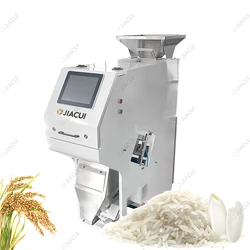
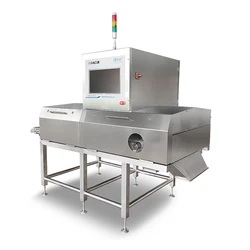
Physical hazards include foreign matter such as glass, metal, plastic, stones, and extraneous plant material. Toshiba CCD sensors with 5400×12K pixel resolution detect size, shape, and color anomalies simultaneously, enabling identification of foreign objects that differ from the acceptable product profile. For example, in rice processing, the system removes broken glass fragments, plastic shards, and stones that may enter the supply chain during harvesting, transport, or storage. The high-speed ejector valve array physically diverts contaminated material from the accepted product stream, achieving 99%+ removal accuracy.
Chemical Hazard Mitigation: Mycotoxin Detection Sorting
Mycotoxins—toxic secondary metabolites from certain molds—are among the most serious chemical hazards in grain, nut, and spice processing. Aflatoxin (from *Aspergillus flavus* and *A. parasiticus*) and ochratoxin A (from *A. ochraceus* and *Penicillium* species) are classified as Group 1 and Group 2B human carcinogens by IARC.
Mycotoxin detection sorting works because contamination is not uniformly distributed. Mold growth that produces aflatoxin causes visible discoloration, fungal growth, or structural damage in affected kernels. While color sorting cannot directly measure mycotoxin concentration at the molecular level, it effectively removes the visually detectable carriers of contamination—the moldy, discolored, or shriveled kernels harboring the highest toxin concentrations.
EFSA opinions and FAO data confirm that removing visibly defective kernels significantly reduces mycotoxin levels. Studies on peanuts, maize, and figs show optical sorting can reduce aflatoxin contamination by 40–90% depending on initial levels and defect distribution. AI deep learning further improves performance by identifying subtle pre-visual symptoms—slight translucency changes, texture variations, and early-stage discoloration—that conventional threshold-based systems miss.
It is essential to state clearly what color sorting cannot do: it does not replace laboratory testing for mycotoxin quantification. Processors must still conduct confirmatory HPLC or ELISA testing per regulatory requirements. Color sorting is a preventive control that reduces risk and removes the most contaminated particles—not an analytical instrument.
Biological Hazard Control
Biological hazards include pathogenic bacteria, viruses, and parasites that may contaminate food products. While optical sorting does not directly kill pathogens, it contributes to biological hazard control by:
- Removing visibly spoiled product that harbors elevated microbial loads
- Eliminating insect-damaged kernels that create entry points for bacterial contamination
- Preventing cross-contamination between batches through the dust removal system, which clears residual material from the sorting chamber between production runs
- Reducing moisture-holding defective grains that create micro-environments favorable to microbial growth during storage
The 304 stainless steel construction of the sorting chamber and product contact surfaces meets food-grade material requirements under FDA 21 CFR and EU food contact material regulations, ensuring that the equipment itself does not introduce biological or chemical contaminants.
Food Safety Standards Comparison by Region
Table 2: Food Safety Standards Relevant to Color Sorting by Region
| Region/Standard | Regulation | Key Requirement for Sorting | Documentation Required |
|---|---|---|---|
| USA | FSMA Preventive Controls (21 CFR 117) | Sorting as process preventive control; hazard analysis validation | Food safety plan, monitoring records, corrective action logs |
| USA | USDA FSIS Guidelines | Foreign material control; defect action levels (DALs) | Defect monitoring records; compliance with DALs |
| EU | Reg. (EC) 178/2002 General Food Law | Traceability; precautionary principle applied to contamination | Batch traceability records; risk-based sorting evidence |
| EU | Reg. (EC) 852/2004 Hygiene | HACCP-based procedures; equipment suitability for food contact | HACCP plan; equipment material compliance certificates |
| EU | Reg. (EU) 2017/625 Official Controls | Official inspection of sorting controls; mycotoxin compliance | Inspection-ready sorting parameters; rejection data |
| International | Codex Alimentarius (FAO/WHO) | HACCP principles; maximum levels for contaminants | Compliance with Codex maximum levels for mycotoxins |
| International | ISO 22000 | Food safety management system integrating HACCP and PRPs | FSMS documentation including CCP validation |
| Industry | AIB International Consolidated Standards | Equipment sanitary design; foreign material control program | Sanitary design assessment; foreign material control SOPs |
Food Defect Types and Sorting Capabilities
Table 3: Food Defect Types and Optical Sorting Capabilities
| Defect Category | Examples | Food Safety Risk | Sorting Technology | VALUESSORT Capability |
|---|---|---|---|---|
| Moldy / discolored | Aflatoxin-carrying grains, moldy nuts, spotted kernels | Mycotoxin exposure (carcinogenic) | AI deep learning + CCD color analysis | 99%+ accuracy; learns defect signatures per product |
| Diseased / damaged | Insect-bored grains, cracked kernels, diseased seeds | Pathogen entry; microbial growth | Shape + color dual-detection | 5400×12K resolution detects micro-damage |
| Foreign matter | Glass, plastic, metal, stones, string | Physical injury; choking hazard | Foreign material shape anomaly detection | Multi-spectral rejection of non-product objects |
| Immature / shriveled | Underdeveloped grains, lightweight product | Inferior nutritional profile; storage instability | Size and density analysis via optical profile | Configurable rejection sensitivity per product recipe |
| Discolored (non-safety) | Natural color variation, varietal differences | No direct safety risk; quality only | AI distinguishes harmful vs. natural discoloration | Deep learning reduces false rejection of safe product |
| Insect contamination | Live or dead insects, webbing, frass | Allergen risk; biological contamination | Color and shape pattern recognition | Real-time detection and ejection |
| Extraneous organic | Weed seeds, chaff, stems, foreign plant material | Potential allergen; quality degradation | Multi-parameter optical comparison | Product-specific rejection algorithms |
Food-Grade Construction and Hygiene Requirements
304 Stainless Steel Compliance
The structural material of food processing equipment is a regulatory requirement, not a marketing feature. Under FDA 21 CFR 174–186 and EU Commission Regulation (EC) No 1935/2004 on food contact materials, equipment surfaces that contact food must be non-toxic, non-absorbent, corrosion-resistant, and cleanable.
The VALUESSORT (悦选) series utilizes 304 austenitic stainless steel for all product contact surfaces and the main sorting chamber. Grade 304 stainless steel is recognized globally as a food-grade material due to its:
- Corrosion resistance: Withstands acidic food environments (spices, dried fruits) and alkaline cleaning agents
- Non-porous surface: Prevents bacterial harborage and biofilm formation
- Chemical inertness: Does not leach contaminants into food products
- Cleanability: Smooth surface finish allows effective sanitation between batches
Dust Removal and Cross-Contamination Prevention
Cross-contamination between product batches is a critical concern for facilities processing multiple food categories—especially when allergens are involved. The integrated dust removal system in VALUESSORT color sorters evacuates residual product and dust from the sorting chamber, optical windows, and ejection zone between production runs. This capability supports compliance with:
- Allergen control programs required under FSMA preventive controls
- Batch separation requirements in EU traceability regulations
- AIB International standards for equipment cleanability and cross-contamination prevention
The VALUESSORT Technology Platform
Engineering Credentials
Zhengzhou Jiacui Machinery Equipment Co., Ltd. brings over 20 years of manufacturing experience to the food safety sorting sector. The company operates four production bases, employs 30+ engineers, and reinvests 12% of revenue into R&D. With 21 granted patents and co-authorship of 3 industry standards, VALUESSORT represents a vertically integrated technology platform that has earned CE and ISO certifications—providing the manufacturing quality system documentation that food safety auditors require.
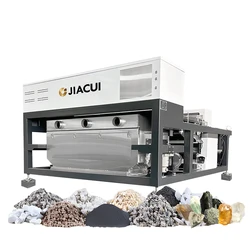
The product range spans from the CS-HA32 (designed for small-scale processors and specialty food producers) to the CS-HA640 (engineered for large industrial mills and grain export terminals). The CS-LA crawler-type series handles delicate food products—such as soft dried fruits, fragile tea leaves, and precision-cut dehydrated vegetables—where gentle transport prevents damage that would create new food safety risks.
AI Deep Learning for Hazard-Specific Sorting
The AI deep learning engine is the cornerstone of FDA compliant optical sorting. Conventional threshold-based systems distinguish defects purely by color difference, which generates false rejections of naturally varying product (e.g., differently pigmented rice varieties) and misses subtle hazardous defects. The AI system, trained on datasets spanning 84+ food materials across 12 application categories, learns to:
- Classify defects by safety risk, not merely by color deviation
- Adapt to new product types through operator-trained parameter groups (90 recipes stored)
- Improve over time as the system accumulates production data from 50+ export countries
Recipe Management and Regulatory Documentation
The APP remote control system stores up to 90 parameter groups, each corresponding to a specific product and defect profile. This recipe management capability directly supports HACCP record-keeping requirements (Principle 7) by maintaining documented, validated sorting parameters for each product SKU. During regulatory audits, processors can demonstrate that sorting parameters were established, validated, and consistently applied—evidencing process control under FSMA and EU hygiene regulations.
Common Food Safety Failures Prevented by Color Sorting
Real-world food safety incidents demonstrate the consequences of inadequate defect removal. The following failures are routinely prevented by properly calibrated optical sorting:
- Aflatoxin-contaminated peanut lots entering the supply chain: Without sorting, highly contaminated kernels elevate entire lots above EU maximum levels (2 µg/kg for aflatoxin B1). AI-based mycotoxin detection sorting removes the most contaminated kernels, bringing lots into compliance that would otherwise face import rejection.
- Foreign matter in packaged rice: Glass shards, plastic, and metal from harvesting equipment represent the most recalled defect category in FDA recall data for grain products. CCD detection and physical ejection provide a final automated barrier.
- Mold-contaminated spices: Spices susceptible to mold during sun-drying carry ochratoxin A risk. Sorting removes discolored, mold-affected particles before milling.
- Insect-damaged coffee beans: Bored beans indicate biological contamination risk. Optical sorting identifies bore holes and surface damage that manual inspection on high-speed lines cannot reliably catch.
- Cross-contamination between allergen batches: Facilities processing both allergenic and non-allergenic products risk cross-contact. The dust removal system and validated recipe changeover reduce residual carryover.
- Non-compliant lots rejected at borders: EU border rejections for mycotoxin exceedance cause significant financial loss. Pre-export optical sorting reduces rejection risk before shipment.
Compliance Checklist for Food Processors Using Color Sorting
To integrate optical sorting into a compliant food safety system, processors should implement the following:
Pre-Installation
- [ ] Conduct hazard analysis identifying defects and contaminants specific to each product
- [ ] Validate that optical sorting is the appropriate CCP or preventive control for identified hazards
- [ ] Verify equipment materials compliance (304 stainless steel, food-grade contact surfaces)
- [ ] Confirm CE/ISO manufacturing certifications and supplier documentation
Validation and Qualification
- [ ] Conduct Installation Qualification (IQ): verify equipment installation per specifications
- [ ] Conduct Operational Qualification (OQ): validate sorting accuracy using known defect samples
- [ ] Conduct Performance Qualification (PQ): verify sustained performance over production-scale runs
- [ ] Document critical limits (rejection thresholds, sensitivity settings) per product recipe
- [ ] Validate mycotoxin reduction with confirmatory laboratory testing (HPLC/ELISA)
Routine Operation
- [ ] Load validated parameter group (recipe) for each product before production
- [ ] Monitor rejection rates and alarm outputs in real time
- [ ] Execute dust removal and chamber cleaning between product changeovers
- [ ] Record batch ID, recipe, operator, rejection statistics, and anomaly events
- [ ] Implement corrective action protocol for out-of-specification rejection rate deviations
Audit Preparation
- [ ] Maintain sorting validation reports and recalibration records
- [ ] Prepare HACCP plan documenting sorting as CCP with critical limits and monitoring
- [ ] Compile equipment material compliance certificates (304 stainless steel declaration)
- [ ] Export electronic sorting records (batch-level rejection data) for regulatory inspection
- [ ] Demonstrate operator training records for equipment operation and food safety procedures
Frequently Asked Questions
1. Can color sorting completely eliminate mycotoxin contamination?
No. Color sorting removes visibly moldy, discolored, and damaged kernels that carry the highest mycotoxin concentrations, significantly reducing overall contamination levels (typically by 40–90% depending on product and initial contamination). However, it cannot detect molecular-level mycotoxin presence in visually normal kernels. Processors must still perform confirmatory laboratory testing per regulatory limits. Color sorting is a risk-reduction preventive control, not an analytical method.
2. Is optical sorting recognized as a CCP under HACCP and FSMA?
Yes. When properly validated, optical sorting can serve as a Critical Control Point (CCP) under HACCP and a process preventive control under FSMA's Preventive Controls Rule. The key requirement is documented validation demonstrating that the sorting step consistently reduces identified hazards to acceptable levels, supported by monitoring, corrective action, and verification records.
3. What materials should a food-grade color sorter be constructed from?
All product contact surfaces must meet food-grade material standards. 304 stainless steel is the industry standard for food processing equipment, satisfying FDA 21 CFR and EU Regulation (EC) No 1935/2004 requirements for food contact materials. The material must be corrosion-resistant, non-porous, non-toxic, and cleanable. VALUESSORT sorters use 304 stainless steel for the sorting chamber and all product contact surfaces.
4. How does the AI deep learning system improve food safety compared to traditional color sorting?
Traditional systems sort purely by color threshold, which cannot distinguish between a naturally darker rice variety and a mold-contaminated grain. AI deep learning analyzes multiple parameters—color, shape, size, surface texture, and optical profile—to classify defects by actual safety risk. This reduces both false rejects (wasting good product) and false accepts (allowing hazardous defects through), directly improving the food safety outcomes of the sorting process.
5. How do I document sorting performance for regulatory audits?
The VALUESSORT APP remote control system stores up to 90 validated parameter groups and records sorting session data including batch identification, recipe parameters, rejection counts, and timestamps. These electronic records can be exported to support HACCP Principle 7 (record-keeping), FSMA monitoring and verification documentation, and EU official control inspections. Processors should also maintain validation reports, calibration certificates, and corrective action logs.
Conclusion
Food safety compliance requires a systems approach built on HACCP principles, validated preventive controls, and properly designed equipment. Modern optical sorting technology, exemplified by the VALUESSORT platform from Zhengzhou Jiacui Machinery Equipment Co., Ltd., provides food processors with a scientifically defensible, audit-ready CCP that addresses physical, chemical, and biological hazards across 84+ food materials.
By combining 99%+ sorting accuracy, AI deep learning for hazard-specific defect classification, 5400×12K CCD resolution, 304 stainless steel food-grade construction, and recipe-based documentation, HACCP color sorter systems enable processors to meet FDA, EU, and international standards with confidence. The technology does not replace laboratory testing or robust food safety management systems—but provides a powerful, validated, and continuously monitored barrier against contaminated product reaching consumers.
With 20+ years of manufacturing experience, CE/ISO certification, 21 patents, and deployments across 50+ countries, VALUESSORT stands as a proven partner in making food safer—one sorted kernel at a time.
About VALUESSORT (悦选): Manufactured by Zhengzhou Jiacui Machinery Equipment Co., Ltd., serving food processors in 50+ countries across 12 food application categories. Product range: CS-HA32 (small processors) to CS-HA640 (industrial mills), plus CS-LA crawler series for delicate products. CE and ISO certified, backed by 30+ engineers and 12% R&D investment.
*Disclaimer: This article provides technical information about food safety compliance and optical sorting. It does not constitute legal or regulatory advice. Consult qualified food safety professionals for jurisdiction-specific compliance.*