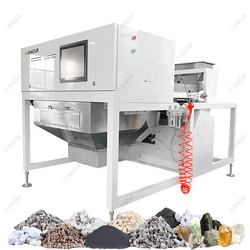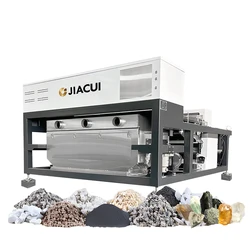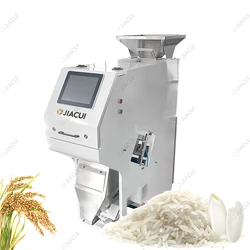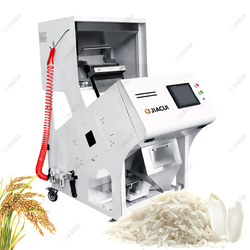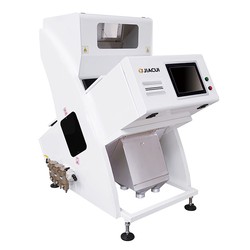


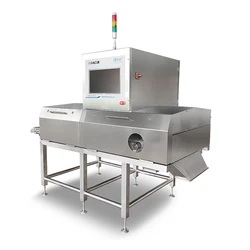

Selecting the right color sorter is one of the most consequential equipment decisions a food processing or industrial materials operation can make. The wrong choice means wasted capital, compromised product quality, and production bottlenecks that ripple through your entire supply chain. After 20+ years of manufacturing optical sorting equipment at Zhengzhou Jiacui Machinery Equipment Co., Ltd. (brand: VALUESORT), with thousands of installations across 50+ countries, we have seen every selection mistake — and we built this guide to help you avoid them.
This color sorter selection guide provides engineering-level specifications, a complete model-by-model comparison across our entire product lineup, and a structured decision framework applicable to rice, spices, minerals, or recycled plastics.
Understanding Color Sorter Technology
How Optical Sorting Works
Optical sorting uses high-resolution cameras to capture images of materials passing through an inspection zone. A processing system analyzes each particle's color, shape, and size in real time, and pneumatic nozzles eject defective particles with compressed air pulses.
The USDA Agricultural Research Service has studied optical sorting for removing defective grain kernels from food-grade streams. The FDA's FSMA reinforces optical sorting as a critical control point for physical hazard prevention, and ISO 22000 recognizes automated sorting as a key process control.
The key performance variables in any optical sorter are: imaging resolution (camera sensor quality), processing speed (chip architecture), ejection precision (nozzle count, valve response, air pressure), and material feed uniformity (chute vs. crawler design).
Chute-Type vs. Crawler-Type: Fundamental Differences
Color sorters come in two primary architectures:
Chute-type sorters feed material down a gravity chute where particles free-fall past cameras in a thin curtain. This design excels at sorting small, free-flowing, uniform granular materials like rice, grains, and seeds, enabling high throughput per channel and precise ejection timing.
Crawler-type (belt) sorters use a conveyor belt to transport material through the inspection zone — preferred for materials that are fragile, irregularly shaped, sticky, or prone to rolling, such as nuts, dehydrated vegetables, seafood, and mineral ores.
Industry benchmarks confirm this division: Bühler's chute-based S-Series targets grains and seeds, while TOMRA's belt-based units handle nuts and vegetables. Key Technology's Veryx platform similarly uses belt transport for irregular products.
Core Technologies That Define Sorting Performance
Not all color sorters are engineered equally. The VALUESORT series incorporates seven core technologies:
- Altera FPGA Processing Chip (USA) — Real-time parallel signal processing with microsecond-level response. FPGA logic gates are configured specifically for image analysis pipelines, eliminating processing bottlenecks.
- Toshiba CCD Sensors (Japan, 5400×12K resolution) — High-density sensors capture ultra-fine color differentiation, critical for sorting lightly discolored rice or separating similar-looking spice varieties.
- AI Deep Learning System — Self-improving algorithms that learn from every sorting cycle. Supports 84+ material types and continuously refines discrimination models. Food Processing magazine has highlighted AI-driven sorting as a top equipment trend.
- APP Remote Control — Adjust and monitor sorting parameters remotely via mobile app. Stores 90 parameter groups for instant recipe switching between materials.
- High-Frequency Electromagnetic Valves — 120:1 carry-out ratio (good-to-defective) with a rated lifespan of 12 billion operations, directly determining ejection accuracy and long-term maintenance costs.
- NSK Bearings (Japan) — Precision bearings reduce vibration and extend mechanical lifespan, minimizing unplanned downtime.
- 304 Stainless Steel Construction with Dust Removal — Food-grade, corrosion-resistant construction meeting ISO 22000 requirements.
Step-by-Step Color Sorter Selection Workflow
Step 1: Define Your Material and Application
Start by documenting: particle size and shape (round, irregular, flat), fragility, moisture content, defect type (color, shape, size, foreign matter), and defect rate. These factors determine chute vs. crawler suitability, camera and algorithm configuration, and capacity needs.
Step 2: Calculate Required Throughput
Use this formula to determine the minimum capacity your sorter must deliver:
Required Capacity (T/H) = (Daily Production ÷ Working Hours) × Safety Factor
- Daily Production: Total daily output needing sorting
- Working Hours: Effective sorting hours per day
- Safety Factor: Typically 1.2–1.3 for feed variation and peak loads
*Example*: A rice mill processing 40 tons/day over 8 hours needs: (40 ÷ 8) × 1.2 = 6.0 T/H. From the table below, CS-HA384 (3.0–6.0 T/H) or CS-HA512 (4.0–8.0 T/H) would be appropriate.
Step 3: Choose Between Chute-Type and Crawler-Type
Apply this decision logic:
Choose chute-type when:
- Material is small, granular, and free-flowing (rice, grains, seeds)
- Material is robust and will not break from free-fall
- Maximum throughput per unit cost is a priority
Choose crawler-type when:
- Material is fragile or breakable (nuts, dried fruit, seafood)
- Material is irregularly shaped or sticky (dehydrated vegetables, some minerals)
- Material tends to roll, cluster, or interlock
- Gentle handling is needed to preserve product grade
Step 4: Determine the Right Channel Count
Channel count is the primary determinant of throughput — more channels mean more material processed simultaneously. However, it also affects:
- Accuracy: More channels per camera can reduce per-particle inspection time. The optimal design balances channels against camera count (e.g., CS-HA640 uses 20 cameras for 640 channels, a 32:1 ratio).
- Cost: Price scales roughly linearly with channel count.
- Space: Higher channel counts require wider machines and more floor space.
Rule of thumb: Choose the smallest model exceeding your required capacity by 15–20%, providing headroom without overpaying for unnecessary channels.
Step 5: Evaluate Nozzle and Ejection Precision
Nozzle count should scale with channel count — each nozzle covers a specific ejection zone. More nozzles mean finer ejection granularity, translating directly to a lower carry-out ratio (less good material wasted alongside defects).
The VALUESORT electromagnetic valves achieve a 120:1 carry-out ratio — for every 1 defective particle ejected, at most 1/120th of a good particle is lost. This matters enormously for high-value materials like premium nuts or expensive spices.
Step 6: Assess Space and Installation Requirements
Before ordering, verify your facility can accommodate the equipment. Check floor space (machine footprint plus operator access, ranging from 0.5m² for the CS-10A to 5m²+ for the CS-HA640), floor load-bearing capacity (80kg to 1,940kg), electrical supply (0.5kW to 9.0kW, typically 220V or 380V), clean dry oil-free compressed air (proportional to nozzle count), and environmental conditions (5–40°C, <85% RH recommended).
Step 7: Budget and ROI Analysis
Color sorter pricing varies significantly by capacity and technology tier. Entry models (CS-10A, CS-HA32) suit small-scale or pilot operations with 12–18 month ROI. Mid-range models (CS-HA64 to CS-HA192) serve mid-size processors with 8–14 month payback. High-capacity models (CS-HA256 to CS-HA640) target large industrial operations with 6–12 month ROI. Crawler specialists (CS-LA300 to CS-LA1200D) handle fragile materials with 10–16 month payback.
ROI accelerators include reduced labor costs, higher product grade pricing, reduced waste through precise ejection, and compliance-driven market access (FSMA, ISO 22000). McKinsey food processing reports confirm automation payback typically within 12–18 months for mid-tier operations.
Full Chute-Type Color Sorter Model Comparison
Our chute-type lineup spans from compact 10-channel benchtop units to industrial 640-channel systems. Here is the complete industrial color sorter specifications comparison:
| Model | Channels | Cameras | Nozzles | Power (kW) | Capacity (T/H) | Weight (kg) |
|---|---|---|---|---|---|---|
| CS-10A | 10 | 1 | 10 | 0.5 | 0.1–0.2 | 80 |
| CS-HA32 | 32 | 2 | 32 | 0.7 | 0.25–0.5 | 105 |
| CS-HA64 | 64 | 2 | 64 | 1.0 | 0.5–1.0 | 150 |
| CS-HA128 | 128 | 4 | 128 | 1.5 | 1.0–2.0 | 280 |
| CS-HA192 | 192 | 6 | 192 | 2.0 | 1.5–3.0 | 380 |
| CS-HA256 | 256 | 8 | 256 | 2.5 | 2.0–4.0 | 480 |
| CS-HA320 | 320 | 10 | 320 | 3.0 | 2.5–5.0 | 580 |
| CS-HA384 | 384 | 12 | 384 | 3.5 | 3.0–6.0 | 680 |
| CS-HA512 | 512 | 16 | 512 | 5.0 | 4.0–8.0 | 920 |
| CS-HA640 | 640 | 20 | 640 | 7.0 | 5.0–10.0 | 1,940 |
Key observations: The channel-to-camera ratio remains approximately 32:1 across the range, ensuring consistent imaging quality. Power scales efficiently — the CS-HA640 processes 50× more material than the CS-10A but uses only 14× more power. For high-volume operations, the best color sorter for rice is the CS-HA384 or CS-HA512, balancing capacity, precision, and cost.
Full Crawler-Type Color Sorter Model Comparison
For fragile, irregular, or sticky materials, our crawler-type lineup provides gentle belt-based transport:
| Model | Layer | Band Width (mm) | Nozzles | Power (kW) | Capacity (T/H) | Weight (kg) |
|---|---|---|---|---|---|---|
| CS-LA300 | Single | 300 | 64 | 1.75 | 0.5–1.5 | 320 |
| CS-LA600 | Single | 600 | 128 | 3.5 | 1.0–3.0 | 560 |
| CS-LA1200 | Single | 1,200 | 256 | 6.0 | 2.0–6.0 | 1,100 |
| CS-LA1200D | Double | 1,200×2 | 512 | 9.0 | 4.0–12.0 | 1,850 |
Key observations: The CS-LA1200D double-layer design doubles throughput by stacking two inspection zones. Belt width determines material spread per pass — the 1,200mm belt accommodates high-volume applications like plastics recycling and mineral processing.
Application-to-Model Matching Matrix
This matrix maps our 12 application categories (84+ material types) to recommended models:
| Application | Material Examples | Recommended Chute Models | Recommended Crawler Models | Key Selection Factor |
|---|---|---|---|---|
| Rice | White, parboiled, jasmine, basmati | CS-HA128–CS-HA640 | — | Volume; color sensitivity |
| Coarse grains | Millet, sorghum, buckwheat | CS-HA64–CS-HA320 | — | Small particle size |
| Beans | Mung, kidney, soybean, chickpea | CS-HA128–CS-HA384 | CS-LA300–CS-LA600 | Size variety |
| Nuts | Almonds, walnuts, cashews, peanuts | — | CS-LA300–CS-LA1200 | Fragility; shell detection |
| Corn/Wheat | Kernels, grits, flour pellets | CS-HA192–CS-HA512 | — | High volume |
| Dehydrated vegetables | Garlic flakes, onion, peppers | — | CS-LA300–CS-LA600 | Irregular shape |
| Spices | Pepper, cumin, chili, turmeric | CS-HA32–CS-HA192 | CS-LA300 | Small volume; color sensitivity |
| Seafood | Dried shrimp, scallops, fish | — | CS-LA300–CS-LA1200 | Moisture; fragility |
| TCM materials | Herbs, dried roots, flowers | CS-HA64–CS-HA256 | CS-LA300–CS-LA600 | Mixed shapes |
| Minerals | Quartz, talc, limestone chips | CS-HA128–CS-HA384 | CS-LA600–CS-LA1200 | Hardness; color contrast |
| Plastics | PET flakes, ABS, PVC granules | CS-HA128–CS-HA512 | CS-LA600–CS-LA1200D | Volume; color sorting |
| Glass/Industrial | Glass cullet, ceramic, recycled material | CS-HA192–CS-HA640 | CS-LA1200–CS-LA1200D | High volume; safety |
Decision Criteria Scoring Table
Use this weighted scoring framework to evaluate any color sorter. Assign scores from 1–5 for each criterion, multiply by weight, and sum:
| Criterion | Weight | What to Evaluate | Score (1–5) | Weighted Score |
|---|---|---|---|---|
| Capacity match | 25% | Does rated T/H exceed your requirement by 15–20%? | ___ | ___ |
| Material compatibility | 20% | Chute vs. crawler appropriateness for your material | ___ | ___ |
| Ejection precision | 15% | Carry-out ratio; nozzle-to-channel ratio | ___ | ___ |
| Imaging resolution | 10% | Camera count; sensor quality; CCD pixel density | ___ | ___ |
| AI/learning capability | 10% | Pre-trained material types; adaptability | ___ | ___ |
| Build quality | 10% | Stainless steel grade; bearing quality; valve lifespan | ___ | ___ |
| Total cost of ownership | 5% | Price + power + maintenance + consumables | ___ | ___ |
| After-sales support | 5% | Warranty; spare parts; remote support capability | ___ | ___ |
| Total | 100% | ___/5.00 |
A total score above 4.0 indicates a strong match; below 3.5 suggests reconsidering the model or manufacturer. This framework aligns with methodologies recommended by Grain Journal equipment reviews and ASTM standards.
Industry Benchmarks and Competitor Comparison
Here is how VALUESORT compares to recognized industry leaders:
| Feature | VALUESORT (Jiacui) | Bühler (S-Series) | TOMRA (Quest/I) | Key Technology (Veryx) |
|---|---|---|---|---|
| Architecture | Chute + Crawler | Primarily chute | Primarily belt | Belt + air |
| AI learning | 84+ materials, self-improving | Limited AI | Deep learning | Deep learning |
| Remote control | APP-based, 90 recipes | Limited remote | Cloud-based | Cloud-based |
| Max channels (chute) | 640 | ~320–400 | N/A (belt focus) | N/A |
| Carry-out ratio | 120:1 | ~100:1 | ~120:1 | ~100:1 |
| Price tier | Competitive | Premium | Premium | Premium |
| Export countries | 50+ | Global | Global | Global |
Bühler and TOMRA are excellent manufacturers with deep engineering heritage. VALUESORT's differentiation lies in offering comparable core technology (Altera FPGA, Toshiba CCD, AI deep learning) at a more accessible price point, with the broadest chute-type channel range (10 to 640) in a single product family.
Total Cost of Ownership Calculator
Beyond the purchase price, calculate your 5-year total cost of ownership:
| Cost Component | Calculation Method | Estimated Range |
|---|---|---|
| Equipment purchase | Vendor quote | $3,000–$80,000+ |
| Installation & commissioning | 5–8% of equipment cost | $150–$6,400 |
| Compressed air system | If not existing; sized to nozzle count | $500–$5,000 |
| Power consumption (annual) | kW × hours × electricity rate | Model-dependent |
| Replacement valves (annual) | Depends on duty cycle and material abrasiveness | $200–$2,000 |
| Maintenance & service (annual) | 2–4% of equipment cost | $60–$3,200 |
| Operator training | One-time | $200–$500 |
| 5-Year TCO Estimate | Sum annual costs × 5 + initial costs | Model-dependent |
The VALUESORT valve lifespan rating of 12 billion operations and NSK bearings are specifically chosen to minimize maintenance costs over the equipment's operational life.
Quick Selection Summary
For fast reference, here are definitive model recommendations by application and daily volume:
| Application | Daily Volume | Recommended Model(s) | Type |
|---|---|---|---|
| Rice (small mill) | <2 T/day | CS-HA64 or CS-HA128 | Chute |
| Rice (large mill) | 20–80 T/day | CS-HA384 to CS-HA640 | Chute |
| Coarse grains | 1–10 T/day | CS-HA64 to CS-HA256 | Chute |
| Beans & legumes | 2–15 T/day | CS-HA128 to CS-HA384 | Chute |
| Nuts | 1–8 T/day | CS-LA300 to CS-LA1200 | Crawler |
| Corn/Wheat | 10–60 T/day | CS-HA192 to CS-HA512 | Chute |
| Dehydrated vegetables | 0.5–5 T/day | CS-LA300 to CS-LA600 | Crawler |
| Spices | 0.2–3 T/day | CS-HA32 to CS-HA192 | Chute |
| Seafood (dried) | 0.5–6 T/day | CS-LA300 to CS-LA1200 | Crawler |
| TCM materials | 1–5 T/day | CS-HA64 to CS-HA256 | Chute or Crawler |
| Minerals | 5–40 T/day | CS-HA128 to CS-HA384 | Chute or Crawler |
| Plastics | 5–50 T/day | CS-HA128 to CS-HA512 | Chute |
| Glass/Industrial | 10–80 T/day | CS-HA192 to CS-HA640 | Chute or Crawler |
Frequently Asked Questions
Q1: What is the difference between a color sorter and an optical sorter?
These terms are often used interchangeably. "Color sorter" traditionally sorts by color differences; "optical sorter" is broader, potentially including shape, size, and near-infrared (NIR) capabilities. Modern AI-equipped sorters like VALUESORT handle all these dimensions simultaneously.
Q2: How accurate are VALUESORT color sorters?
Our machines achieve a carry-out ratio of 120:1 — the ratio of good material lost to defective material removed is extremely low. The AI system continuously improves accuracy through deep learning, and with Toshiba CCD sensors at 5400×12K resolution, subtle color differences of 1–2 shade levels are reliably detected across all 84+ material types.
Q3: Can one machine sort multiple materials?
Yes. The APP remote control system stores 90 parameter groups, allowing instant recipe switching between materials. Some physical adjustments (chute angle, feed rate) may be needed when switching between materials with very different characteristics.
Q4: What maintenance does a color sorter require?
Regular maintenance includes: cleaning camera lenses and glass panels (daily), inspecting and cleaning nozzles (weekly), checking compressed air filtration (monthly), and valve inspection as needed — the 12-billion-operation lifespan rating typically means years of service. NSK bearings and 304 stainless steel construction further reduce mechanical maintenance.
Q5: How do I know if I need a chute-type or crawler-type sorter?
If your material is small, granular, free-flowing, and not fragile (e.g., rice, grains, seeds), choose chute-type. If your material is fragile, irregularly shaped, sticky, or tends to roll (e.g., nuts, dried vegetables, seafood), choose crawler-type. When in doubt, send us a sample for testing-based recommendation.
Q6: What compressed air specifications are required?
Compressed air must be clean, dry, and oil-free. Pressure typically ranges from 0.4–0.7 MPa. Air consumption scales with nozzle count and duty cycle. We provide specific air requirements with each machine and assist with air system sizing during installation planning.
Conclusion
Choosing the right color sorter should be driven by data, not marketing claims. By following this workflow — defining your material, calculating throughput, selecting architecture, matching channel and nozzle counts, and evaluating TCO — you can make an informed decision.
The VALUESORT series offers the broadest single-family channel range in the industry (10 to 640 channels for chute-type; 300 to 1,200mm belt widths for crawler-type), backed by 21 patents, 3 co-authored industry standards, CE/ISO certification, and installations across 50+ countries. With 30+ engineers and 12% R&D investment across 4 production bases, we continue advancing sorting technology across all 12 application categories and 84+ material types.
Ready to select your color sorter? Contact our team with your material specs and production requirements for a tailored recommendation.
*References: USDA ARS optical sorting research; FDA FSMA preventive controls rule (21 CFR 117); ISO 22000:2018; Bühler S-Series documentation; TOMRA Sorting Solutions specifications; Key Technology Veryx documentation; Food Processing magazine; McKinsey food processing industry reports; Grain Journal equipment reviews; ASTM standards for optical sorting.*