


The food processing industry loses billions annually to defective products, foreign material contamination, and substandard quality that reaches consumers or is discarded at great cost. For decades, the industry relied on human inspectors manually removing discolored grains and foreign objects—a slow, inconsistent approach limited by human fatigue. Early optical sorters in the 1990s used photoelectric sensors and threshold-based algorithms, but could only compare pixel brightness against fixed reference values. They could not understand what they were seeing.
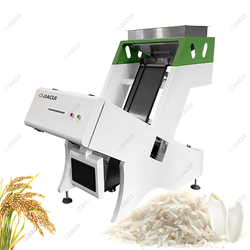
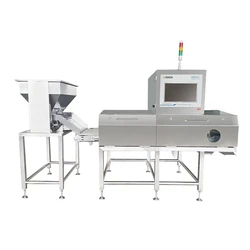
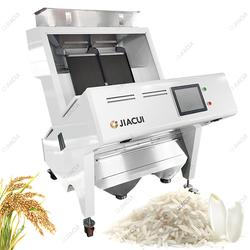
Today, AI deep learning has transformed this landscape. Modern intelligent sorting systems powered by convolutional neural networks (CNNs) can distinguish a slightly bruised cashew from an acceptable one with naturally varying color, identify mold colonies invisible to the human eye, and separate recyclable plastic pellets by polymer type at throughputs exceeding 12 tons per hour. JIACUI, with 20+ years of engineering experience and 21 national patents, has integrated deep learning into its VALUESORT (悦选) series—an AI color sorter platform achieving 99%+ sorting accuracy across 84+ material types and setting a new benchmark for AI-powered optical sorting in industrial applications.
From Rule-Based Algorithms to Deep Learning: A Paradigm Shift
Limitations of Traditional Threshold-Based Sorting
Conventional color sorters operate on a simple principle: product particles pass under a line-scan camera, pixel data is converted to RGB values, and a threshold comparator flags any pixel deviating beyond a user-defined tolerance band. This works for high-contrast tasks—black stones from white rice—but fails with the visual complexity of real agricultural products. A japonica rice grain legitimately ranges from translucent white to creamy yellow depending on cultivar, harvest timing, and milling degree. A threshold tight enough to catch lightly yellowed diseased grains also rejects acceptable product, inflating the carry-out ratio. Conversely, a loose threshold allows defective product to pass.
Key Technology documented this limitation through object-based image processing research, revealing that pixel-threshold methods cannot reliably extract shape, length, width, curvature, symmetry, or circularity—dimensions essential for distinguishing a cracked grain (defect) from a naturally short grain (acceptable) [1].
How Deep Learning Transforms Defect Detection
Deep learning replaces fixed comparison rules with learned feature representations. A neural network trained on thousands of labeled images extracts hierarchical features no engineer could manually program as thresholds:
- Layers 1-2: Detect edges, gradients, and raw color transitions at pixel level
- Layers 3-4: Compose these into texture patterns, spots, and localized discoloration
- Layers 5-6: Recognize concepts such as "mold colony," "insect damage," or "immature kernel"
TAIHO demonstrated that deep learning models built on massive sample databases can quickly construct and iterate sorting models challenging complex foreign objects traditional algorithms cannot cope with, achieving multi-dimensional sorting across color, shape, and texture simultaneously [2]. Instead of asking "does this pixel exceed a threshold," the network asks "does this object match the statistical distribution of known defect classes."
Training Neural Networks on Defect Image Databases
The training pipeline for production sorting follows supervised learning:
- Data Collection: Thousands of images per product type are captured under controlled illumination using the same CCD sensors deployed in production. Both acceptable and defective samples are imaged, with defects categorized by type.
- Annotation: Quality control experts label each image, creating ground-truth classifications. JIACUI's system automatically records good and defective product information during operation, continuously expanding the dataset with real-world data [3].
- Model Training: A CNN architecture—typically a modified ResNet or EfficientNet variant optimized for inference speed—is trained using backpropagation to minimize cross-entropy loss.
- Deployment: The trained model is validated on a held-out test set; once accuracy reaches 99%+, model weights are compiled and deployed to FPGA-based edge computing hardware.
The system improves with use: every batch generates new labeled training data, and periodic retraining captures seasonal variations, new cultivars, and emerging defect types. This continuous improvement cycle is what fundamentally separates deep learning sorting from static threshold systems that cannot adapt to evolving product characteristics.
JIACUI's AI-Powered Sorting System: Technical Architecture
The Altera Cyclone IV FPGA: Edge Computing for Real-Time Decisions
The fundamental challenge of AI-powered sorting is latency. A typical grain sorter processes 5,000 to 15,000 particles per second. Each must be imaged, classified, and ejected within 30-50 milliseconds of traveling from the camera zone to the solenoid valve array. Cloud-based inference introduces hundreds of milliseconds of latency—far too slow.
JIACUI solves this through edge computing using Altera Cyclone IV FPGA chips (USA). The FPGA executes neural network convolution operations in dedicated hardware logic gates rather than sequential CPU instructions, achieving classification latencies measured in microseconds. The large-capacity SOC (System-on-Chip) provides the memory bandwidth to handle multiple high-resolution cameras simultaneously [3].
Toshiba CCD Sensors: Feeding High-Fidelity Data to the Neural Network
A neural network's accuracy is limited by its input data quality. JIACUI employs Toshiba 5400×12K full-color high-speed line-scan CCD sensors (Japan):
| Parameter | Specification | Impact on AI Classification |
|---|---|---|
| Resolution | 5400 × 12K pixels | Detects 0.03mm² disease spots |
| Sensor Type | Full-color line-scan CCD | True RGB capture, not interpolated |
| Scan Rate | High-speed line scanning | Matches belt velocity without motion blur |
| Spot Detection | 0.01mm minimum spot size | Catches micro-defects invisible to standard cameras |
| Color Depth | Full-color image sensor | Preserves subtle hue variations for texture analysis |
The 0.03mm² detection capability is critical for rice processing, where belly white, light yellow, and dark rice defects manifest as tiny spots that standard cameras cannot resolve.
SOC System and Large-Capacity Processing
The SOC architecture integrates image acquisition, neural network inference, and valve control into a unified framework, eliminating data transfer bottlenecks between discrete modules. The large-capacity designation enables simultaneous handling of data streams from up to 20 cameras (CS-10A model), scaling from small grain processing to industrial recycling.
Multi-Dimensional Recognition: Beyond Color
Color + Shape Sorting: JIACUI's Original Dual-Mode
Traditional sorters evaluate only color. But many challenges require simultaneous multi-dimensional evaluation. In white rice processing, broken grains have nearly identical color to whole grains yet must be separated into different market grades. JIACUI's color + shape dual-mode advances neural network color sorting by training the network on a combined feature space including color histograms and shape descriptors (aspect ratio, circularity, perimeter-to-area ratio). The network evaluates "correct color" and "correct shape" in a single inference pass, achieving white rice and broken rice separation previously impossible with color-only systems [3].
Texture and Surface Defect Recognition
The network's convolutional layers perform machine vision defect detection, naturally identifying texture features that indicate surface defects:
- Chalkiness: Incomplete grain filling texture in rice
- Fissure cracks: Fracture lines reducing milling yield
- Mold colonization: Surface texture changes preceding visible color shifts
- Insect damage: Small holes with characteristic geometry
Center Positioning Algorithm for Precise Ejection
Accurate classification is meaningless without precise ejection. JIACUI's center positioning algorithm calculates spatial coordinates of each defective particle, accounting for particle velocity, camera-to-valve transit time, valve response latency (<1ms), and adjacent particle interference. The ultra-high-frequency solenoid valves achieve a carry-out ratio of ≥120:1 with service life up to 12 billion operations [3].
The 90-Group Memory Function: Learning from Every Batch
Multi-product facilities must switch between material types throughout the day—rice in the morning, beans in the afternoon, plastic pellets in the evening—each requiring different neural network models, camera settings, and ejection parameters. JIACUI's original 90-group parameter memory function stores complete parameter sets, each containing:
- The trained neural network model for that material
- Camera exposure and gain settings
- Lighting configuration (intensity, wavelength balance)
- Ejection timing and air pressure parameters
- Defect class threshold boundaries
Selecting a stored profile recalls all parameters instantly with no recalibration delay. Combined with WiFi remote control for remote debugging and material detection via mobile APP, operators can manage changeovers, monitor metrics, and adjust parameters from anywhere [3].
Real-World Impact: AI Sorting Across 84+ Materials
JIACUI's systems are deployed across 12 application categories covering 84+ materials:
| Application Category | Representative Materials | Key AI Detection Challenges | Detection Capability |
|---|---|---|---|
| Rice | Indica, Japonica, Black, Red, Brown, Parboiled | Disease spots, chalkiness, broken grains | 0.03mm² spot detection |
| Grains & Seeds | Millet, Black sesame, Wolfberry, Raisin | Discoloration, shriveled kernels | Color + shape sorting |
| Beans | Soy, Chickpeas, Red lentils, Coffee beans | Insect damage, mold, splits | Texture + color recognition |
| Nuts | Peanuts, Cashew, Walnut, Pine nuts | Hidden mold, shell fragments | Surface defect + shape analysis |
| Corn & Wheat | Corn kernels, Wheat, Oat, Quinoa, Barley | Cracked grains, fungal damage | Color + shape dual-mode |
| Frozen Vegetables | Mushroom, Carrot slices, Edamame | Foreign material, size uniformity | Object-based processing |
| Seasonings | Garlic, Sichuan/Black pepper, Cardamom | Stems, foreign material | Multi-dimensional sorting |
| Seafood | Shrimp, Dried fish, Wakame | Foreign material, quality grading | Color + texture recognition |
| Herbal Medicines | Licorice, Astragalus, Salvia, Poria | Species adulteration, mold | Color + shape + texture |
| Ore & Minerals | Quartz, Feldspar, Calcite, Kaolin | Color classification, purity | High-contrast spectral sorting |
| Plastics | PET, HDPE, PP, ABS, PC | Polymer type, color separation | Multi-spectral recognition |
| Glass & Industrial | Broken glass, Slag, Scrap metal | Color separation, foreign matter | Shape + color sorting |
Rice Processing: Identifying 0.03mm² Disease Spots
Rice sorting demands detection of belly white, light yellow discoloration, and dark spots—often extremely subtle. JIACUI's Toshiba sensors resolve disease spots as small as 0.03mm², and the neural network classifies these patterns with context awareness that threshold systems lack. The system achieves a first carry-out ratio of ≥1:1 and second carry-out ratio of ≥15:1, meaning the first-pass reject stream is re-sorted while the second pass contains at most one good grain per 15 defective grains ejected [3].
Nut Sorting: Detecting Hidden Mold and Internal Defects
Nuts present a dangerous sorting challenge: *Aspergillus* mold can produce aflatoxins at parts-per-billion concentrations—among the most carcinogenic naturally occurring substances. Visible mold often appears after internal colonization has already made the nut unsafe, meaning color-only sorting catches contamination too late.
Plastic Recycling: Multi-Color Separation at Scale
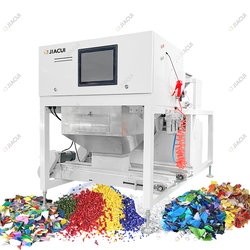
In recycling, the goal is separating mixed streams by polymer type and color. The CS-10A model, with 20 cameras and 640 air holes, processes mixed plastic streams (PET, HDPE, PP, ABS, PC, colored sheets) at industrial throughput rates, achieving clean separation directly impacting recycled regrind market value.
AI and Food Safety: Meeting HACCP Requirements
The FDA's HACCP system identifies critical control points (CCPs) where hazards can be prevented or reduced. Color sorting serves as a CCP when designed to remove physical hazards (foreign material), chemical hazards (mycotoxin-contaminated product), or biological hazards (moldy product). FDA guidelines specify that critical limits must be scientifically based [4].
AI sorting systems offer a significant compliance advantage: a deep learning model's classification accuracy can be quantified on labeled test sets, providing documented evidence of specific, reproducible defect rejection rates. USDA ARS research validates this: image-based sorting systems were 10-20% more accurate than commercial color sorters for red/white wheat separation, and for popcorn blue-eye damage—a subtle defect traditional sorters cannot detect—ARS systems achieved 83% accuracy versus 0% for conventional sorters [5].
Mycotoxin Detection Through Fluorescence Imaging
Hamamatsu Photonics demonstrates that fluorescence imaging can detect mycotoxins in grains and nuts at parts-per-billion levels—concentrations far below visible-light camera resolution [6]. Integrated with AI classification, this spectral data enables removal of mycotoxin-contaminated product before it enters the food supply.
The Future: Hyperspectral Imaging and Predictive Sorting
Chemical Composition Analysis Without Destructive Testing
Hamamatsu's research shows hyperspectral imaging collects complete continuous spectra for each pixel, enabling identification of materials by chemical fingerprint. Unlike RGB cameras capturing three broad channels, hyperspectral sensors capture dozens of narrow spectral bands, detecting foreign bodies sharing visual color with acceptable product, monitoring freshness through spectral degradation indicators, and identifying polymers in recycling without manual pre-sorting. InGaAs cameras—used by Bühler SORTEX in their Merlin.Ai system—extend sensitivity into near-infrared (900-1700nm), accessing absorption features related to moisture, protein, and oil content [7].
IoT Integration: Remote Learning and Cloud-Based Optimization
JIACUI's WiFi remote control is an early step toward IoT-integrated sorting. The next evolution involves cloud-based model aggregation: systems across facilities share anonymized training data, enabling the network to learn from vastly broader datasets. This distributed approach addresses climate change impacts on product quality, as Bühler's Merlin.Ai targets. Drought, heat stress, and changing pest pressures introduce new defect patterns individual sorters encounter too infrequently to learn independently. Cloud-connected systems rapidly disseminate updated models, ensuring new defect types identified at one facility are recognized across the entire fleet [7].
Why JIACUI's AI Sorting System Delivers Measurable ROI
| Performance Metric | Traditional Threshold Sorter | JIACUI AI Sorter | Improvement |
|---|---|---|---|
| Sorting Accuracy | 90-95% | ≥99% | 4-9 percentage points |
| Carry-Out Ratio | 10:1 to 30:1 | ≥120:1 (valve system) | 4-12× less waste |
| Minimum Defect Detection | 0.1mm² | 0.03mm² | 3.3× finer resolution |
| Sorting Dimensions | Color only | Color + Shape + Texture | 3× more features |
| Material Changeover | 10-30 min recalibration | <1 min (90-group memory) | 10-30× faster |
| Model Adaptability | Fixed thresholds | Continuous learning | Self-improving |
| Remote Monitoring | On-site only | WiFi + APP remote | Anywhere access |
| HACCP CCP Validation | Subjective, hard to document | Quantified accuracy, logged | Audit-ready |
JIACUI's investment in AI research—30+ senior engineers, 12% annual R&D investment, 21 national patents—produces an intelligent sorting system platform delivering these improvements across the full model range, from the compact CS-HA32 (2 cameras, 32 air holes) to the industrial CS-10A (20 cameras, 640 air holes). All models share 99%+ accuracy, 90-group memory, and remote debugging capability.
Conclusion
AI deep learning has transformed optical color sorting from a pixel-comparison exercise into an intelligent classification system. By training neural networks on comprehensive defect databases, integrating Toshiba CCD sensors with Altera FPGA edge computing, and applying multi-dimensional recognition across color, shape, and texture, JIACUI's VALUESORT series achieves 99%+ accuracy across 84+ materials—from rice and nuts to plastics and minerals.
As FDA HACCP requires scientifically validated control points, and USDA ARS research demonstrates 10-20% accuracy improvements over conventional sorters, AI-powered optical sorting is becoming a food safety necessity, not just an operational advantage. The future—hyperspectral imaging, cloud-based distributed learning, and predictive sorting—will further widen the gap between intelligent systems and threshold-based predecessors.
Contact JIACUI to discuss your sorting application:
- Website: www.jcsorter.com
- Email: jiacuichen10@gmail.com
- Phone: +86-13837166065
- Company: Zhengzhou Jiacui Machinery Equipment Co., Ltd. (CE & ISO Certified, 50+ export countries)
About the Author
The JIACUI Engineering Team comprises 30+ senior engineers with 20+ years combined experience in optical sorting. Holding 21 national patents and contributing to 3 industry standards, the team invests 12% of annual revenue in R&D to advance the VALUESORT (悦选) series. JIACUI products are CE and ISO certified, deployed across 50+ countries serving food processing, agriculture, plastics recycling, and mineral processing.
References
[1] Key Technology. Advanced Object-Based Image Processing and FMAlert Foreign Material Tracking.
[2] TAIHO. Deep Learning Technology for Multi-Dimensional Sorting. https://www.chinataiho.com
[3] JIACUI. VALUESORT (悦选) Series AI Deep Learning Color Sorter Product Manual. Zhengzhou Jiacui Machinery Equipment Co., Ltd.
[4] U.S. Food and Drug Administration. HACCP Principles and Application Guidelines. https://www.fda.gov/food/hazard-analysis-critical-control-point-haccp/haccp-principles-application-guidelines
[5] USDA Agricultural Research Service. Image-Based Sorting Systems for Grain Quality. https://www.ars.usda.gov/research/publications/publications.htm?SEQ_NO_115=234931
[6] Hamamatsu Photonics. Hyperspectral Imaging for Agri-Food Technology. https://www.hamamatsu.com/eu/en/news/featured-products_and_technologies/2024/driving-agri-food-tech-towards-sustainability.html
[7] Bühler Group. SORTEX Merlin.Ai: AI-Powered Optical Sorting. https://www.buhlergroup.cn