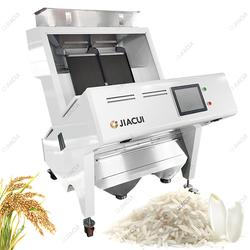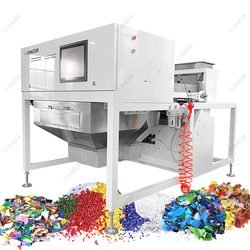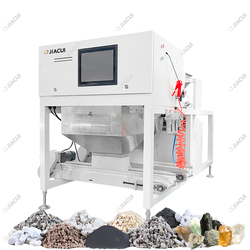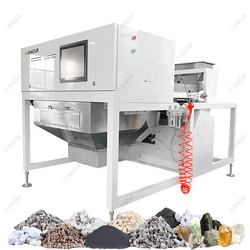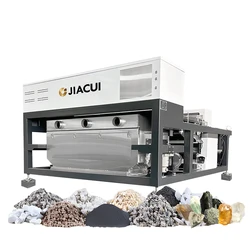



The optical sorting industry has undergone a fundamental shift. What was once a machine that required on-site technicians for every adjustment has become an intelligent, connected system that engineers can monitor, debug, and optimize from anywhere in the world. At Zhengzhou Jiacui Machinery Equipment Co., Ltd., our VALUESORT (悦选) series color sorters now ship with full IoT capabilities — and the operational impact across our 50+ export countries has been transformative.
This article provides a technically grounded, experience-based examination of how IoT architecture, remote debugging protocols, and cloud-connected diagnostics are reshaping color sorting operations. Drawing on 20+ years of manufacturing experience, 21 patents, and field data from nine regional service zones, we explain the complete data pipeline from CCD sensor acquisition to mobile app dashboard — and address the cybersecurity, bandwidth, and standardization challenges that come with it.
The Evolution of Color Sorter Connectivity
From On-Site-Only to Cloud-Connected
Ten years ago, a color sorter fault in a South American grain processing facility meant waiting days — sometimes weeks — for a technician to arrive, diagnose the issue, and restore production. Every parameter adjustment required physical presence at the machine's control panel. Recipe changes for new material types meant flying an engineer across continents.
The shift began with basic telemetry: machines could send simple status alerts via SMS or email. But the real transformation came with the convergence of edge computing, cloud platforms, and mobile applications — the three-tier IoT architecture that modern color sorters now rely on.
The VALUESORT IoT Foundation
Our VALUESORT series integrates IoT at the hardware level rather than as a bolt-on module. The Altera FPGA chip (USA) handles real-time signal processing at the edge, while Toshiba CCD sensors (Japan, 5400×12K resolution) capture image data that feeds into both the local sorting algorithm and the remote monitoring pipeline simultaneously. This dual-path architecture means that remote connectivity never interferes with real-time sorting performance — a critical design principle that we discuss in detail below.
IoT Architecture in Modern Color Sorters
A properly designed industrial IoT system follows a layered architecture. For color sorters, this means three distinct layers: edge computing, cloud platform, and mobile application.
Edge Computing Layer
The edge layer is where physical sorting happens and where data originates. In the VALUESORT architecture, this includes:
- Toshiba CCD sensors (5400×12K): Capture high-resolution image data of material passing through the sorting chamber at rates up to 12 tons per hour (CS-HA640) or 12 tons per hour (CS-LA1200D double-layer crawler model)
- Altera FPGA chip: Performs real-time signal processing — converting analog image data into digital sorting decisions within milliseconds. The FPGA's parallel processing architecture is essential because sorting decisions must be made before material passes the ejector nozzles
- Local controller: Manages ejector valve timing, stores the 90 parameter group memory locally, and serves as the gateway for upward data transmission
- Edge data buffer: Stores operational metrics, fault logs, and performance data when network connectivity is intermittent, transmitting to the cloud when connection is restored
The edge layer's independence from cloud connectivity is a deliberate design choice. If the internet connection drops, the color sorter continues operating at full performance using locally stored parameters and algorithms. Remote debugging enhances operations — it does not create a dependency.
Cloud Platform Layer
The cloud layer aggregates data from all connected machines, providing:
- Centralized monitoring dashboards for fleet management across multiple facilities
- AI deep learning model training using accumulated sorting data across 84+ material types
- Predictive maintenance analytics that flag potential component failures before they cause downtime
- Parameter recipe repository where the 90 stored parameter groups can be backed up, version-controlled, and deployed to other machines
- Fault diagnostic database that correlates symptoms across machines to build an institutional knowledge base
The cloud platform follows the ISA-95 (International Society of Automation) enterprise integration model, ensuring that data flows seamlessly between the control level (Level 2) and the manufacturing operations management level (Level 3) without proprietary lock-in.
Mobile Application Layer
The VALUESORT mobile app is the primary interface for operators and remote engineers. It provides:
- Full remote control of sorting parameters — not just monitoring, but active adjustment
- 90 parameter group memory access — operators can store, recall, and deploy sorting recipes remotely, switching between material types without being physically present at the machine
- Real-time status display showing throughput, rejection rate, sorting accuracy, and equipment health
- Fault alerts and diagnostic codes pushed to designated personnel instantly
- Historical performance trends for data-driven optimization decisions
Core IoT Features in VALUESORT Color Sorters
IoT Feature Comparison: Traditional vs. Connected Color Sorters
| Feature | Traditional Color Sorter | VALUESORT IoT Color Sorter |
|---|---|---|
| Parameter adjustment | On-site only, manual panel | Remote via mobile app |
| Recipe management | Manual, no backup | 90 stored groups, cloud-backed |
| Fault diagnosis | On-site technician visit | Remote diagnostics + fault codes |
| Performance monitoring | Periodic manual checks | Real-time dashboard, 24/7 |
| Software updates | Technician visit required | Over-the-air deployment |
| Predictive maintenance | Reactive (fix after failure) | AI-driven failure prediction |
| Multi-site management | Impossible | Centralized cloud dashboard |
| Technical support response | Days to weeks | Minutes via remote debugging |
| Sorting accuracy optimization | Static calibration | AI deep learning, continuous |
| Data logging | Limited, local | Comprehensive, cloud-archived |
APP Remote Control and 90-Group Parameter Memory
The parameter recipe system is one of the most operationally impactful IoT features. In practice, a single processing facility might handle rice in the morning, mixed grains in the afternoon, and recycled plastics on a different shift. Each material requires distinct sorting parameters — sensitivity thresholds, ejector timing, background calibration, rejection ratio targets.
The 90 parameter group memory allows operators to pre-configure and name these recipes, then recall them instantly via the mobile app. A facility manager in Vietnam managing a CS-HA320 chute-type sorter can switch from rice sorting to coffee bean sorting in seconds by selecting the stored recipe remotely, rather than spending 15–30 minutes recalibrating on-site.
From a remote debugging perspective, this system means that when a customer in West Africa reports suboptimal sorting results, our engineers can access the machine's current parameter group remotely, compare it against the optimized recipe stored in our cloud database, and deploy the corrected parameters — all within a single remote session.
AI Deep Learning Integration
The AI deep learning system operates on accumulated sorting data. Every image captured by the Toshiba CCD sensors — both accepted and rejected material — contributes to a growing training dataset. Over time, the algorithm learns to identify defect patterns specific to each material type and each customer's quality standards.
This is where the IoT architecture creates compounding value. A machine that has been sorting Brazilian coffee for six months has accumulated a dataset that improves its accuracy beyond what static calibration could achieve. When a similar customer in Ethiopia begins sorting the same crop type, the cloud-stored model can be deployed to accelerate their optimization curve — a network effect that benefits all connected machines.
Our field data shows sorting accuracy of 99%+ across 84+ material types, with the AI system contributing measurably to accuracy maintenance over time, particularly for materials with variable defect patterns like mixed-color plastics and agricultural products with seasonal quality variations.
Real-Time Monitoring and Diagnostics
The real-time monitoring system tracks multiple operational dimensions simultaneously:
- Throughput rate (tons per hour) with trend logging
- Rejection ratio — the percentage of material being ejected, with anomaly alerts if the ratio deviates beyond expected ranges
- Sorting accuracy metrics based on sampling algorithms
- Ejector valve health — individual valve firing rates and response times
- CCD sensor status — temperature, calibration drift, and pixel health
- FPGA processing load — ensuring the signal processing pipeline maintains real-time performance
- Environmental conditions — chamber temperature, humidity, and vibration that can affect sorting performance
When any metric deviates from expected parameters, the system generates a fault code with diagnostic context. This is not simply an alert — it is a structured diagnostic message that tells the remote engineer exactly which subsystem is affected and what the likely cause is.
The Data Pipeline: From CCD Sensor to Remote Dashboard
Understanding the complete data journey clarifies both the capabilities and the limitations of IoT-enabled color sorters.
- Image acquisition: Toshiba CCD sensors (5400×12K) capture line-scan images of material in free-fall (chute-type) or on conveyor belt (crawler-type) at high frame rates
- Edge processing: Altera FPGA chip processes image data in real-time, making accept/reject decisions and firing ejector valves — all within the material's transit time through the sorting chamber (typically 30–50 milliseconds)
- Data extraction: The local controller extracts operational metrics from the processing pipeline — throughput counts, rejection events, valve firing data, sensor health indicators
- Edge buffering: Extracted data is buffered locally, with priority given to fault events for immediate transmission
- Protocol encapsulation: Data is packaged using MQTT (Message Queuing Telemetry Transport) protocol — a lightweight publish/subscribe messaging protocol designed for constrained devices and unreliable networks, standardized by the OASIS consortium and aligned with IEEE industrial communication guidelines
- Secure transmission: Encrypted data transmission over TLS 1.2+ to the cloud platform, with certificate-based mutual authentication
- Cloud ingestion: The cloud platform receives MQTT messages, validates integrity, and stores data in time-series databases
- Analytics processing: AI models evaluate incoming data against historical baselines, flagging anomalies for predictive maintenance
- Dashboard rendering: Processed metrics are pushed to the mobile app and web dashboard via WebSocket connections for near-real-time display
The end-to-end latency from sensor capture to dashboard display is typically 2–5 seconds for operational metrics. Fault alerts are prioritized and can reach the mobile app in under 3 seconds. This is not real-time enough for sorting control (which happens entirely at the edge in milliseconds), but it is more than sufficient for monitoring, diagnostics, and remote debugging.
Communication Protocols: MQTT, OPC UA, and Industrial Standards
MQTT: The Backbone of Color Sorter Telemetry
MQTT is our primary protocol for machine-to-cloud communication, chosen for several technically justified reasons:
- Low bandwidth overhead: MQTT's header is only 2 bytes, critical for installations in regions with limited internet infrastructure — a real concern across our African and Central Asian service zones
- Unreliable network tolerance: The protocol's QoS (Quality of Service) levels handle intermittent connectivity gracefully, with the edge buffer ensuring no data loss during outages
- Publish/subscribe model: Allows multiple consumers (monitoring dashboard, AI training pipeline, maintenance alert system) to receive the same data stream independently
- OASIS standardization: As an internationally recognized standard, MQTT avoids vendor lock-in and aligns with IEEE recommendations for industrial communication
OPC UA: Plant-Level Integration
For facilities where the color sorter is part of a broader automated production line, VALUESORT machines support OPC UA (OPC Unified Architecture) for plant-level SCADA integration. OPC UA provides:
- Semantic data modeling: Each data point carries context — not just a value, but a description of what it means, its engineering unit, and its relationship to other data points
- Platform-independent communication: Enables integration with any compliant SCADA, MES, or ERP system regardless of vendor
- Built-in security: OPC UA includes authentication, authorization, and encryption as native features, not afterthoughts
This dual-protocol approach means VALUESORT machines fit into both simple standalone installations and complex Industry 4.0 production environments.
Remote Debugging in Practice: Scenarios from 50+ Countries
Scenario 1: Parameter Optimization for a New Crop Variety
A customer in Southeast Asia began processing a new variety of jasmine rice with a different defect profile than the machine's default calibration. Rather than dispatching a technician (which would take 3–5 days including travel), our remote engineering team accessed the machine via the cloud platform, reviewed the CCD sensor's real-time image data, and adjusted the sensitivity parameters for the specific defect characteristics of the new variety. The optimized parameters were saved as a new group in the 90-recipe memory, and the customer achieved target sorting accuracy within 2 hours of the initial support request.
Scenario 2: Predictive Maintenance Alert
The AI monitoring system flagged an anomaly in a European customer's CS-LA600 crawler-type sorter: ejector valve #47 was showing a 12% slower response time compared to its baseline. The system predicted a valve failure within 7–10 days based on the degradation trend. The remote engineer reviewed the diagnostic data, confirmed the prediction, and the customer's maintenance team replaced the valve during a scheduled downtime window — avoiding what would have been an unplanned production stoppage with an estimated 8 hours of lost throughput.
Scenario 3: Multi-Site Recipe Deployment
A multinational grain processor operating VALUESORT machines across three facilities in South America needed to standardize sorting parameters for a shared export contract. The cloud platform's parameter recipe repository allowed our engineering team to optimize parameters on one machine, validate the results, and then deploy the identical recipe group to all three machines remotely — ensuring consistent product quality across sites without any physical travel.
Remote Monitoring Capabilities
Remote Monitoring Capability Matrix
| Capability | Real-Time | Historical | Remote Action | Alert Type |
|---|---|---|---|---|
| Throughput monitoring | Yes | 90-day trend | No (display only) | Threshold breach |
| Rejection ratio tracking | Yes | 90-day trend | Parameter adjust | Anomaly detection |
| Sorting accuracy metrics | Yes | 90-day trend | Algorithm retrain | Deviation alert |
| Ejector valve health | Per-cycle | Lifetime log | Maintenance order | Predictive failure |
| CCD sensor status | Continuous | Calibration log | Remote recalibration | Drift warning |
| FPGA processing load | Continuous | 30-day trend | No (display only) | Overload alert |
| Fault diagnostics | Instant | Full fault log | Remote reset/adjust | Fault code push |
| Parameter recipe management | On-demand | Version history | Remote deploy | Change notification |
| Environmental monitoring | Continuous | 90-day trend | HVAC interlock | Range breach |
| Software version status | On-demand | Update history | OTA deployment | Update available |
Global Service Network Coverage
Our nine regional service zones ensure that remote debugging is backed by local support when physical intervention is required. Remote diagnostics resolve approximately 70% of reported issues without requiring a site visit; the remaining 30% are dispatched to the nearest regional service team with full diagnostic context already in hand — dramatically reducing on-site resolution time.
Service Network Coverage by Region
| Region | Coverage Area | Typical Remote Response | On-Site Response | Primary Material Types |
|---|---|---|---|---|
| North America | USA, Canada, Mexico | < 2 hours | 24–48 hours | Plastics recycling, nuts, coffee |
| South America | Brazil, Argentina, Chile, Peru | < 2 hours | 24–72 hours | Coffee, grains, seeds |
| Europe | EU + UK, Eastern Europe | < 1 hour | 24–48 hours | Plastics, food, recycling |
| Africa | Nigeria, Egypt, South Africa, Kenya | < 3 hours | 48–96 hours | Grains, coffee, nuts |
| Central Asia | Kazakhstan, Uzbekistan, Turkmenistan | < 3 hours | 48–72 hours | Grains, seeds |
| West Asia | Turkey, UAE, Saudi Arabia, Iran | < 2 hours | 24–72 hours | Nuts, grains, food |
| South Asia | India, Pakistan, Bangladesh, Sri Lanka | < 2 hours | 24–72 hours | Rice, grains, spices |
| Southeast Asia | Vietnam, Thailand, Indonesia, Philippines | < 2 hours | 24–48 hours | Rice, coffee, seafood |
| East Asia | Japan, South Korea, Taiwan | < 1 hour | 24–48 hours | Plastics, food, recycling |
Cybersecurity in Connected Color Sorting Systems
We would be misleading our customers if we presented IoT connectivity as purely beneficial without addressing the security implications. Connecting industrial equipment to cloud platforms introduces attack surfaces that did not exist in isolated machines. We address this honestly.
Encryption and Authentication
The VALUESORT IoT security architecture implements multiple defense layers:
- Transport-layer encryption: All data transmission uses TLS 1.2+ with perfect forward secrecy. No data — whether operational metrics or parameter recipes — traverses the network in plaintext
- Mutual certificate authentication: Both the machine and the cloud platform authenticate each other using X.509 certificates, preventing man-in-the-middle attacks
- Device identity management: Each machine carries a unique hardware identity provisioned at manufacturing time, registered in the cloud platform's device registry
- Role-based access control: The mobile app and web dashboard enforce granular permissions — an operator can view status and recall recipes, but only authorized engineers can modify core algorithm parameters or deploy software updates
- Audit logging: Every remote action — parameter change, recipe deployment, software update — is logged with timestamp, user identity, and before/after values, providing a complete chain of accountability
Cybersecurity Best Practices for Connected Color Sorters
For facilities deploying IoT-enabled color sorters, we recommend the following practices:
- Network segmentation: Place color sorters on an isolated VLAN or industrial network segment, separated from general office networks via firewalls configured to permit only MQTT (port 8883 for TLS) and OPC UA traffic to known destinations
- Certificate rotation: Rotate device authentication certificates annually. The VALUESORT cloud platform supports automated certificate management via the OCSP (Online Certificate Status Protocol) responder
- Access principle of least privilege: Grant remote access only to personnel who require it, and only for the scope of their role. Avoid shared accounts — each user should have individually identifiable credentials
- Firmware update hygiene: Apply OTA software updates promptly. Each update includes security patches identified through our vulnerability management program. The cloud platform can enforce minimum firmware versions and flag machines running outdated software
- Physical security awareness: While IoT security focuses on network vectors, physical access to the machine's local controller remains a risk. Ensure the controller panel is physically secured and accessible only to authorized personnel
- Incident response preparation: Maintain a documented procedure for responding to security alerts. If anomalous access patterns are detected, the cloud platform can immediately revoke a device's certificates and sever its connection — but local personnel must be prepared to operate the machine in standalone mode
- Regular security audits: Conduct annual security assessments of the IoT deployment, including penetration testing of the network perimeter and review of access logs for unauthorized attempts
Honest Assessment of Limitations
We want to be transparent about what IoT connectivity cannot solve:
- Bandwidth dependency in remote regions: Some of our African and Central Asian customers operate on satellite or cellular connections with significant latency and intermittent availability. While the edge buffer prevents data loss, real-time monitoring during these outages is impossible. The machine continues sorting, but remote visibility is degraded
- Cybersecurity is a shared responsibility: Our cloud platform and machine firmware are engineered with strong security, but the customer's local network, firewall configuration, and access management are outside our control. A misconfigured customer firewall can undermine the security of the entire system
- Remote debugging has physical limits: We can resolve approximately 70% of issues remotely. Hardware failures — a burned-out ejector valve, a damaged CCD sensor, a failed FPGA board — require physical replacement. What remote debugging provides in these cases is precise diagnosis, ensuring the technician arrives with the correct part and the correct procedure, minimizing on-site time
Predictive Maintenance and ROI
The Business Case for IoT-Enabled Color Sorters
Remote monitoring and predictive maintenance deliver measurable return on investment through three primary mechanisms:
Reduced unplanned downtime: By identifying component degradation before failure, the system converts unplanned stoppages into scheduled maintenance windows. Industry research on predictive maintenance in food processing equipment consistently shows 30–50% reductions in unplanned downtime. Across our installed base, customers utilizing the full IoT monitoring suite report MTTR (Mean Time To Repair) improvements of 40–60% compared to pre-IoT operations, because remote diagnostics pre-identify the fault before a technician is dispatched.
Optimized sorting performance: The AI deep learning system and remote parameter optimization maintain peak sorting accuracy over time, preventing the gradual accuracy drift that costs processors in lost product quality and wasted material. The 90-recipe parameter system eliminates the calibration time when switching between material types.
Reduced technical support costs: Remote resolution of 70% of reported issues eliminates the travel costs and time delays associated with on-site visits. For customers in regions where the nearest service center is a 48-hour flight away, this represents both cost savings and dramatically faster issue resolution.
Bandwidth Requirements and Infrastructure Considerations
A practical question we address frequently: what internet connection does a VALUESORT IoT color sorter require? The answer is deliberately modest:
- Minimum operational: 256 Kbps sustained, sufficient for fault alerts and basic status monitoring
- Recommended: 1 Mbps sustained, enabling full real-time dashboard and remote parameter adjustment
- Optimal: 5+ Mbps, supporting comprehensive data streaming and AI model updates
The MQTT protocol's efficiency means these requirements are significantly lower than video-streaming applications. Most customer facilities exceed these requirements with basic business internet connections. For truly remote installations, 4G cellular modems provide adequate bandwidth in most coverage areas.
Parameter Recipe Management: The 90-Group System
The 90 parameter group memory system deserves detailed explanation because it represents a fundamental operational advantage of IoT-enabled color sorters.
Each parameter group is a complete sorting recipe containing:
- Sensitivity settings for each spectral channel (visible light, near-infrared, RGB)
- Ejector timing parameters calibrated for the material's free-fall or conveyor speed
- Background calibration values referencing the machine's baseline optical environment
- Rejection ratio targets defining acceptable product loss vs. defect removal trade-offs
- AI model selection specifying which trained model applies to this material type
- Custom metadata including material name, customer-defined labels, and creation timestamps
The 90 groups cover the full spectrum of our 84+ supported material types with room for customer-specific variations. When a customer develops a new sorting application, our remote engineering team can create a new parameter group, validate it against the machine's real-time CCD data, and deploy it to the 90-group memory — all remotely.
This system also enables cross-machine standardization. A parameter group developed and proven on one machine can be exported to the cloud repository and deployed to identical machines across multiple facilities, ensuring product quality consistency for multi-site operators.
Industry Standards and Compliance
ISA-95 Enterprise Integration
The VALUESORT IoT architecture aligns with the ISA-95 standard (developed by the International Society of Automation), which defines the integration hierarchy between control systems and enterprise systems. By following this framework, our machines integrate with existing manufacturing IT infrastructure without requiring proprietary middleware.
Food Safety Compliance
For food processing applications, the FDA Food Safety Modernization Act (FSMA) traceability requirements mandate that processing equipment maintain auditable records of operational parameters. The VALUESORT cloud platform's comprehensive audit logging — recording every parameter change with timestamp, user, and before/after values — directly supports FSMA compliance. Customers in EU markets additionally benefit from alignment with the EU's Industry 5.0 framework, which emphasizes human-centric, sustainable, and resilient manufacturing — principles that remote monitoring supports by reducing travel-dependent technical support.
CE and ISO Certification
All VALUESORT machines carry CE marking and ISO certification. The IoT components are included in the scope of these certifications, ensuring that connected features meet the same safety and quality standards as the physical sorting hardware.
Future Trends: From Industry 4.0 to Industry 5.0
McKinsey's Industry 4.0 research highlights that connected manufacturing equipment delivers value through data-driven optimization, predictive maintenance, and remote operations — exactly the capabilities described in this article. The global industrial IoT market, per STATISTA data, continues to grow at double-digit rates as manufacturers recognize the operational and financial benefits of connectivity.
Looking forward, the EU Industry 5.0 framework adds a dimension beyond pure efficiency: it emphasizes sustainability and resilience. For color sorting, this means:
- Sustainable operations: Remote debugging reduces the carbon footprint of technical support by eliminating unnecessary travel. Predictive maintenance extends equipment lifespan, reducing electronic waste
- Resilient supply chains: Multi-site parameter standardization and cloud-based recipe management enable rapid reconfiguration of sorting operations across facilities — critical for supply chain resilience
- Human-centric design: The mobile app interface democratizes complex machine management, allowing less specialized operators to achieve expert-level results through guided parameter management and AI-assisted optimization
Frequently Asked Questions
Can the VALUESORT color sorter operate if the internet connection fails?
Yes. The edge computing layer — Altera FPGA, Toshiba CCD sensors, and local controller — operates completely independently of cloud connectivity. If the internet connection drops, the machine continues sorting at full performance using locally stored parameters. The edge buffer stores operational data during the outage and transmits it to the cloud when connectivity is restored. Remote monitoring and remote parameter adjustment are unavailable during the outage, but sorting operations are unaffected.
How does the 90 parameter group memory work across multiple machines?
Each machine stores 90 parameter groups locally. Additionally, parameter groups can be exported to the cloud repository, where they can be deployed to other machines. This enables a customer with multiple VALUESORT machines to develop and validate a sorting recipe on one machine, then deploy it to all machines processing the same material — ensuring consistent quality across sites. The cloud repository maintains version history, so previous recipe versions can be recalled if needed.
What cybersecurity measures protect the remote control system?
The system implements multi-layer security: TLS 1.2+ transport encryption, X.509 mutual certificate authentication, unique per-device hardware identity, role-based access control with granular permissions, and comprehensive audit logging of all remote actions. The cloud platform can immediately revoke a compromised device's certificates and sever its connection. We recommend customers implement network segmentation, placing color sorters on an isolated VLAN with firewalls permitting only MQTT and OPC UA traffic to known destinations.
What internet bandwidth is required for IoT features?
Minimum operational bandwidth is 256 Kbps for fault alerts and basic status monitoring. Recommended bandwidth is 1 Mbps for full real-time dashboard and remote parameter adjustment. Optimal bandwidth is 5+ Mbps for comprehensive data streaming and AI model updates. The MQTT protocol's efficiency (2-byte header) keeps these requirements far below typical business internet speeds. For remote installations, 4G cellular modems provide adequate bandwidth in most coverage areas.
How quickly can remote debugging resolve a sorting issue?
Remote resolution time depends on issue complexity. Parameter optimization issues are typically resolved within 1–2 hours of the initial support request. Fault diagnosis for hardware issues is completed remotely within minutes, allowing the nearest regional service team to be dispatched with the correct part and procedure. On-site resolution time is reduced because the technician arrives with full diagnostic context, improving MTTR by 40–60% compared to traditional dispatch-and-diagnose approaches.
Conclusion
IoT connectivity has transformed color sorting from an isolated, technician-dependent operation into a connected, data-driven, remotely manageable system. For VALUESORT customers across 50+ countries, this means faster issue resolution, sustained sorting accuracy through AI optimization, reduced unplanned downtime through predictive maintenance, and standardized quality across multi-site operations.
The technology is not without limitations — bandwidth dependency in remote regions, the irreducible need for physical hardware replacement, and the shared responsibility of cybersecurity are realities we address honestly. But the operational data is unambiguous: remote debugging and IoT monitoring deliver measurable ROI through downtime reduction, MTTR improvement, and optimized sorting performance.
At Zhengzhou Jiacui Machinery Equipment Co., Ltd., our 20+ years of manufacturing experience, 21 patents, 12% R&D investment, and nine-region global service network provide the infrastructure to make IoT-enabled color sorting not just a feature, but a reliable operational advantage. With CE and ISO certification, Altera FPGA and Toshiba CCD components, AI deep learning, and the 90-group parameter recipe system, the VALUESORT series represents the state of connected optical sorting technology.
For facilities evaluating the transition to smart color sorting, the question is no longer whether IoT connectivity provides value — the evidence from 50+ countries confirms that it does. The question is how quickly your operation can capture that value.
*For more information about VALUESORT color sorter models, IoT features, or to discuss your specific sorting application, contact Zhengzhou Jiacui Machinery Equipment Co., Ltd. Our engineering team is available across nine regional service zones to support your transition to connected sorting operations.*
About the Manufacturer: Zhengzhou Jiacui Machinery Equipment Co., Ltd. is a CE/ISO-certified manufacturer of optical sorting equipment with 20+ years of experience, 30+ engineers, 12% R&D investment, 21 patents, and 3 co-authored industry standards. The VALUESORT (悦选) series includes chute-type models from CS-HA32 (32 channels) to CS-HA640 (640 channels, 10T/H) and crawler-type models from CS-LA300 (300mm) to CS-LA1200D (1200mm×2 double-layer, 12T/H), serving customers across 50+ countries from 4 production bases.