


Golden Harvest Agro Processing handles around 60 tons of maize a day in Kaduna, Nigeria, supplying flour and grits to food manufacturers. Raw maize arriving from smallholder farmers carried aflatoxin-affected kernels, discoloured grain, broken kernels, cob fragments and stones. A 10-channel sorter with infrared detection moved aflatoxin removal above 95% and lifted contracted orders by 25%.
| Customer | Amina Okafor, Production Director |
| Company | Golden Harvest Agro Processing Ltd. |
| Country | Nigeria (Kaduna) |
| Material | Yellow maize (corn) |
| Machine | 10-channel color sorter with infrared (IR) detection |
| Installation | Mid-2023 |
Background
Golden Harvest processes approximately 60 tons of maize per day, sourced from smallholder farmers across the region. Output goes to industrial food manufacturers as flour and grits, where incoming material is judged against food safety specifications rather than appearance alone.
The challenge
The raw supply frequently contained aflatoxin-affected kernels, discoloured grains, broken kernels, cob fragments and stones. Manual sorting was too slow and too unreliable to meet the food safety standards of industrial buyers, and regulators were pressing the company to tighten aflatoxin control in finished products. The hard part is that aflatoxin contamination is often invisible: a kernel can be contaminated without being discoloured, so a visible-light sorter alone cannot carry the quality guarantee.
The solution
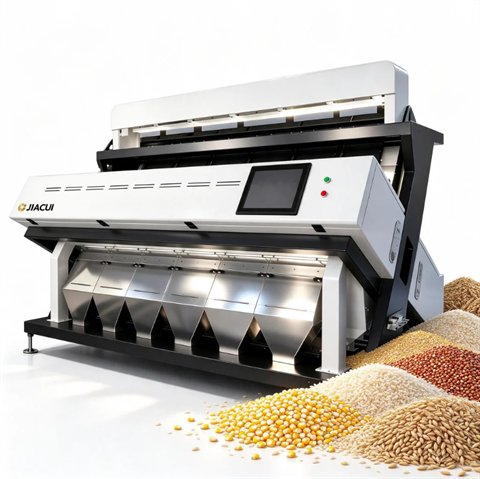
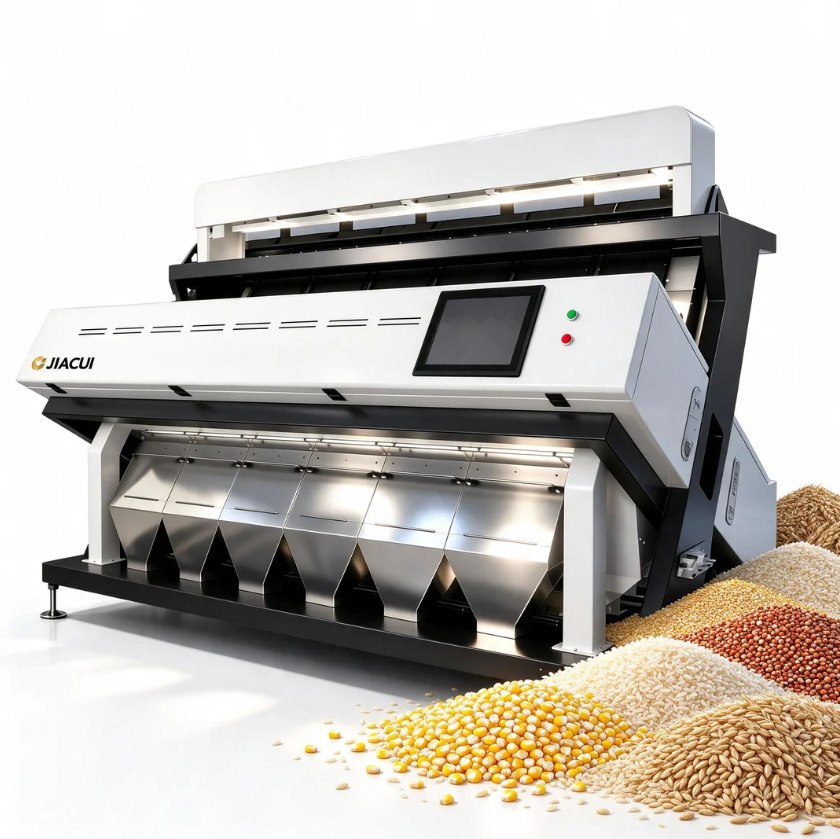
Golden Harvest installed a 10-channel color sorter with infrared detection in mid-2023. The IR channel identifies aflatoxin-contaminated kernels that show no visible discolouration, while the CCD cameras remove discoloured grains, foreign matter and broken kernels. The two detection paths run on the same pass, so food-safety rejection and appearance grading are handled together instead of in separate steps.
Results
- Aflatoxin-affected kernel removal above 95%, materially improving food-safety compliance
- Finished product consistently meeting industrial buyer standards, with contracted orders up 25%
- Processing capacity of 8 tons per hour with minimal downtime
- Manual sorting staff reduced by 40%, with workers reassigned to packaging and quality assurance
“Food safety is non-negotiable for our buyers. This machine gives us the confidence to guarantee the quality of every batch. Our customers have noticed the difference, and our business has grown because of it.”
— Amina Okafor, Production Director
What this means for a maize line
If aflatoxin control is the goal, specify infrared detection from the start. Visible-light sorting handles discolouration and foreign matter well, but it cannot screen kernels where contamination has not changed the surface colour. The practical limit also sits in the raw-material intake: sorting removes contaminated kernels, it does not average out a badly stored batch. Machine options and detection modes are described on the corn color sorter page, and grain handling is covered under grain sorting.
Performance figures on this page are as reported by the customer. They were not independently audited by JIACUI, and results depend on raw material, moisture and line layout.
More case studies
- Coffee bean sorting in Colombia: 99%+ defect removal
- Plastic recycling in Germany: NIR sorting lifts PET purity
To discuss a configuration for your own material, see the contact page.