


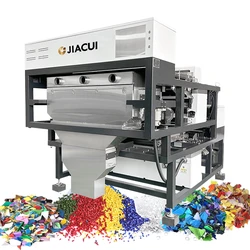
RheinPlast Recycling operates a recycling facility near Cologne, Germany, turning about 15,000 tons of post-consumer plastic waste a year into flakes for packaging and automotive applications. Colour contaminants were dragging down the value of the clear PET stream. A sorter combining NIR and visible-light spectroscopy moved PET purity from 92% to 98.5% and cut black-flake contamination by more than 90%.
| Customer | Stefan Richter, Plant Manager |
| Company | RheinPlast Recycling GmbH |
| Country | Germany (near Cologne) |
| Material | Mixed post-consumer plastic flakes (PET, HDPE, PP) |
| Machine | High-resolution sorter with NIR and visible-light spectroscopy |
| Installation | Late 2023 |
Background
RheinPlast runs a modern recycling plant that converts post-consumer plastic waste into high-quality recycled flakes for packaging and automotive customers, handling roughly 15,000 tons of plastic waste annually. Buyers in those segments specify purity, and the clear PET stream is where specifications are tightest.
The challenge
The recycled flake stream carried colour contaminants - black, opaque and off-colour flakes - that reduced the value of the final product. Manual sorting was impractical at this volume, and conventional optical sorters struggled to separate similar polymer types and colours, black plastics most of all, because black material reflects almost no visible light. European recycling standards and customer demand for high-purity material turned this into the plant's critical bottleneck.
The solution
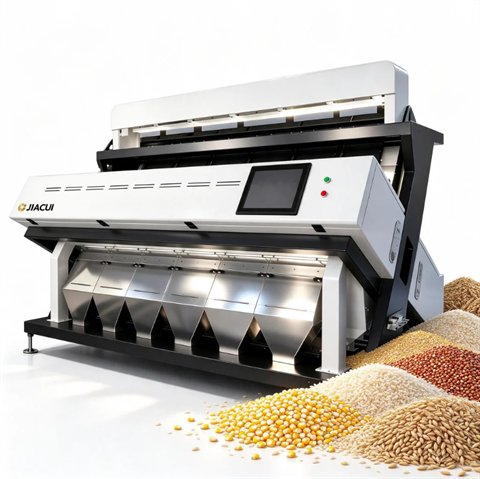
RheinPlast installed a high-resolution sorter with near-infrared and visible-light spectroscopy in late 2023. The system was configured to separate PET from HDPE and PP, remove black and dark-coloured flakes, and eject off-colour contaminants from the clear flake stream. Polymer identification comes from the NIR channel, while colour rejection is handled in visible light - the combination is what makes black flakes removable at all.
Results
- Recycled PET purity improved from 92% to 98.5%, meeting food-grade recycled packaging specifications
- Black plastic contamination reduced by more than 90%
- Selling price of recycled flakes up approximately 15% on higher purity
- Throughput of 3 tons per hour from a single machine, reducing reliance on manual sorting lines
“The European market demands high purity, and this sorter delivers it. We can now guarantee our customers a consistent product, which has strengthened our position as a reliable supplier. The return on investment was faster than we expected.”
— Stefan Richter, Plant Manager
What this means for a flake line
Two different jobs are being done on one machine here: polymer separation and colour rejection. NIR decides what the flake is made of, visible light decides what it looks like, and neither channel alone covers black material. Flake size, dust and moisture all affect detection stability, so material preparation upstream is part of the specification. Configurations are described on the plastic flake color sorter and plastic color sorter pages.
Performance figures on this page are as reported by the customer. They were not independently audited by JIACUI, and results depend on raw material, moisture and line setup.
More case studies
- Coffee bean sorting in Colombia: 99%+ defect removal
- Corn processing in Nigeria: IR sorting for aflatoxin control
To discuss a configuration for your own material, see the contact page.