
- Home
-
Color Sorters
Optical Color Sorters
-
Solutions
Solutions
- Service Support
- News Center
- About Us
- Contact Us


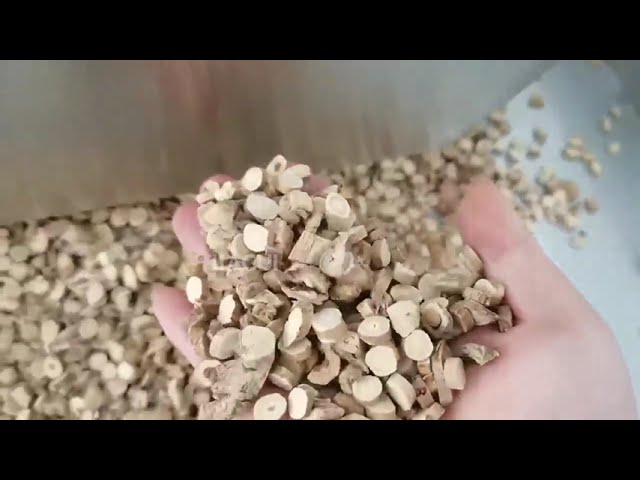
Chuanxiong Slices on a Belt Color Sorter
Chuanxiong slices are light, irregular and slightly sticky — three properties that make chute feeding unreliable. On a belt the slices settle flat, the camera gets a stable view, and low vibration avoids damaging the edges.
Published 9 December 2025 · JIACUI Color Sorter · Watch on YouTube
What the video shows
Sliced roots are fed onto the belt, inspected from above and separated into accept and reject streams. The belt runs slowly enough for the camera to see each slice, and the ejector removes discoloured or damaged pieces without throwing them far.
Why chutes struggle with this material
- Light slices slide unevenly and overlap, so defects hide under good product.
- Sticky surfaces change the fall speed, which shifts the point where the ejector must fire.
- Free-fall impact breaks slice edges, and broken edges are themselves a quality defect.
What to control on a belt machine
Belt speed is the main capacity lever, but it also sets inspection time. Air pressure should be just enough to move a slice off the belt without blowing neighbours with it. Moisture and cut thickness change both stickiness and colour, so recipes need to be saved per product and per drying batch. Cleaning the belt and window on a fixed interval prevents a slow drift in accuracy.
Is a belt machine the right fit?
It depends on shape and fragility more than on the material name. Slices, strips and light herbs usually justify a belt; round seeds and free-flowing grains are usually cheaper to sort on chutes. Send a representative sample and we will tell you which presentation gives the cleaner reject stream.
Watch the full video on YouTube →