


Most nut businesses are not single-product businesses. A kernel processor runs walnuts in one season and almonds in the next; a trader handles cashews, pistachios and peanuts through the year; a snack plant switches between pecans, hazelnuts and macadamias by customer order. The obvious question on every one of their minds before buying a sorter is the same: can one machine really handle all of it, or will I need a separate sorter per nut?
The honest answer is that a modern AI color sorter can run the full commercial nut range from one platform — but only if three things are true: the machine stores enough product recipes, changing between nuts is a touchscreen selection rather than a re-commissioning job, and the optical system is capable enough to handle both a 3 mm peppercorn-sized peanut skin and a 25 mm walnut half. This guide shows what each nut actually needs, how one machine covers them, and how the economics work out across a multi-nut line.
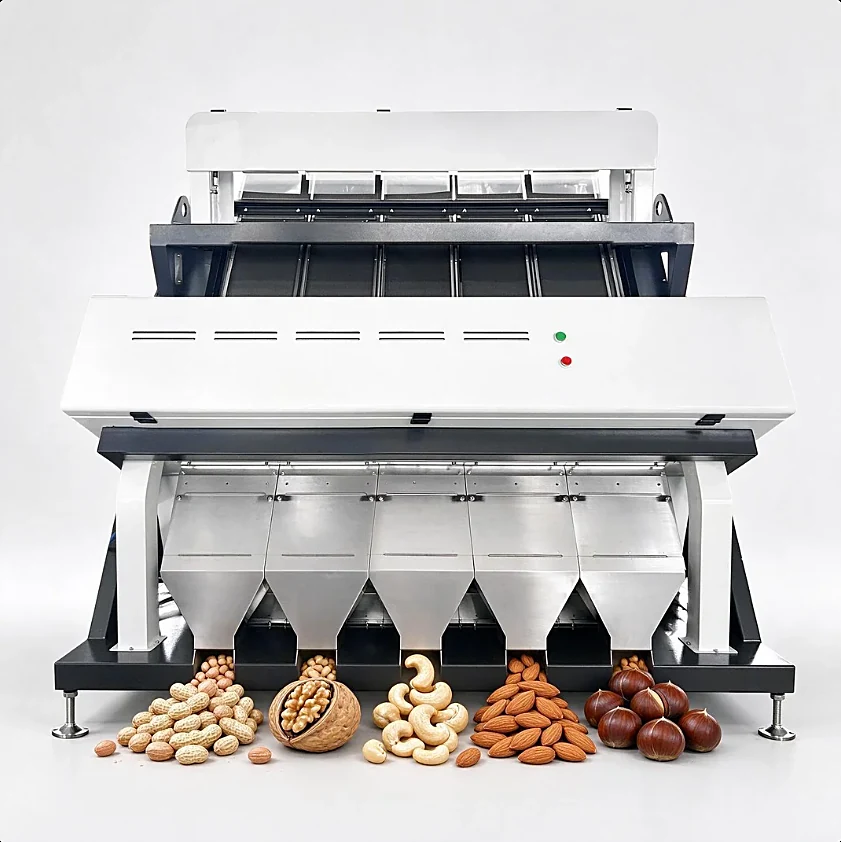
One platform, switchable by recipe, across the commercial nut range.
What Sorting Each Major Nut Actually Needs
Different nuts fail differently. Specifying a single machine for all of them means the machine has to address every one of these defect profiles — which is exactly what an AI color-and-shape platform is for.
Walnuts & Pecans
- Targets: black and dark-ring kernels, shriveled and moldy halves, the woody pith/diaphragm and shell fragments, and pinched/broken halves.
- Why it is hard: pith and shell match the kernel color (see our shell and aflatoxin guide), and walnut halves are among the most fragile, highest-value kernel forms — so this is the clearest case for a gentle belt-type / crawler feed to protect whole-half yield.
Cashews & Almonds
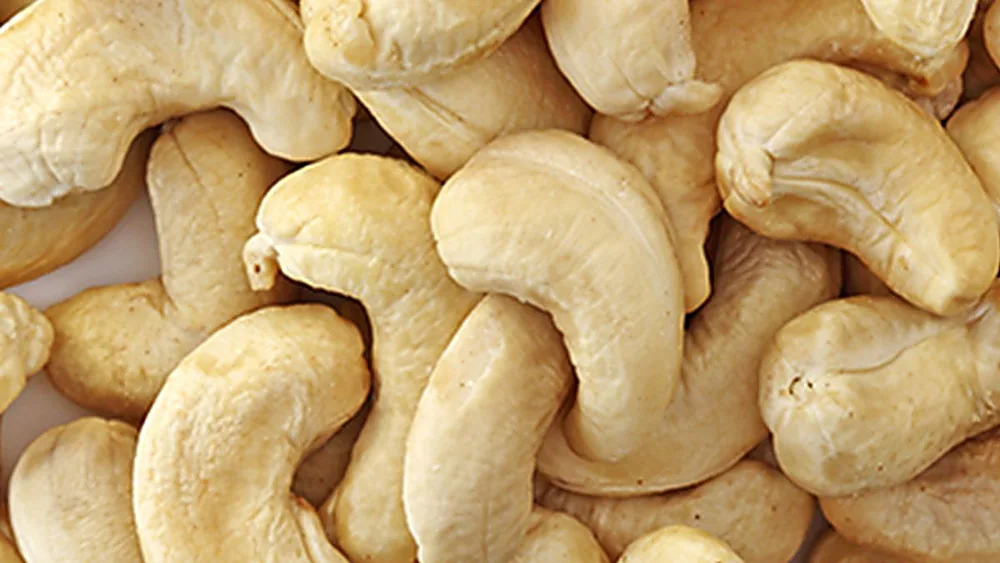
- Targets (cashew): color grading between white wholes and the lower-value blemished/scorched/spotted classes (DW, SW, SK), plus insect damage and skin residue. The international grade ladder is real money: published FOB references (Q3 2026) put white wholes at roughly $7.90–9.60/kg versus broken/blemished classes at $4.30–5.20/kg, so accurate color grading directly sets which rung each kernel lands on.
- Targets (almond): light versus dark/shriveled kernels, insect and navel-orangeworm damage (the main aflatoxin vector), skin and shell. California's almond program treats optical sorting as a control point for aflatoxin, so an almond sorter is doing food-safety work, not just cosmetics.
- Why it is easy for one machine: both are free-flowing, sized 18–35 mm, and respond well to color + shape AI.
Pistachios & Macadamias
- Targets (pistachio): open-shell vs closed-shell / blank (empty) kernels, black-stained shells, and aflatoxin-risk moldy kernels. EU limits for pistachios (8 µg/kg AFB1, 10 µg/kg total for product sold to consumers) make pistachios one of the most aflatoxin-scrutinised nuts in trade.
- Targets (macadamia): whole vs broken/pieces grading, light vs caramel/dark color, and internal defects. Macadamia is high-value and brittle — breakage control again favours a belt feed.
- Why it is hard for one machine: closed-shell and blank detection on pistachio, and internal grading on macadamia, push the optics toward the AI-shape and (where specified) infrared tier.
Peanuts & Hazelnuts
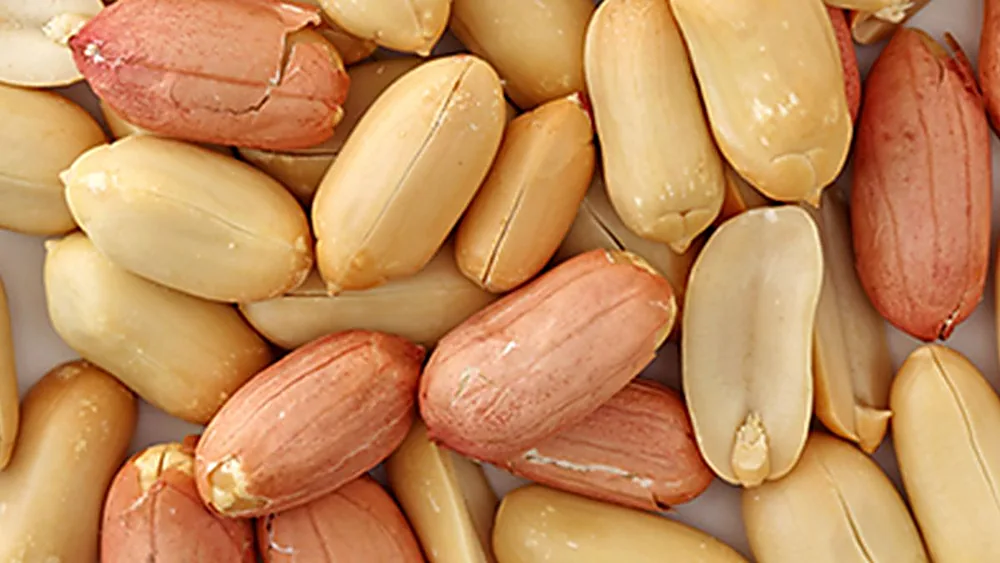
- Targets (peanut): moldy/aflatoxin-risk kernels, pink/discolored shrivels, half-vs-whole, skin residue and foreign matter. EU sets a higher pre-sort limit for peanuts "to be sorted" (8 µg/kg AFB1 / 15 µg/kg total) precisely because mechanical and optical sorting is the compliance step.
- Targets (hazelnut): kernel vs shell fragment, brown rot / moldy kernels, and shrivels. Hazelnut skin dust is fine and oily — a dust-management problem more than an optics problem.
- Why it is easy for one machine: small, dense, free-flowing; a high-resolution CCD with strong dust cleaning handles them well.
How One Machine Covers Every Nut: Recipe Switching
The reason one good sorter can do all of the above instead of five single-purpose machines is the stored-recipe model. Each nut's color thresholds, shape criteria, sensitivity, feeder amplitude and ejector timing are different — but they do not need to be rebuilt from scratch. They need to be saved and recalled.
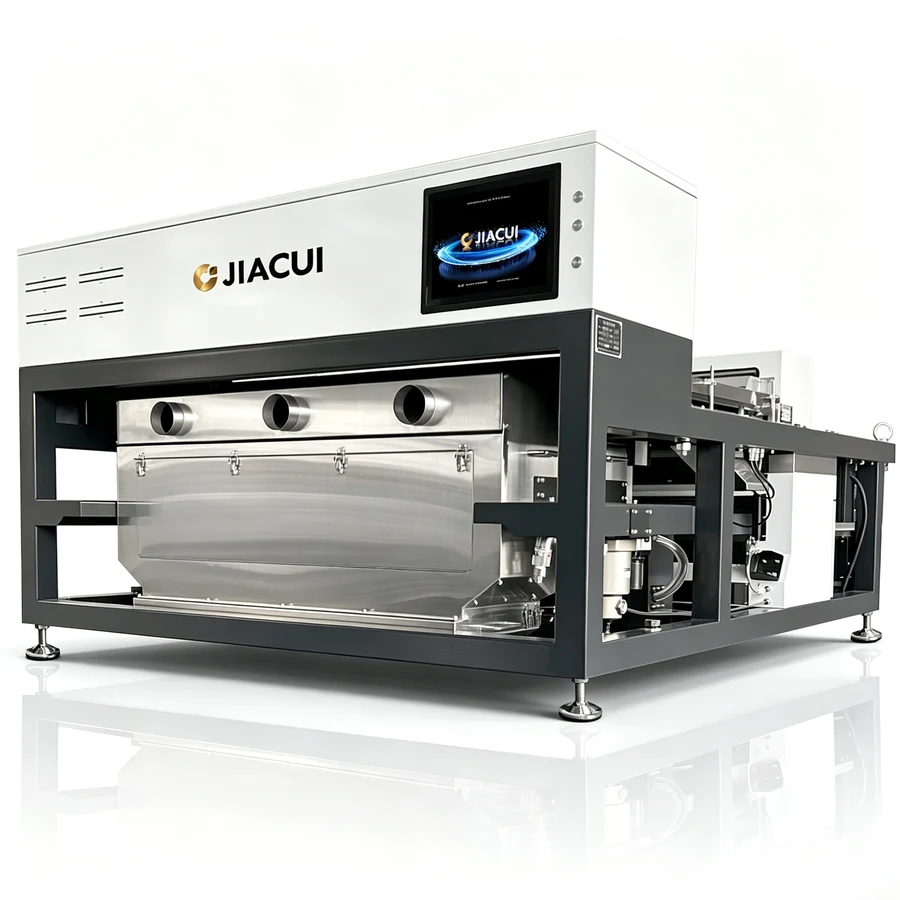
This is a genuine strength of the ValueSort platform rather than a vague promise: JIACUI machines store 90 material recipes, and switching from walnuts to cashews to pistachios is a touchscreen selection of a saved recipe, not a re-commissioning project. The AI module auto-learns good-versus-defective classification and stores the profile, so the criteria you validated for an almond lot on Tuesday are reproduced identically next harvest. Remote commissioning and APP/WiFi adjustment mean an engineer can tune or add a new nut recipe over a connection if you are running something unusual, without a specialist living on your site.
Practically, a multi-nut changeover looks like this:
- Operator selects the saved nut recipe (e.g. "Cashew W240 grade").
- Feeder and belt parameters, sensitivity and eject timing load automatically.
- A short purge clears the previous nut; the camera re-backgrounds in seconds.
The changeover time on a recipe-switch machine is a fraction of a manual re-setup, which is the whole point: capacity you would otherwise lose to a multi-day re-commissioning becomes productive sorting time on the next nut.
Sizing One Machine for a Multi-Nut Line
A multi-nut processor sizes from the hardest duty on the line, not the average one. Two rules:
- If your mix includes fragile high-value kernels (walnut halves, macadamia, large cashew wholes), base the machine on a belt/crawler feed so the breakage-sensitive nuts set the spec, and let the tough small nuts run on the same gentle path.
- If you need to recover good product from the reject stream across several nuts in one pass, the double-deck CS-LA1200D (three grades in a single pass) is the multi-nut workhorse.
| Line profile | Daily nut volume | Suggested JIACUI model |
|---|---|---|
| Single-origin / small processor | up to ~3 t/day | CS-LA300 (crawler) |
| Mid-size multi-nut plant | 3–10 t/day | CS-LA600 (crawler) |
| Export processor, several nuts | 10–30 t/day | CS-LA1200 (crawler) |
| High-volume, 3-grade recovery | 30 t/day+ | CS-LA1200D (double-deck) |
| Budget line, mainly tough nuts | varies | CS-2A128 → CS-6A (chute) |
All crawler models run on 0.6–0.8 MPa compressed air and 220 V / 50 Hz, holding ≥99% separation accuracy across the nut range.
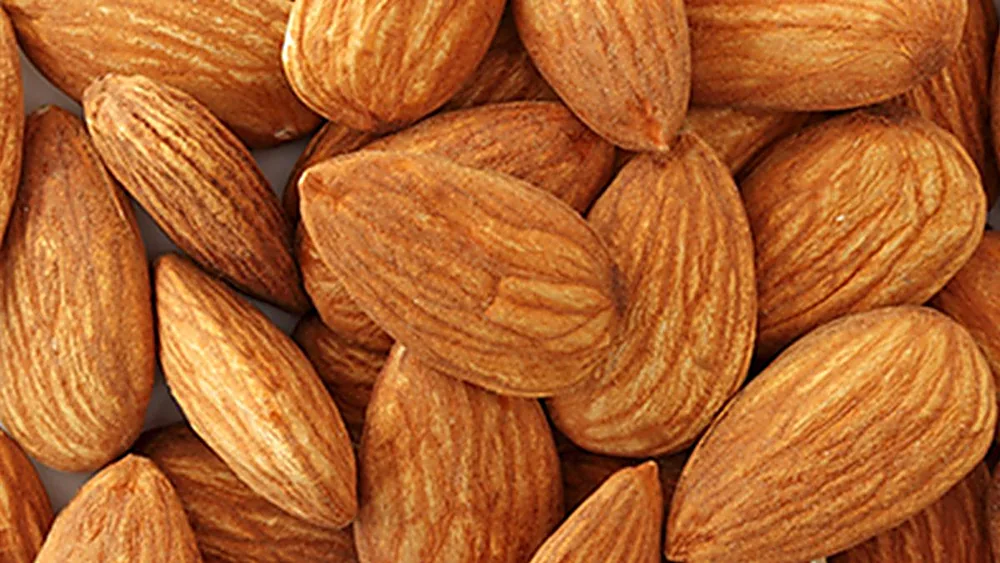
Almonds, cashews and pistachios each load their own stored recipe in seconds.
The ROI: Labor, Whole-Kernel Recovery, and Payback
A multi-nut sorter earns money on three stacked lines. You should rebuild each with your own numbers before quoting a customer, but the structure holds.
1. Labor replaced. The international nut industry already runs a two-stage model: electronic/optical sorting first, then a much smaller hand-sorting/QC step behind it — this is the structure in the California almond HACCP flow (Mechanical/Optical Sorting → Manual Sorting → QC). Optical sorting is the workhorse; hand sorting becomes verification, not bulk removal. Third-party productivity research on a comparable commodity (green coffee hand grading, Indonesian Coffee and Cocoa Research Institute) measured hand sorting at roughly 743 kg per worker-day versus ~1,870 kg/day on a conveyor grading table — nuts, with more varied defects, are no faster by hand. A single sorter running multiple tonnes per hour replaces a large share of that hand-sorting headcount, and the wage line is the cost that rises every year. (Treat the per-worker figure as a coffee-study reference, not a nut-specific benchmark; plug in your own nut hand-sorting rate.)
2. Whole-kernel recovery — the line most buyers forget. On cashews the spread between a white whole and a piece is roughly $2.40–4.50/kg (SVC Q3 2026 FOB). A gentle belt feed plus low carryover keeps kernels on the higher rung of that ladder. On multi-nut lines this compounds: every nut you protect from over-rejection adds back saleable weight.
3. Grade-loss and rejection avoided. An aflatoxin or shell-fragment rejection at an EU border is not a downgrade — it is a container, a claim, and a customer. Optical sorting as the designated control point converts that tail risk into a process you can prove.
A realistic payback illustration
Illustrative — replace every figure with your own before using it. A mid-size processor hand-sorting 8 t/day across walnuts and cashews, replacing most of that labor with one crawler sorter plus a reduced QC team, recovers the labor difference plus a few percentage points of whole-grade cashew/walnut yield within the first season. For a multi-nut line, the second and third nuts add payback on top of the first because the machine was already paid for. (This is a structural illustration, not a guaranteed return; the actual numbers — wage rate, electricity, whole-vs-broken spread and volume mix — depend on your own market.)
The multi-nut case is fundamentally better than the single-nut case on ROI: you buy the machine once and amortise it across every nut and every season, instead of leaving a dedicated sorter idle 10–11 months a year. The 90-recipe model is what makes that amortisation real — without it, the second nut costs you a re-commissioning every changeover.
Supported Nut Varieties
One AI platform, switchable by recipe, covers the commercial nut range — walnuts, pecans, cashews, almonds, pistachios, macadamias, peanuts, hazelnuts, pine nuts, chestnuts, plus seeds such as sunflower, pumpkin and melon seeds, and legumes including chickpeas and coffee beans.
Conclusion
One well-specified AI color sorter genuinely can cover almonds, walnuts, cashews, pistachios, macadamias, peanuts and hazelnuts — because the platform stores 90 recipes, switches nuts from the touchscreen, and combines color-and-shape AI capable of both a 3 mm peanut skin and a 25 mm walnut half. Specify from your hardest nut (fragile kernels → belt/crawler), and amortise the machine across your whole product range and season.
Tell us which nuts you run and in what order, and we will return a per-nut test report, a recipe plan and a multi-nut sizing proposal: Request a multi-nut sorting test.
FAQ
Can one color sorter handle different types of nuts?
Yes — provided it stores per-product recipes and switches them from the touchscreen. Our machines keep 90 material recipes with AI auto-learning, so moving between walnuts, cashews, almonds and pistachios is a recipe selection, not a re-commissioning job.
Is a belt-type or chute-type sorter better for a multi-nut line?
Size from the most fragile nut in your mix. If you process walnut halves, macadamias or large cashew wholes, choose a belt/crawler machine and run the tough small nuts on the same gentle path. If everything you run is dense and free-flowing (peanuts, almonds), a chute machine can be the better value.
How many workers does a nut color sorter replace?
It depends on your throughput, defect load and target purity, but the industry pattern (e.g. the California almond HACCP flow) is optical sorting for bulk removal followed by a small hand-sorting/QC step. Most hand-sorting headcount is replaced; a few QC staff remain. Calculate it on your own hand-sorting rate.
How fast does a nut color sorter pay for itself?
On a multi-nut line, typically within the first processing season, because you amortise one machine across every nut and season while recovering both labor and whole-kernel grade value. Exact payback depends on your wage rate, electricity price, and the whole-vs-broken price spread in your market.