
- Home
-
Color Sorters
Optical Color Sorters
-
Solutions
Solutions
- Service
- Blog
- Videos
- About Us
- Contact Us


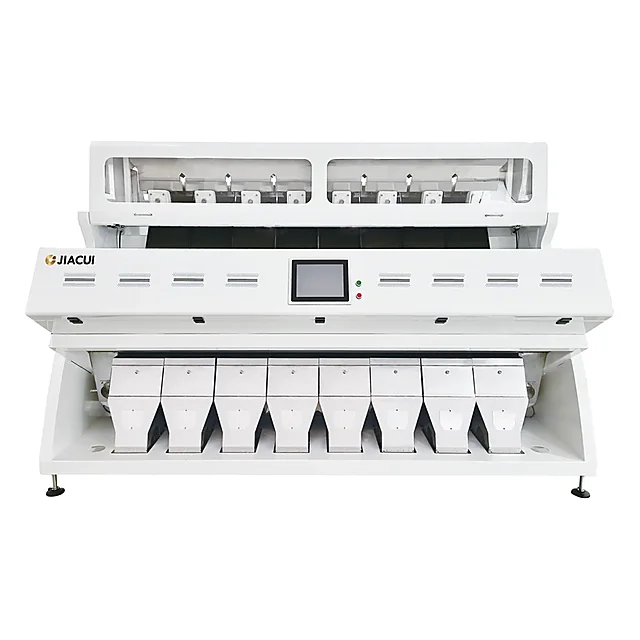
CS-HA640 640-Channel Color Sorter
A high-density platform for grain plants that want more inspection points per tonne. 640 channels and 640 nozzles are driven by 20 cameras across a 7.0 kW frame, at a nominal 5–10 t/h.
Where the CS-HA640 fits
CS-HA640 sits above the CS-6A in inspection density rather than simply in chute count. The 640 channels are split into 640 individually driven nozzles, and 20 cameras look at the falling product from more angles than a standard six-chute frame.
The result is finer control on small defects and a nominal 5–10 t/h, in a 1,940 kg frame that occupies roughly 5 m² of floor. It suits grain plants that need high resolution at volume, and lines where one machine has to keep pace with a continuous mill.
We do not publish a single accuracy or carryover figure for this model. Those numbers move with grain type, defect mix and the reject rate you demand, so they are measured on your sample and written into the test report.
What it sorts
Rice and grain share the platform. Recipes are stored per material, so white rice, paddy, parboiled rice and maize run on one machine with separate feed settings.
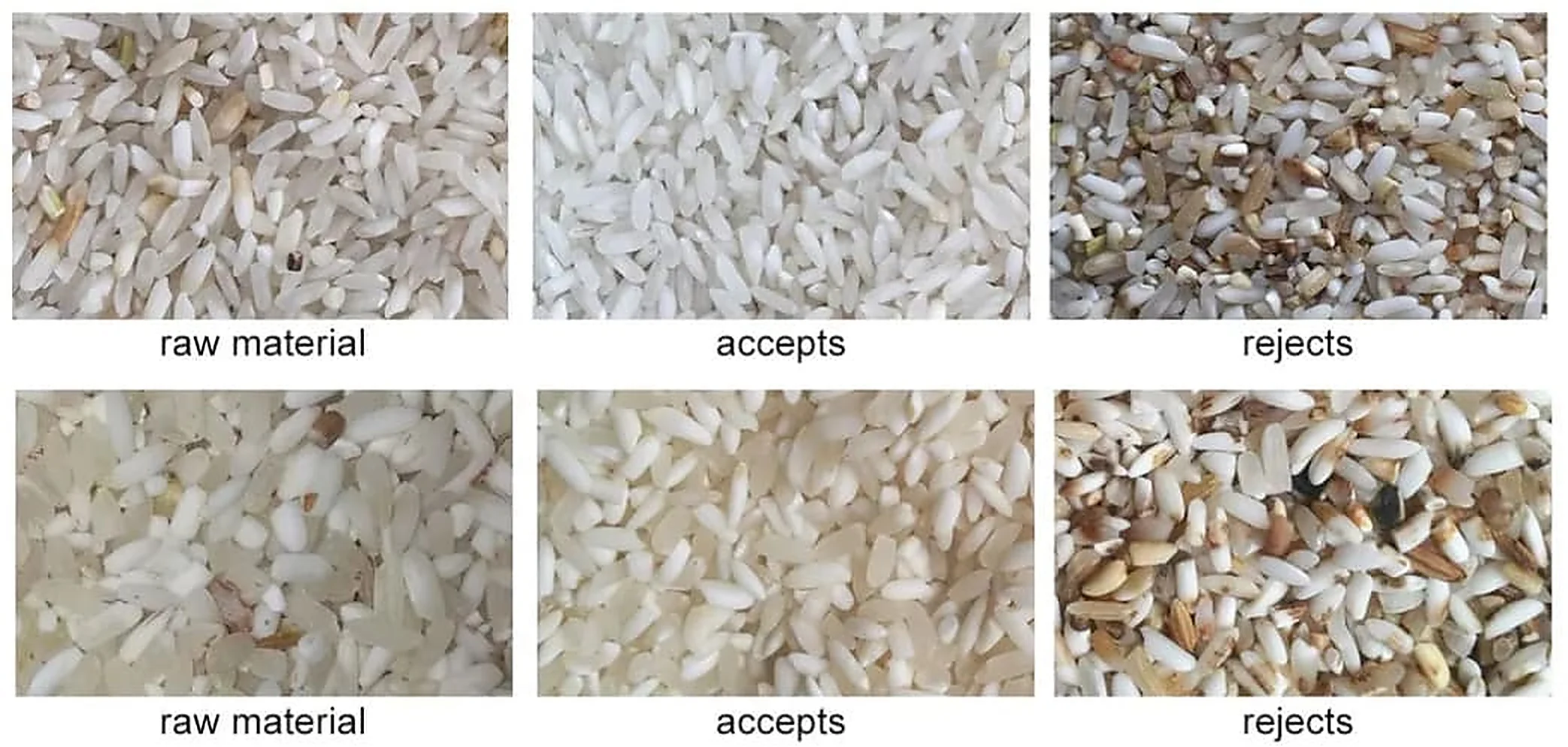
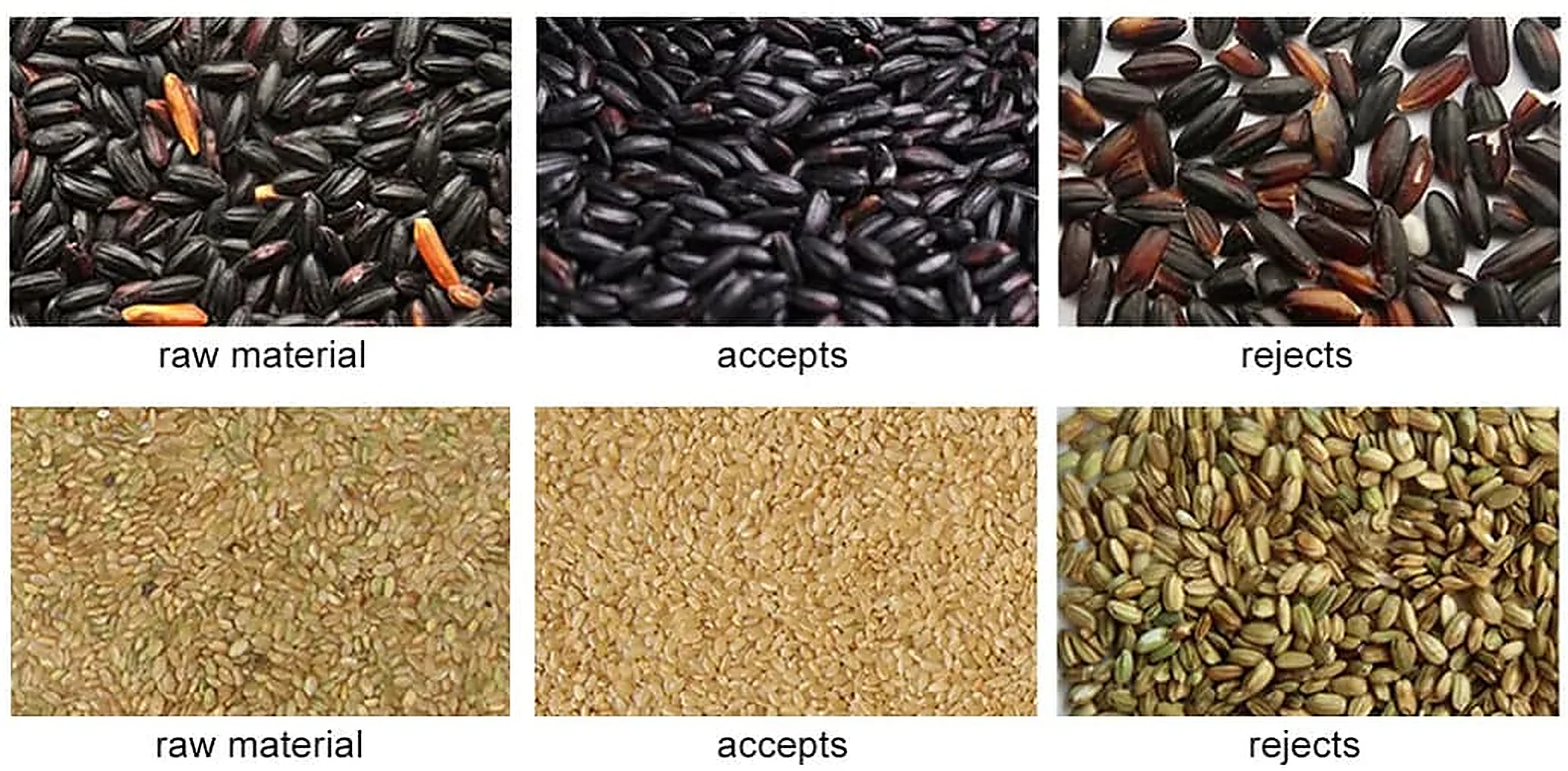
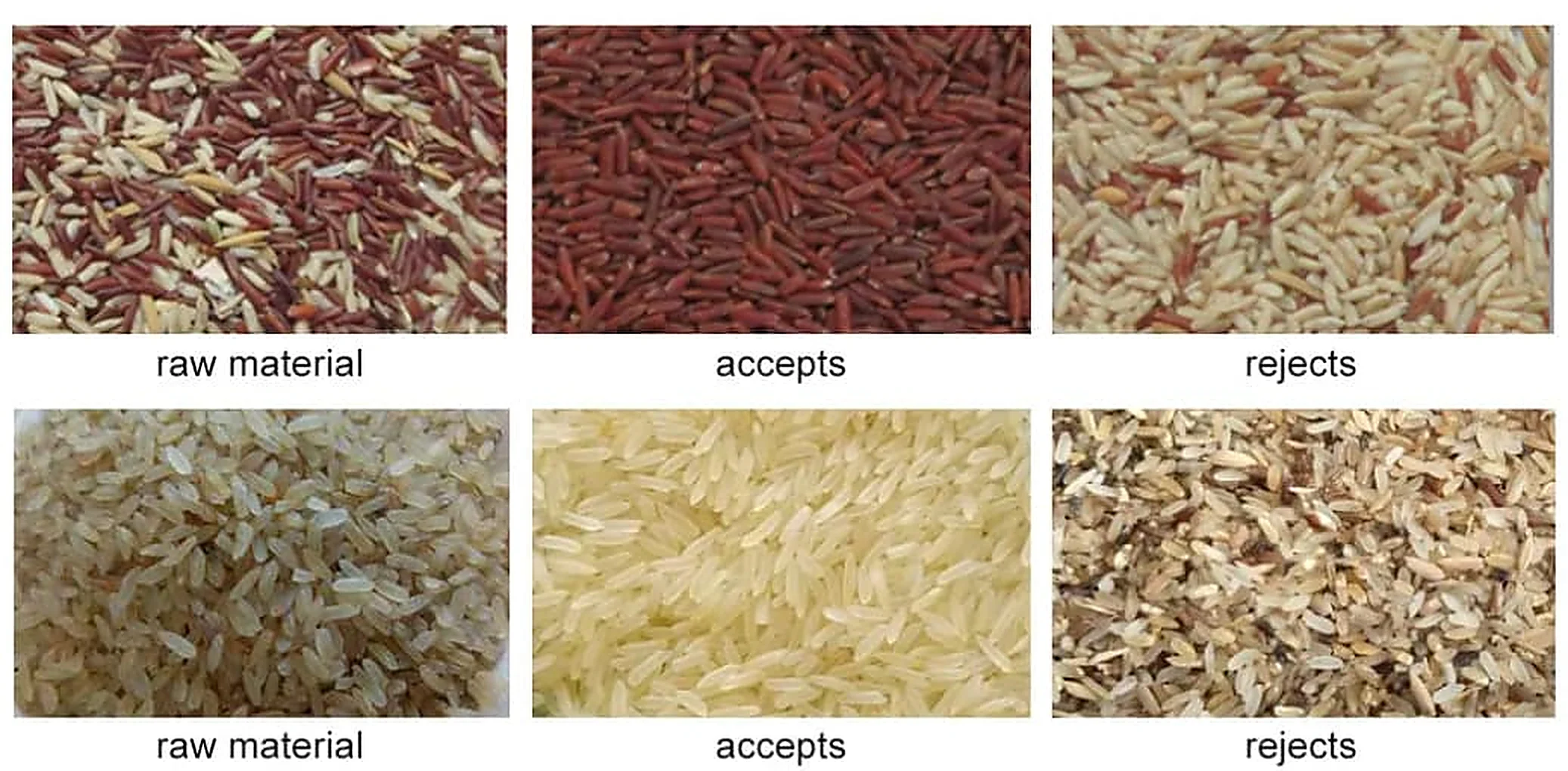

CS-HA640 specifications
| Model | Channels | Cameras | Nozzles | Power (kW) | Capacity (t/h) | Weight (kg) | Footprint |
|---|---|---|---|---|---|---|---|
| CS-HA640 | 640 | 20 | 640 | 7.0 | 5 – 10 | 1,940 | ~5 m² |
Capacity is nominal and changes with grain type, grade, moisture and the reject rate required. Accuracy and carryover are measured on your sample rather than quoted as a platform constant. Power supply is built to the destination voltage.
CS-HA640 next to the other chute models
The choice is between inspection density and cost per tonne. Compare the inspection hardware first, then the tonnage.
| Model | Channels | Cameras | Power (kW) | Capacity (t/h) | Weight (kg) | Best for |
|---|---|---|---|---|---|---|
| CS-6A | 384 | Six-chute standard | 5.6 | 5 – 9 | 1060 | Rice, grains, high tonnage |
| CS-HA640 | 640 | 20 | 7.0 | 5 – 10 | 1,940 | High inspection density at volume |
| CS-10C | 640 | Standard | 5.5 | 7 – 10 | 2200 | Rice, industrial lines |
| CS-12C | 768 | Standard | 7.5 | 8 – 12 | 2600 | Rice, nuts, top capacity |
CS-HA640 is the right choice when defect size is small and the line cannot slow down. When raw tonnage matters more than inspection density, CS-10C or CS-12C cover more tonnes per hour.
Configuration and site requirements
Included as standard
- 640-channel ejector block with 640 individually driven nozzles
- 20-camera inspection array and LED lighting
- Touchscreen control with per-material recipes
- Remote service connection for commissioning and support
- English operation manual and commissioning guidance
Confirm before quoting
- Target throughput (t/h) and shifts per day
- Materials to be covered: white rice, paddy, parboiled, maize — and changeover frequency
- Smallest defect you must catch and the reject rate you need
- Destination voltage and frequency (power supply is built to order)
- Clean, dry compressed air supply and roughly 5 m² of floor
Custom frame heights, RAL machine colour, OEM branding and destination-voltage builds are handled through our custom color sorter service.
CS-HA640: Rice mill integration
Rice is the primary duty, but the platform is set up for the whole mill flow: paddy before husking, milled white rice after polishing, parboiled rice on a separate recipe, and by-grades such as long, round, half and broken rice. Each stage is stored as its own recipe, so the operator switches product without re-teaching the machine. The same chute also handles sesame, pulses and small grains when the mill runs seasonal campaigns.
This tier is built for continuous, multi-shift operation where stopping the line is expensive. Tonnage is high enough that a small percentage of carryover becomes a real annual quantity, so the carryover ratio matters as much as the headline capacity. Plan the civil works, air supply and dust extraction before the machine arrives, because retrofitting them around a running line is the costly way to do it. The installed figures are 5-10 t/h, 7.0 kW and 1940 kg, with a footprint of approximately 5 square metres. 640 channels means 640 independently switched ejectors, so a defect only costs the air of the nozzle that fires.
Two site details decide whether the machine performs as specified: a steady, single-layer feed and a clean, dry air supply. A feed that arrives in surges forces the operator to slow the belt or chute, which gives away tonnage that the machine is capable of holding.
Throughput, reject load and cost per tonne
At the top of the 5-10 t/h range, an eight-hour shift is 80 tonnes of feed. Running at a realistic 85% utilisation for changeovers, cleaning and grade switches, plan on about 68 tonnes per shift. That is the number to compare with your intake, not the peak figure on the specification sheet.
Reject volume is set by your defect load, not by the machine. At a 2% reject rate the sorter removes roughly 200 kg per hour at full rate, and every kilogram of reject carries good product with it. The stated >120:1 carryover means that for every 120 rejected particles about one good particle goes with them, or about 0.8% of the reject stream by count. On a high-value product that percentage is the number that decides payback, which is why we quote carryover beside capacity rather than in a footnote.
Energy is the smaller cost line. At 7.0 kW installed, the machine draws about 0.7 kWh per tonne at full rate, and roughly 13440 kWh over 300 eight-hour days at 80% load. Compressed air, belt and nozzle wear, and the labour needed to clean the inspection window usually cost more than the electricity, so the maintenance plan in the next section matters more than the motor rating.
Installation and commissioning
The machine arrives as one transport unit and is positioned on a level concrete floor with access to both sides for cleaning and service. Allow for a feed conveyor or hopper at the inlet and two outfeed bins at the outlet; the reject bin must be easy to empty because it fills fastest on a dirty lot. Lifting points are marked on the frame, and the frame weight is 1940 kg, so plan lifting gear and a clear path before delivery rather than after it.
Services are a compressed-air drop at 0.6-0.8 MPa with dry, oil-free air, and a power supply built to the destination voltage and frequency. Commissioning covers mechanical alignment, belt tracking where a belt is fitted, air-pressure setting, a camera calibration on a reference card and a first recipe run on your own material. We ask for 5-10 kg of representative feed in advance so the first recipe is close before the engineer arrives.
A two- to four-hour run with your operator present is part of commissioning: the recipes are tuned to your grades, the operator is trained on the touchscreen and the reject-rate target is agreed before sign-off. Remote support stays connected after commissioning for recipe adjustments as your incoming lots change.
Wear parts, service and uptime
The wear list is short and known. Ejector nozzles, filters on the air line, the inspection window and the lighting module are the parts that need routine attention; on a belt machine the belt itself and its cleaning scraper are added to the list. Nozzles are replaced individually, not as a block, so a failed ejector is a low-cost item rather than a reason to stop the line.
Daily work is cleaning: wipe the inspection window, check the air pressure, empty the reject bin and look at the feed for surges. Weekly work adds a nozzle test from the touchscreen, a check of the camera image against the reference card and a belt-tracking check on belt models. Annual work is the full calibration and a leakage verification on X-ray machines for the HACCP file.
Keep a small spares kit on site: a set of nozzles, an air filter element, a window and an LED module. That kit covers almost every unplanned stop, and the remote support connection lets our engineers read the machine log before a technician is dispatched, so a minor fault does not turn into a week of downtime.
CS-HA640 questions
CS-6A or CS-HA640 — which one do I need?
CS-6A is the six-chute workhorse at 384 channels, 5–9 t/h and 1060 kg. CS-6A is the lower-cost choice when a standard camera set is enough. CS-HA640 adds 20 cameras and 640 individually driven nozzles for finer detection on small defects at 5–10 t/h.
What do 20 cameras and 640 nozzles actually change?
More cameras give the sorter more views of each kernel as it falls, so small or partially hidden defects are more likely to be seen. One nozzle per channel means the ejector can act on a narrower slice of product, which usually reduces the amount of good grain blown out with the reject. Both effects are measured on your sample.
What accuracy and carryover will I get?
We do not quote platform-wide accuracy or carryover for this model, because both move with grain type, defect mix, moisture and the reject rate you demand. Send 2–5 kg and the measured figures go into your test report before you order.
What voltage and air supply does it need?
The power supply is customizable to the destination voltage and frequency. The 640-nozzle block needs more clean, dry compressed air than a 384-channel machine; the exact consumption is specified in the quotation once your feed rate and ejector duty are known.