


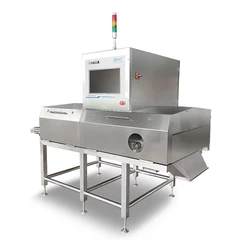
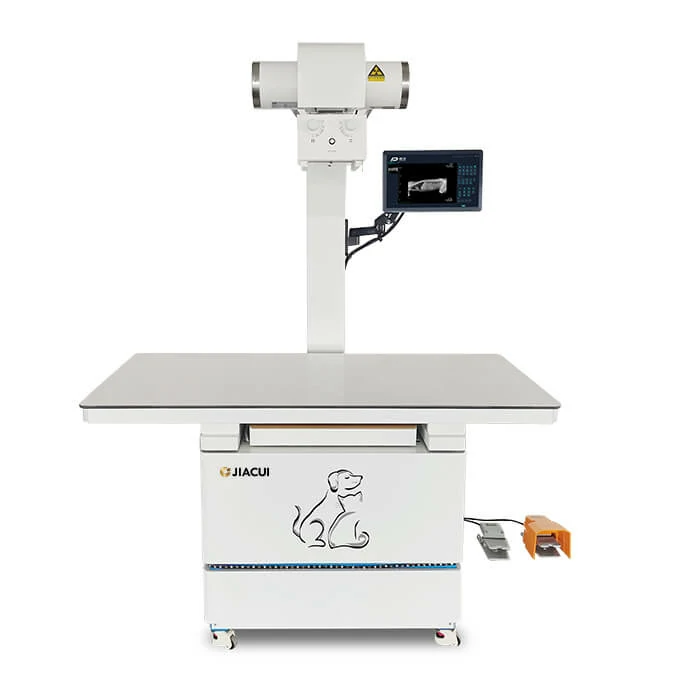
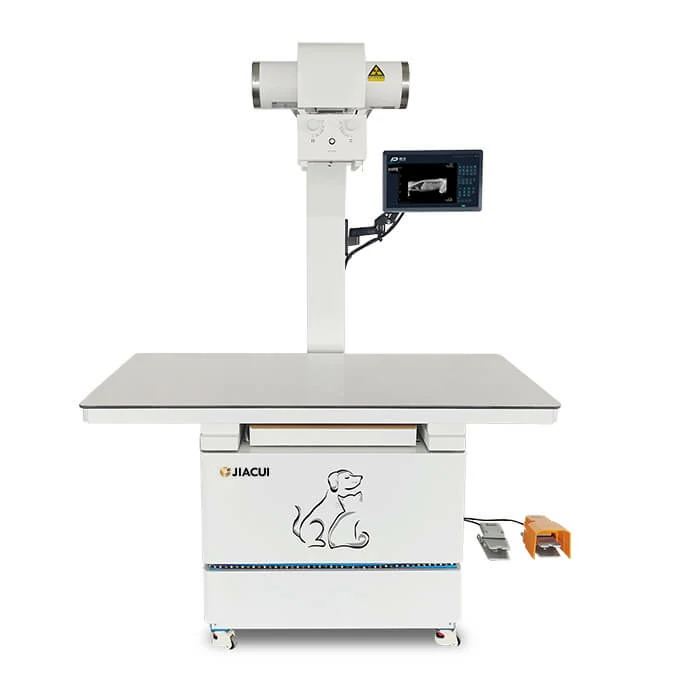

The purchase order is the easy part. What determines whether a sorter delivers its specification is the fortnight after it arrives: how the site was prepared, how it was levelled, what air it was given, and whether anyone actually verified the result before signing acceptance.
This is a practical guide to that fortnight. It is written for plant engineers and owners who want the machine producing to specification on day one rather than discovering in month three that it has never been properly commissioned.
Before delivery: what the site must provide
Sorting machines are compact by industrial standards but have specific requirements, and the common failure is discovering them on delivery day.
Space and floor. A substantial multi-chute machine typically occupies a floor footprint of roughly 2–3 m² and weighs between 700 and 2,000 kg. That is serious point loading on a mezzanine or an elevated platform, so check the floor rating before you choose the location, and confirm the access route can carry the machine to it.
Power. Industrial sorters are specified at 400 V / 50 Hz three-phase, with installed power typically 1.5–4.5 kW depending on chute count and camera configuration. Confirm your supply matches before delivery, not after.
Compressed air. This is the requirement most often under-budgeted. The ejection array needs clean, dry, oil-free air at stable pressure. Large chute machines may consume up to 6.5 m³/min at 0.5–0.8 MPa. Practical guidance for grain applications scales the compressor from about 15 HP for smaller machines to 40 HP for large multi-chute units. Specify an oil-free screw compressor with dryer and filtration, an accumulator tank for peak demand, and a pressure regulator at the machine.
Environment. Optical performance is temperature-sensitive, and sorting installations are best placed in reasonably climate-controlled space. In hot or humid climates a compressor air dryer on the ejector supply is not optional — moisture in the lines fouls valve orifices and progressively degrades sorting.
Dust extraction. Sorting generates fine particulate, and uncontrolled dust fouls optics, nozzles and the working environment. Plan extraction at the machine, not as an afterthought.
Positioning in the production line
Where the sorter sits in the line matters as much as how it is installed.
Upstream, before the sorter. A sorter is a precision finishing device, not a primary cleaner. Install mechanical pre-cleaning ahead of it — magnets, de-stoners, aspirators and screens — to remove stones, metal, stalks and fines. Every item removed mechanically is capacity returned to the optics for the defects that genuinely need them.
Feeding it consistently. Provide elevators and a buffer hopper sized to deliver steady, surge-free feed. Surging feed is one of the most damaging and most avoidable conditions a sorter experiences; a hopper that alternately starves and floods the machine produces wildly inconsistent results.
Downstream. Provide separate handling for the accept stream and the reject stream, with the reject stream accessible — you will need to inspect and hand-sort it during acceptance testing and during tuning.
Mechanical and electrical installation
Three installation details disproportionately affect long-term performance:
Levelling. On chute-type machines this is genuinely critical, because the machine depends on gravity to accelerate product down the channels at a designed rate. An out-of-level machine produces uneven flow between channels, and the result is permanent accuracy loss that no software setting can correct. Level it properly and re-check after the first weeks.
Vibration isolation. Sorters contain vibratory feeders. Mount them so the vibration is damped rather than transmitted into the frame, the building or adjacent equipment.
Earthing and supply quality. Provide proper earthing and stable supply. Voltage fluctuation affects lamp output and therefore optical calibration, which is a subtle and frequently misdiagnosed cause of drift.
The commissioning sequence
In order, because each step depends on the previous one:
- Verify utilities — supply voltage, air pressure and air quality at the machine, before powering anything.
- Verify levelling and mechanical integrity — chutes, belt tracking, fastenings.
- Calibrate the feed — adjust the vibratory feeder so product is metered evenly across the full working width. Uneven distribution means some channels are starved while others run over their monolayer limit.
- Calibrate the optics — run white-reference / background calibration so the system has a valid baseline. This is the step that makes later drift detectable.
- Teach the material — build the sorting recipe from samples of your actual good product and your actual defects, not from a generic preset.
- Set sensitivity — establish the rejection threshold against your product's real variation.
- Verify ejection timing — confirm targets are being hit, by observing the reject stream, not by trusting the counter.
- Run production trials — at your intended throughput, on your material, for long enough to be meaningful.
Step 5 is the one most often skipped, and it is the one that most determines the outcome. A recipe built on generic settings will either reject good product or pass defects, and the machine will be blamed for it.
Acceptance testing: measure the three metrics together
Acceptance is where buyers most often accept a demonstration instead of a measurement. A supplier showing you clean-looking output is not the same as a verified result.
There are three metrics, and they must be evaluated together because they trade against one another:
Throughput is the actual tonnes per hour achieved, measured over a sustained run, not a peak instantaneous reading.
Sorting accuracy is the proportion of total defects present that the machine removed.
Carry-over ratio is the ratio of good product to genuine defect in the reject stream — what the machine threw away to achieve that accuracy.
The first two flatter a machine; the third is the one that costs you money. A sorter can hit impressive accuracy by being set aggressively and blowing away good product with every reject, and carry-over is the metric that exposes it. Our published baseline is sorting accuracy ≥99%, stated at a defined condition — polished japonica-type rice at approximately 2% foreign content — because accuracy without a stated test condition is not a comparable specification.
A practical acceptance protocol
This is the procedure we recommend, and it needs nothing but scales, sample trays, a marker and patience:
- Take a representative sample of your feed material and weigh it.
- Hand-sort that sample to establish the true defect content — this is your denominator, and without it you cannot compute accuracy at all.
- Run the machine at the agreed production feed rate, for an agreed period.
- Collect and weigh the reject stream separately.
- Hand-sort the reject stream into good product and genuine defect.
- Compute: accuracy = defects removed ÷ total defects present; carry-over = good product in reject ÷ defect in reject.
Do this at your throughput and your contamination level, and record the result. That record becomes your baseline for every future performance conversation, drift check and warranty claim.
Then, critically, tune it: adjust sensitivity and pulse duration to find the economic optimum, not maximum rejection. The procedure for doing that systematically is set out in Why your sorter rejects good product.
Training and handover
Insist on two distinct levels of training, because they are different jobs:
Operators need daily cleaning of optics, windows and nozzles; recipe selection and changeover; sensitivity adjustment; recognising the early symptoms of drift; and the presentation checks — monolayer, even distribution, feed rate within limit — that belong at every shift start.
Technicians need optical recalibration, ejector valve replacement, air-system maintenance including filtration and drying, and basic diagnostics.
Spares to hold on site. Valves, lamps or LED modules, nozzle assemblies, air filters, and viewing-window glass — the consumable items whose absence turns a one-hour fix into a two-week wait.
Common commissioning mistakes
- Signing acceptance on a demo rather than a measurement. If you did not weigh and hand-sort the reject stream, you did not verify the machine.
- Accepting a recipe built on generic settings instead of taught on your material.
- Undersizing the compressor, then blaming the sorter for weak ejection.
- Skipping pre-cleaning upstream, then discovering the sorter spends its capacity removing stones.
- Levelling done once and never re-checked.
- No baseline recorded, so later drift cannot be distinguished from original performance.
How JIACUI supports commissioning
We publish the conditions behind our ≥99% sorting accuracy baseline precisely so that acceptance testing is a comparison against a stated specification rather than a matter of opinion.
The range spans the chute machines — CS-QB16 (20–100 kg/h, well suited to laboratory and small-batch use), CS-HA32, CS-4A, CS-5A, and CS-7A at 6–12 T/H — and the belt machines CS-LA300, CS-LA600, CS-LA1200 and the double-deck CS-LA1200D for product that must not free-fall. Sizing that range to your throughput is covered in Color sorter ROI and capacity planning.
FAQ
How long does commissioning take?
Plan for several days for a straightforward installation on a prepared site, of which the largest single block is material teaching and tuning. Sites that skipped preparation routinely lose more time to utility problems than to the machine.
Can I commission it myself?
Mechanical installation and utilities should be local, and yes — the sequence above is designed to be followed by a competent plant engineer. Remote support for the optical and software steps is standard, and it removes the scheduling delay of waiting for an engineer to travel.
What if the acceptance test fails?
First confirm the presentation basics — monolayer, even distribution, feed rate within rating, correct air pressure. The large majority of apparent shortfalls trace to those, and specifically to the material conditions described in material presentation, not to the machine.
Do I need to re-test after commissioning?
Yes, on a schedule. Illumination drifts, valves wear and feed conditions change. Re-running the same protocol quarterly gives you a comparable number and lets you catch decline before it becomes a quality incident.
What is the single biggest thing I can do to protect the investment?
Record the acceptance result. Everything afterwards — drift detection, troubleshooting, warranty discussion, tuning decisions — depends on having a verified baseline to compare against.
Should I run the sorter at maximum rated throughput?
No. Reserve roughly 20% capacity margin. A machine run permanently at its rated limit is run permanently at its worst accuracy, because bed depth rises and particles overlap in the camera frame.