- Home
-
Color Sorters
Optical Color Sorters
-
Solutions
Solutions
- Service
- Blog
- Videos
- About Us
- Contact Us


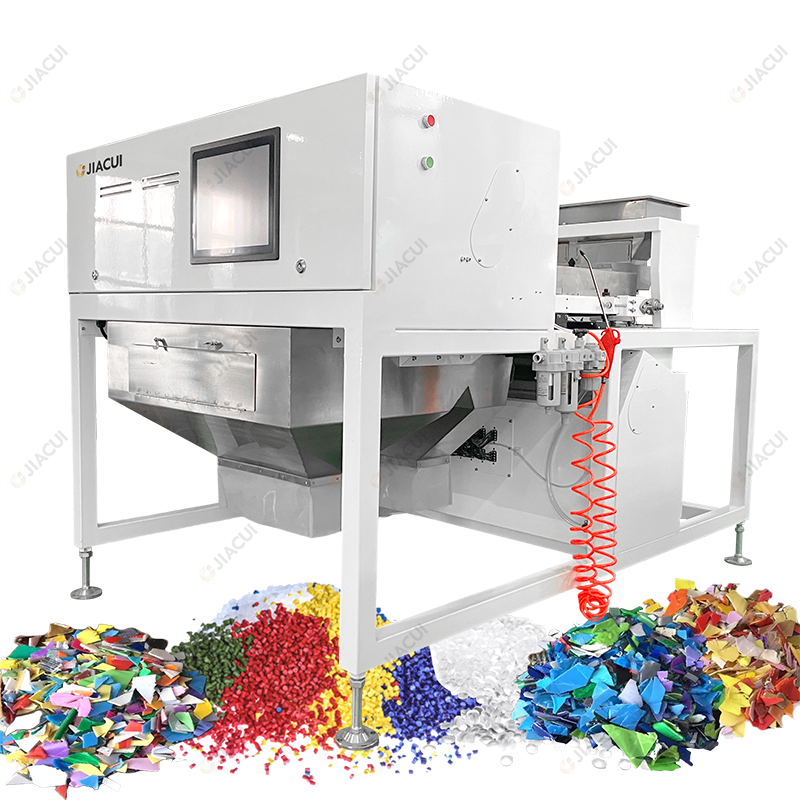
CS-LA1200 Belt-Type Color Sorter
A 1200 mm single-belt platform for plastic recycling and minerals. Up to 12 t/h, 6 kW and 1,150 kg, with the >20:1 carryover that protects a high-value flake or ore product.
Where the CS-LA1200 fits
CS-LA1200 is the widest single-belt platform in the range. At 1200 mm the belt spreads a heavier stream into one layer, so a recycling plant can hold 5-12 t/h without running two machines. The 6 kW drive, 1,150 kg frame and 2,430 x 2,000 x 1,198 mm footprint suit a line that already has a conveyor take-off point; when the reject stream still carries good product, step up to the dual-layer CS-LA1200D and recover it in a second pass.
Compare against the smaller and larger platforms below before choosing tonnage. All figures are nominal and confirmed on your sample.
What it sorts
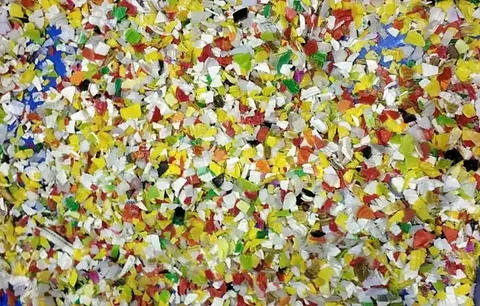
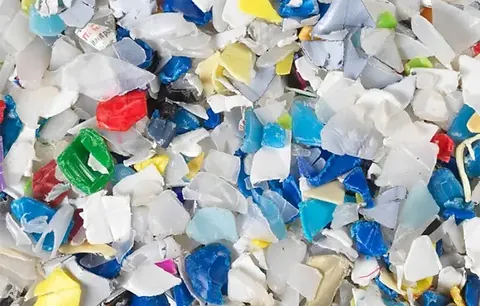
Plastic flake is light, translucent and easily airborne. A belt keeps the flake flat and evenly spread, which is what makes clear PET, coloured PE and mixed regrind sortable at high tonnage.


CS-LA1200 specifications
| Specification | CS-LA1200 |
|---|---|
| Belt width | 1200 mm |
| Belt speed | Adjustable, set per material |
| Feed size | 5-50 mm |
| Capacity | 5-15 mm 2.5-3.5 t/h; 15-30 mm 3-5 t/h; 30-50 mm 4-6 t/h per pass |
| Power | 6.0 kW |
| Power supply | Customizable to destination voltage and frequency |
| Accuracy | >=99.99% |
| Carryover | >20:1 |
| Dimensions (L x W x H) | 2430 x 2000 x 1198 mm |
| Net weight | 1150 kg |
Capacity is quoted per feed-size band because a belt carries one layer; accuracy and carryover are platform statements confirmed on your material.
CS-LA1200 next to similar models
The nearest models by belt width and tonnage.
| Model | Belt | Capacity (t/h) | Power (kW) | Weight (kg) |
|---|---|---|---|---|
| CS-LA600 | 600 | 2.5-6 | 2.5 | 750 |
| CS-LA1200 | 1200 | 5-12 | 6.0 | 1150 |
| CS-LA1200D | 1200 dual | 5-12 | 9.0 | 2300 |
| CS-LA300 | 300 | 1.2-3 | 1.75 | 550 |
Choose by belt width first, then by tonnage at your coarsest feed fraction.
Configuration and site requirements
Included as standard
- 1200 mm belt with alignment and tension control
- Colour camera inspection and LED lighting
- Touchscreen control with per-material recipes
- Automatic belt cleaning and air purge on the inspection window
- English operation manual and commissioning guidance
Confirm before quoting
- Feed-size range and the tonnage at each fraction
- Contaminant type and the reject rate you must achieve
- Destination voltage, frequency and compressed-air supply
- Conveyor height and the space for two outfeed bins
- Dust, moisture and wash-down conditions on site
Custom belt widths, frame heights, RAL machine colour and destination-voltage builds are handled through our custom color sorter service.
CS-LA1200: Mine and recycling line integration
Ore and recycled plastic arrive coarse, abrasive and uneven in size. A belt keeps the product flat and at a constant distance from the camera, which is what makes 5-50 mm lumps sortable at production tonnage. Mineral duties are quartz, silica sand, bauxite, manganese, feldspar and kaolin; plastic duties are PET bottle flake, coloured PE, mixed regrind and shredded rigid scrap. The same frame serves a quarry pilot line and a recycling plant with a conveyor take-off point. The belt is 1200 mm wide, set by the conveyor take-off point rather than by the sorter cabinet.
This tier is built for continuous, multi-shift operation where stopping the line is expensive. Tonnage is high enough that a small percentage of carryover becomes a real annual quantity, so the carryover ratio matters as much as the headline capacity. Plan the civil works, air supply and dust extraction before the machine arrives, because retrofitting them around a running line is the costly way to do it. The installed figures are 5-12 t/h, 6.0 kW and 1150 kg in a 2430 x 2000 x 1198 mm frame.
Two site details decide whether the machine performs as specified: a steady, single-layer feed and a clean, dry air supply. A feed that arrives in surges forces the operator to slow the belt or chute, which gives away tonnage that the machine is capable of holding.
Throughput, reject load and cost per tonne
At the top of the 5-12 t/h range, an eight-hour shift is 96 tonnes of feed. Running at a realistic 85% utilisation for changeovers, cleaning and grade switches, plan on about 81.6 tonnes per shift. That is the number to compare with your intake, not the peak figure on the specification sheet.
Reject volume is set by your defect load, not by the machine. At a 2% reject rate the sorter removes roughly 240 kg per hour at full rate, and every kilogram of reject carries good product with it. The stated carryover means that for every 10 rejected particles about one good particle goes with them, or about 9.1% of the reject stream by count. On a high-value product that percentage is the number that decides payback, which is why we quote carryover beside capacity rather than in a footnote.
Energy is the smaller cost line. At 6.0 kW installed, the machine draws about 0.5 kWh per tonne at full rate, and roughly 11520 kWh over 300 eight-hour days at 80% load. Compressed air, belt and nozzle wear, and the labour needed to clean the inspection window usually cost more than the electricity, so the maintenance plan in the next section matters more than the motor rating.
Installation and commissioning
The machine arrives as one transport unit and is positioned on a level concrete floor with access to both sides for cleaning and service. Allow for a feed conveyor or hopper at the inlet and two outfeed bins at the outlet; the reject bin must be easy to empty because it fills fastest on a dirty lot. Lifting points are marked on the frame, and the frame weight is 1150 kg, so plan lifting gear and a clear path before delivery rather than after it.
Services are a compressed-air drop at 0.6-0.8 MPa with dry, oil-free air, and a power supply built to the destination voltage and frequency. Commissioning covers mechanical alignment, belt tracking where a belt is fitted, air-pressure setting, a camera calibration on a reference card and a first recipe run on your own material. We ask for 5-10 kg of representative feed in advance so the first recipe is close before the engineer arrives.
A two- to four-hour run with your operator present is part of commissioning: the recipes are tuned to your grades, the operator is trained on the touchscreen and the reject-rate target is agreed before sign-off. Remote support stays connected after commissioning for recipe adjustments as your incoming lots change.
Wear parts, service and uptime
The wear list is short and known. Ejector nozzles, filters on the air line, the inspection window and the lighting module are the parts that need routine attention; on a belt machine the belt itself and its cleaning scraper are added to the list. Nozzles are replaced individually, not as a block, so a failed ejector is a low-cost item rather than a reason to stop the line.
Daily work is cleaning: wipe the inspection window, check the air pressure, empty the reject bin and look at the feed for surges. Weekly work adds a nozzle test from the touchscreen, a check of the camera image against the reference card and a belt-tracking check on belt models. Annual work is the full calibration and a leakage verification on X-ray machines for the HACCP file.
Keep a small spares kit on site: a set of nozzles, an air filter element, a window and an LED module. That kit covers almost every unplanned stop, and the remote support connection lets our engineers read the machine log before a technician is dispatched, so a minor fault does not turn into a week of downtime.
CS-LA1200 questions
CS-LA1200 or CS-LA1200D - which one do I need?
CS-LA1200 is a single-layer belt at 5-12 t/h and 6 kW. CS-LA1200D adds a second sorting layer in one frame at 9 kW and 2,300 kg, so good product ejected with rejects is recovered in the same machine. Choose the D when your reject stream still has recoverable value.
What throughput will I get on PET flake?
A 5-15 mm bottle flake stream typically runs 2.5-3.5 t/h per belt pass, and coarse 30-50 mm shred reaches 4-6 t/h. The 5-12 t/h headline is the platform range across feed sizes, so size on your actual flake and add headroom for re-runs.
How much floor space does it need?
The frame is 2,430 x 2,000 x 1,198 mm and weighs 1,150 kg. Plan for a conveyor infeed, two outfeed bins and access to both sides; the machine needs a level floor and a compressed-air drop within reach.
Can one machine sort several colours?
Yes. Each colour and each resin is stored as its own recipe, and the operator selects the recipe for the bale being run. Sorting three colours in one pass is a production-layout decision made with our engineers, not a standard setting.