

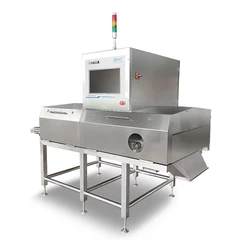

Ask a roaster what keeps them awake and the answer is rarely the roast curve. It is the pale bean that comes out of a finished batch looking like a lightly roasted coffee bean — except it is not.
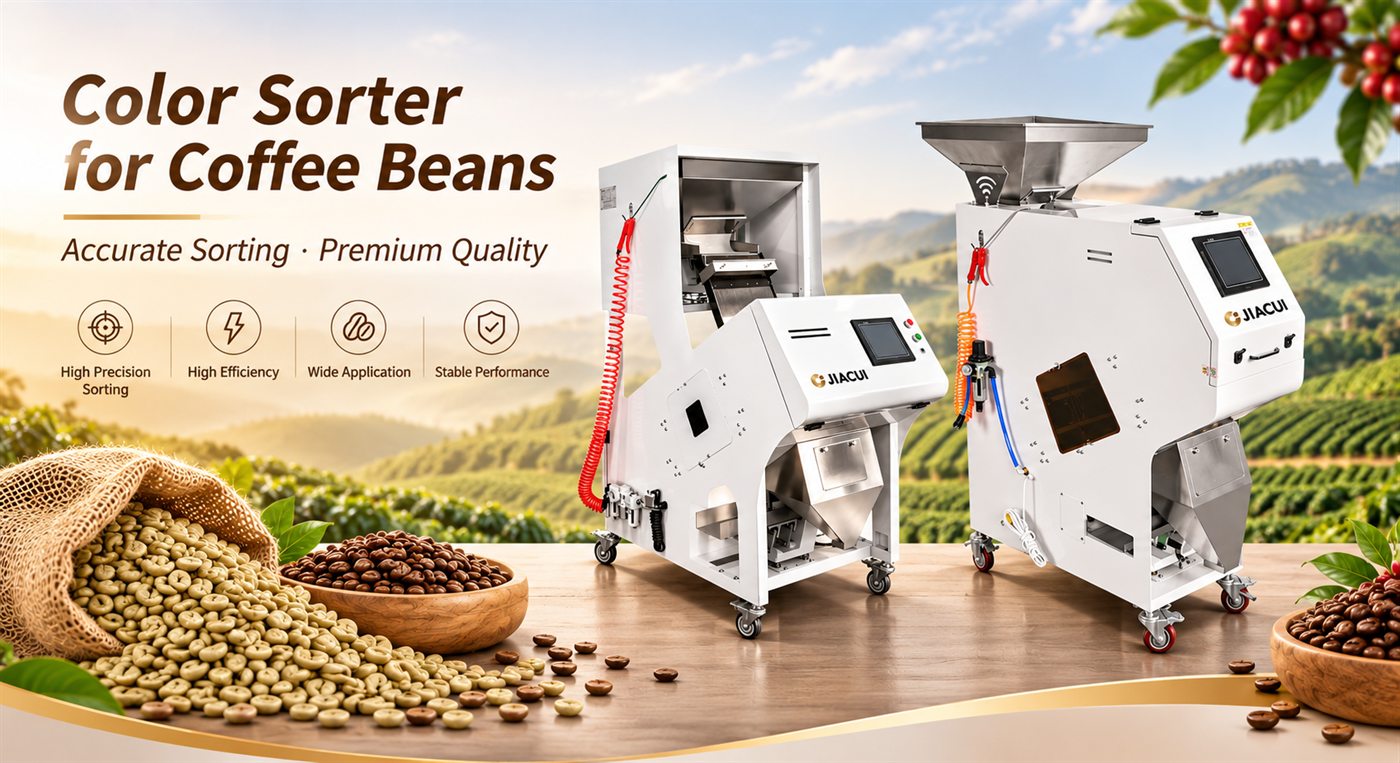
Quakers are the defect that quality control cannot fully catch upstream, the one the Specialty Coffee Association allows exactly zero of in a 100 g roasted sample of specialty coffee, and the one that hand-picking from a cooling tray eats twenty minutes of a roaster's day. Post-roast optical sorting is now the standard industrial answer, and the machines have become small enough to sit in a two-roaster shop.
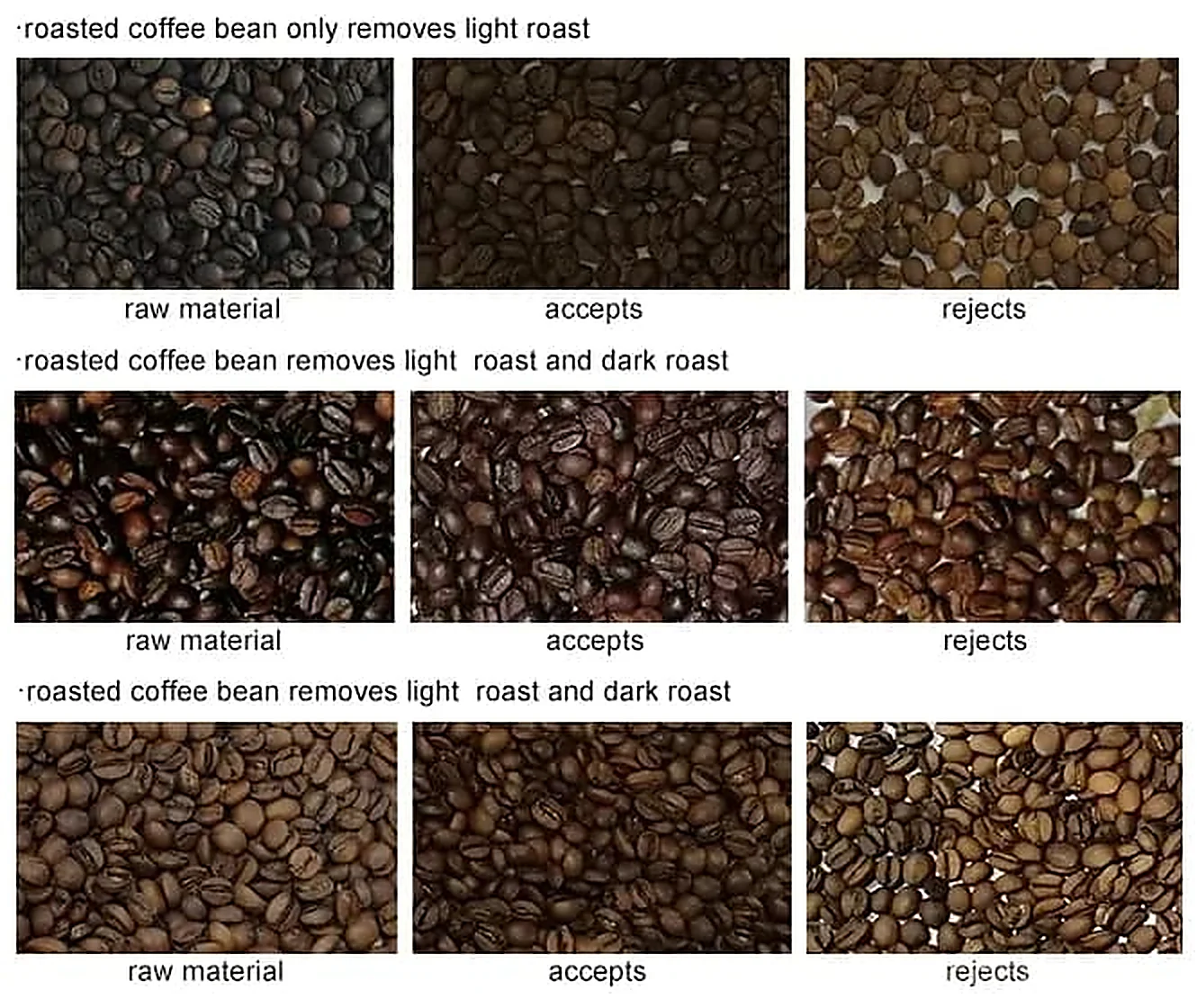
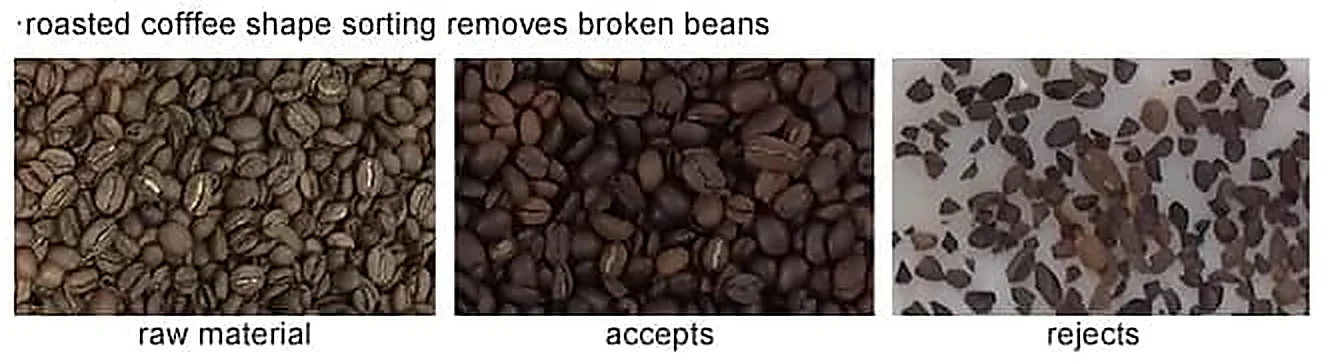
Post-roast sorting removes pale quakers, tipped beans and fragments before packaging.
What Are Quaker Beans and Why Do They Ruin Espresso and Pour-Over?
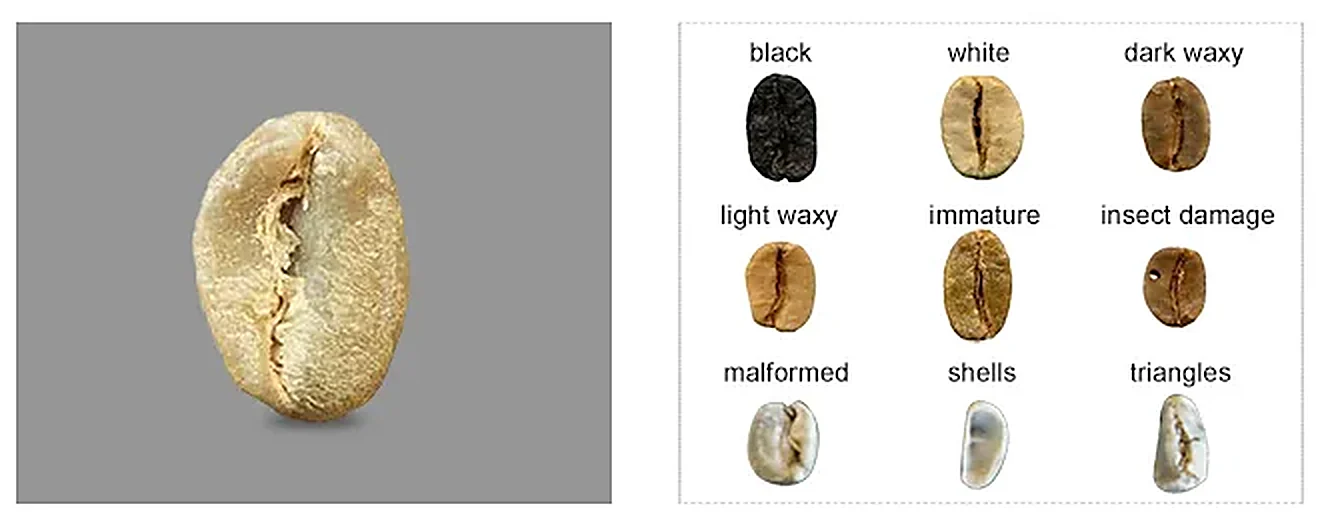
A quaker is an underdeveloped seed. It never accumulated the sugars and amino acids a mature bean needs, so during roasting the Maillard reaction does not proceed normally and the bean stays pale while everything around it browns.
Why they survive your quality programme is the important part, because it is not simply careless harvesting. Picking only red cherries helps, and is standard practice in specialty regions — but it is not the whole story. Coffee buyers have observed quakers appearing in lots where producers picked selectively, when the plants themselves were unhealthy or under-nourished; the leaf rust epidemic that hit Central and South America from 2012 made this visible across whole origins. Strip-picked lots carry more quakers, but selective picking does not bring the number to zero.
What they do in the cup. Sensory research on natural-process specialty coffee describes quaker-affected beverages with descriptors such as herbaceous, immature fruit, peanut, astringent and paper-like — the same off-notes roasters complain about when a "good lot" tastes flat and dry in the finish. The same research found the sensory threshold is low: beans of the palest quaker shade measurably damaged the cup when as few as about seven of them were present in a 65-bean cupping serving.
That is why one or two pale beans in a bag of single-origin retail coffee is a reputation problem, not an aesthetic one. And it is why the trade's own grading rules are absolute on the point.
Why Post-Roast Sorting Requires a Different Machine Design
Green coffee is hard, dry and forgiving. Roasted coffee is the opposite, and a sorter configured for a dry mill can quietly fail on a roastery floor. Four design requirements:
1. A gentle product path
Roasted beans are brittle and degassed; shattering them into fragments and fines destroys the very product you paid to sort. Belt and crawler-fed machines carry the beans horizontally instead of dropping them, and an anti-crushing internal path with a low fall height limits impact. Our crawler line is specified with an anti-crushing structure designed to reduce material breakage, and a discharge layout built to work in dusty, corrosive conditions.
The practical sizing point for roasted whole bean: on the CS-LA300 (300 mm belt), the 5–15 mm size band is rated at 1.2–1.8 t/h — which covers espresso-grade bean sizes and typical production batches.
2. Optical cleaning that keeps up with oils and chaff
Roasted coffee coats glass. Coffee oil, silver skin and fines build a film on the viewing windows, and the machine's accuracy decays through the shift without warning. This is the single most under-specified feature on a post-roast purchase order.
Our chute machines include an automatic dust-removal device, specified to hold a high separation rate in high-dust environments, with operator-set cleaning time and cycle periods and a 304 stainless / food-grade alloy dust-cleaning system. For roasted duty, ask any supplier to demonstrate accuracy at hour eight, not minute two.
3. Shape and texture recognition, not only color
Post-roast rejects are a mix of color failures and physical failures: pale quakers and tipped/scorched beans are color; chips, fragments, husk, sticks and the occasional wood or plastic contaminant are shape and material. A deep-learning classifier trained on your defect set handles both, and center-positioning algorithms eject only the length of the offending object so you do not lose a good bean next to a bad one.
4. Footprint, power and plug-in practicality
Most specialty roasteries have no spare square meters and no three-phase supply. This is where the mini class matters:
| Model | Capacity | Floor space | Power | Weight | Best fit |
|---|---|---|---|---|---|
| CS-HA32 | 0.25 t/h | 0.3 m² | 0.7 kW, 220 V/50 Hz | 105 kg | Micro-roastery, batch samples, single-origin retail |
| CS-1A64 | 0.8–1.5 t/h | 1 m² | 1 kW, 220 V/50 Hz | 157 kg | Small/medium roastery, one shift of retail production |
| CS-1A80 (re-sort) | 0.8–1.5 t/h | 1.4 m² | 1.5 kW, 220 V/50 Hz | 189 kg | Roasteries running high sensitivity while protecting yield |
| CS-LA300 (crawler) | 1.2–1.8 t/h (5–15 mm) | 2.7 m² | 1.75 kW, 220 V/50 Hz | 550 kg | Delicate light roasts, oily dark roasts, mixed SKUs |
A 0.25 t/h machine sorts a 60 kg batch in about fifteen minutes. For a roastery producing 300–800 kg a day, that is not a production line — it is an after-roast finishing step that runs between batches.
Confirm supply voltage and frequency for your country before ordering. Our standard specification is 220 V/50 Hz; North American 208–240 V/60 Hz requirements need to be verified with the factory and, where required, handled with the appropriate electrical configuration.
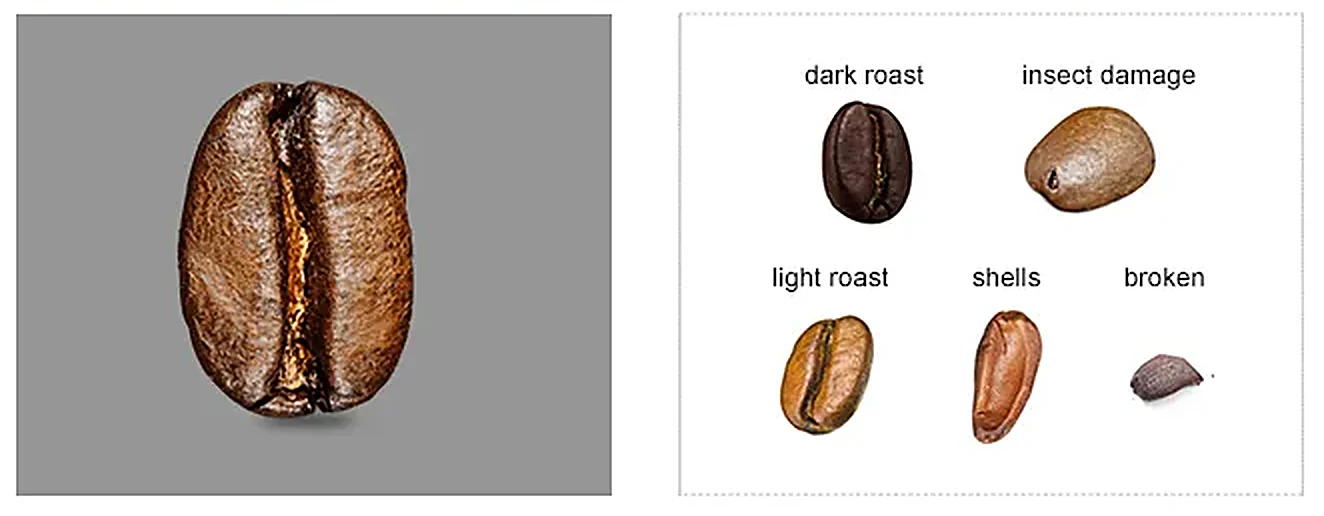
Quakers stay pale after roasting - the only reliable place to catch them is the finishing line.
Where to Place a Color Sorter in Your Roasting Workflow
The order matters more than people expect:
Roaster → cooling tray → destoner → color sorter → packaging / hopper
- Cooling tray first. Quakers are only identifiable once the beans are cool and the color contrast is stable; sorting hot, degassing beans also stresses the machine.
- Destoner before the sorter, not after. A destoner removes stones and dense metal. Removing them upstream protects the sorter's glass and ejector path from damage and keeps foreign matter from being counted as a color defect.
- Sorter last, before packaging. This is the correct position for quakers, tips, scorched beans and fragments, because they are close enough to good beans in density and size that gravity and screening will not reliably catch them. Color and shape are the only discriminating signals — and those only exist after the roast.
- After the grinder, never. Sort whole bean. Ground coffee defeats the optical system.
Roasteries who install the sorter at the end of the line also gain something more useful than defect removal: a repeatable measurement. When the reject drawer accumulates pale beans, you know a lot is behaving badly, and you can feed that back to your green buyer while the origin relationship still matters.
What This Means Commercially
Optical sorters have been used on green coffee for decades; the shift in recent years is their use on roasted coffee, driven by specialty roasteries that found hand-sorting could not keep pace with batch volume. Smaller, cheaper machines made post-roast sorting accessible to shops that would never have installed industrial equipment a decade ago.
For a roastery the case is not throughput. It is three smaller things that compound: no more hand-sorting time on every batch, no quaker complaint from a café customer who tasted peanut and paper in a 22-euro kilo, and a defensible answer when a buyer asks how you control the SCA's zero-tolerance rule.
For mills and exporters, the same machines solve a different problem — see our guide to green coffee defect sorting under SCA grading.
Conclusion
Quakers cannot be bought out, picked out, or roasted out. They can only be sorted out — after the roast, by a machine that sees color and shape on a gentle, self-cleaning path.
If you run a specialty roastery and want to see what this looks like on your own beans, send us a roasted sample and we will return a sorting test with reject photography and a sized proposal for your floor space: Request a post-roast sorting test. Browse the machines: mini coffee color sorter for roasteries.
FAQ
Can quaker beans be removed before roasting?
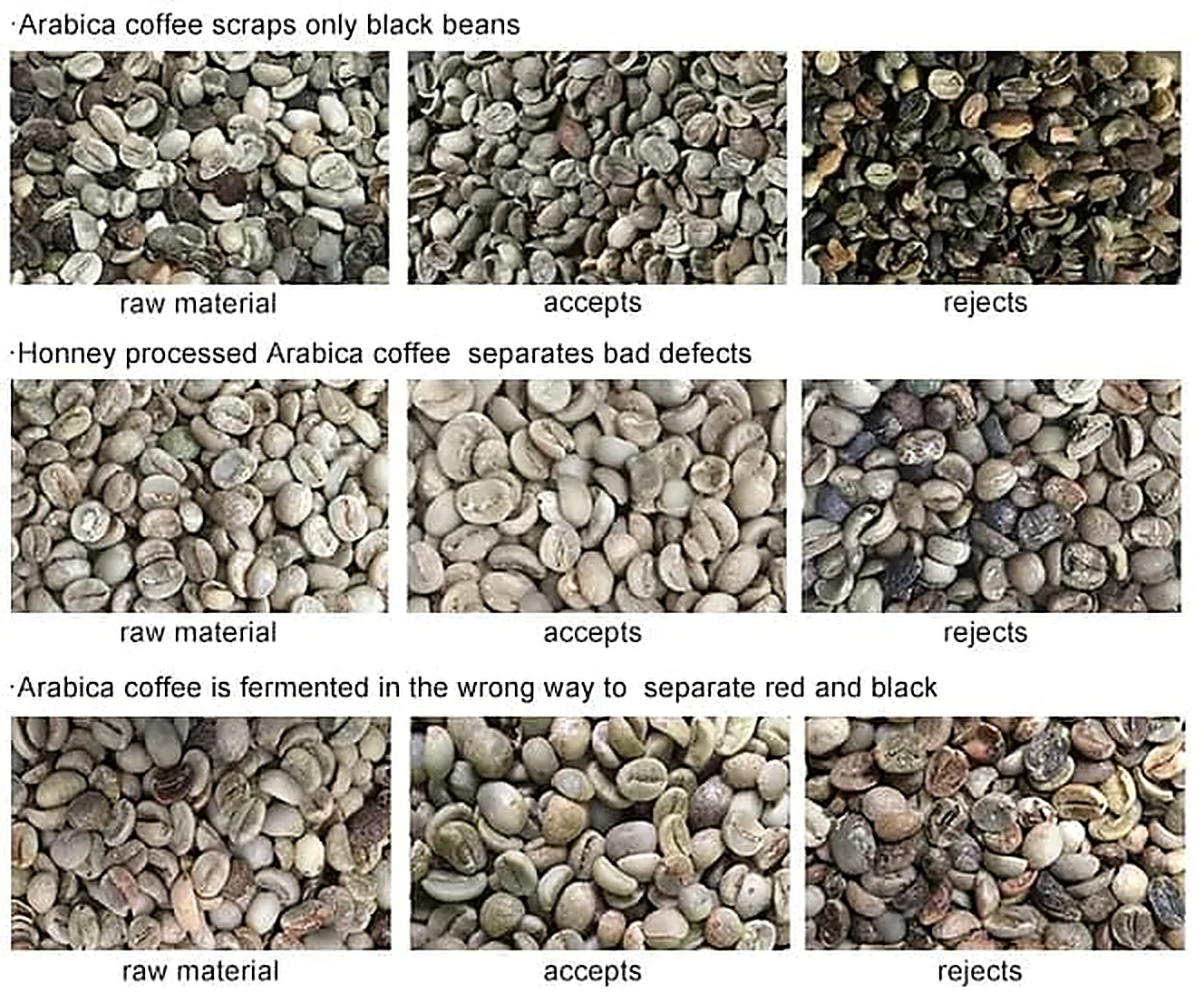
Usually not. Quakers are immature or underdeveloped seeds that are typically indistinguishable in green coffee; they become identifiable after roasting, when they stay pale. SCA's quaker criterion is applied to a 100 g roasted sample, which is why post-roast sorting is the reliable control point.
What is the capacity of a mini coffee color sorter?
Our smallest model, CS-HA32, handles about 0.25 t/h in 0.3 m² of floor space at 0.7 kW, sorting a 60 kg batch in roughly fifteen minutes. The CS-1A64 covers 0.8–1.5 t/h for larger roasteries.
Does roasted coffee need a different sorter than green coffee?
Yes, in three respects: a gentle low-impact product path (belt/crawler or a soft chute layout) to avoid shattering brittle roasted beans, automatic optical cleaning to cope with coffee oils and chaff, and shape as well as color recognition for tips, chips and fragments.
Where should a color sorter be installed in a roastery?
After the cooling tray and the destoner, immediately before packaging or the grind hopper. The destoner protects the sorter from stones and metal; the sorter then handles the defects that density and size separation cannot reach.