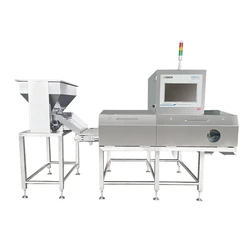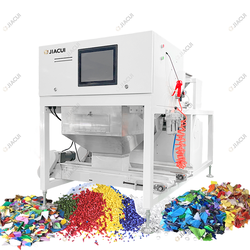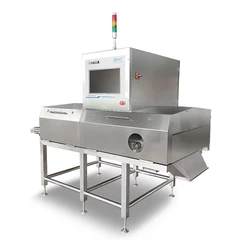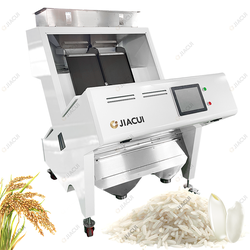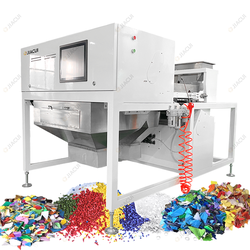


Mexican dried chili processors should sort on a belt, not a chute. Whole ancho, guajillo and pasilla pods are light, flat and dusty, so a belt spreads them in a stable single layer for stem, mould and colour inspection at 1-3 t/h. Plan two passes, stems and foreign material first, then colour grading for export grade.
The Mexican chili crop and the seasons that matter
The main dried chili regions are Chihuahua, Zacatecas, San Luis Potosi, Aguascalientes and parts of Jalisco, with harvest from September into November and drying through the dry season. Processing plants then work year round against contracts, so the sorter must hold accuracy on stored lots whose moisture, colour and dust load change from month to month.
Varieties behave differently on the line. Ancho and pasilla are broad, dark and prone to sunscald and brown patches. Guajillo is longer and more uniform, which makes colour grading easier but stem removal less forgiving because the stem sits tight against the shoulder. Chipotle is smoke-dried, so its uneven surface colour must not be rejected as a defect.
Intake peaks at the end of harvest, when field-dried and tunnel-dried lots arrive together. Size for that peak week, not the annual average, and remember that stored lots are cleaner but more brittle, which limits the drop heights you can allow.
Defects that decide the grade: stem, mould and colour
Stems and calyx fragments are the biggest manual labour cost in most Mexican chili plants, and the easiest defect for a camera to find once pods are presented in a single layer. Then come mould, black and brown patches, sunscald, insect holes, split pods, plastic, stones, wood and string.
Mould deserves a direct sentence. Mouldy pods are a food safety risk and an aflatoxin concern, especially where pods are broken or insect-damaged. A colour sorter removes the visibly moulded and discoloured pods, which reduces risk substantially, but it does not measure aflatoxin. Keep the laboratory check on the finished lot and treat the sorter as the first and most consistent filter.
Colour grading is a separate objective from defect removal. For ancho and guajillo, buyers ask for a narrow colour band, often with dark and light fractions sold separately. That is a two-pass job: reject the defects, then split the accepts into colour classes, because one recipe tuned for both tasks usually does neither well.
Why dried chili belongs on a belt
On a chute, flat pods glide, spin and change orientation, so the camera sees a mix of faces and edges and the ejector fires at an unstable target. On a belt, each pod lies flat in a single layer at a controlled speed, which stabilises the image, cuts false rejects and lets the ejector use a shorter air pulse. Less air means less breakage and a lower compressed air bill.
There is a second reason. Chili dust is abrasive and irritating, and a belt machine can be enclosed and extracted far more cleanly than a free-fall chute, where dust is released along the whole drop. For a plant preparing for an audit, that matters as much as accuracy.
| Configuration | Model | Rated throughput | Where it fits | What to watch |
|---|---|---|---|---|
| Stem and foreign material removal | CS-LA600 | 2.5-6 t/h | First pass on whole pods at 1-2 t/h intake | Keep drop heights low to limit pod breakage |
| Colour grading and mould removal | CS-LA1200 | 5-12 t/h | Second pass at 2-4 t/h with a wider inspection layer | 6 kW draw and a longer footprint |
| Two passes in one frame | CS-LA1200D | Dual layer, 9 kW | Plants above 4 t/h that cannot extend the building | 2,300 kg frame needs a stronger floor |
Rated tonnage is measured on free-flowing product. Dried pods are light, so real chili throughput is set by layer thickness and belt speed rather than by the headline number. Ask for the rate to be confirmed on your own sample and treat the rating as a ceiling, not a promise.
Sizing a 1-3 t/h chili line
Use the standard planning formula: shift output = rated t/h x hours x 0.85. The 0.85 covers recipe changes between varieties, cleaning, filter changes and the short stops that always happen on a dusty line. A plant taking 1.5 t/h over eight hours plans on 1.5 x 8 x 0.85 = 10.2 t per shift.
Two passes change the arithmetic. If stems are removed first and colour grading second, the second machine only sees the accepts of the first, so its load is smaller but its accuracy standard is higher. Some plants run one wider belt with a split recipe and re-sort the reject stream instead of buying two machines; that is cheaper but only works when the reject volume is small and the building has the space.
Check the feed as carefully as the sorter. Whole pods bridge in narrow hoppers and flow unevenly on a vibratory feeder, which shows up as patches of thin and thick layer on the belt. A variable-speed feeder and a level sensor are worth more than an extra 100 mm of belt width.
Dust, humidity and food safety
Chili dust is fine, irritating and slightly sticky. Extract at the feed, at the belt transfer and at the discharge, and keep the optical cabinet at positive pressure so dust does not settle on the windows. Do not blow dust off with compressed air inside the enclosure: it moves contamination onto lenses and contact surfaces. Vacuum on a fixed schedule and log it.
Moisture control protects both quality and reliability. Dried pods are traded around 10-12% moisture; wetter lots stick to the belt, smear the window and create false rejects, while over-dried pods shatter at every transfer. In humid coastal plants, condensation on cold metal in the morning is a real risk, so allow warm-up time and keep the cabinet heater on.
For export and retail audits, document contact materials, cleaning records and calibration. JIACUI machines carry CE marking under CE M.2025.206.C125724 and ISO 9001 certification under NOA2105037, the documents a Mexican exporter most often needs when a US buyer asks for a supplier file.
Power, operators and spare parts
Mexican industrial supply is commonly 220 V or 440 V, three phase, 60 Hz, and voltage variation at the end of a line is normal. Confirm voltage and frequency at the order stage, fit a stabiliser where the supply is weak, and give the sorter a dedicated circuit. A CS-LA600 draws 2.5 kW and a CS-LA1200 draws 6 kW, while the compressor that feeds either machine will draw more than the sorter itself.
Compressed air must be dry and oil-free at 6-8 bar. On a chili line the filters load quickly, so specify a larger filter and a daily drain routine rather than the smallest unit that works on paper. Water or oil in the air line ruins ejector valves and shows up as missed defects at the worst possible moment.
Operator training takes about two days. What matters afterwards is recipe discipline: one recipe per variety and per contract grade, saved and named, with a note on why sensitivity changed. A plant running three varieties a week needs that discipline more than it needs a faster machine. Keep belts, nozzles, filters and window glass in stock, and agree a remote support response time before the season starts.
Frequently asked questions
Can a color sorter remove chili stems?
Yes, for most stems. The stem differs from the pod in colour and shape, and on a belt the pods present consistently enough for reliable ejection. Tight stems on guajillo and broken stems inside a curled pod are harder, so most plants keep a short manual check after the machine. Expect the sorter to remove the large majority and cut manual labour sharply, not to remove every stem.
Will a belt sorter damage dried chilies?
A correctly set belt sorter is gentler than most alternative handling. Pods travel at controlled speed with no free fall, and the ejector uses a short air pulse rather than a long blast. Damage usually comes from badly designed transfer points and excessive drop heights around the machine. Keep every drop under about 300 mm and use a soft landing.
How do I control dust on a chili line?
Enclose the machine, extract at the feed, transfer and discharge points, and keep the optical cabinet under positive pressure. Size the filter for chili dust rather than for grain, clean windows on a fixed schedule, and vacuum instead of blowing dust around. Dust control protects operator health, reduces fire risk and keeps accuracy stable through a long shift.
Is one pass enough for export grade?
Usually not. One pass removes stems, stones and obvious mould, but colour grading for ancho and guajillo normally needs a second look, either on a second machine or by re-sorting the reject stream. Run a sample test against the buyer's specification and decide from measured results, not a demonstration on clean pods.
Related guides: see the chili color sorter range, compare platforms on the model overview page, and read the gentle handling guide for belt settings that apply equally to fragile pods.
Request a free sample test and quotation for your chili line →
How the free sample test works
Send 2-5 kg of your material and we return a written report with before and after photos, measured defect removal and a recommended model. No cost, no obligation.
- Send your sample - 2-5 kg of production material, sealed in a bag or tin.
- Tell us the target - the defects you must remove and the purity or grade you sell against.
- State the line - tonnes per hour, power supply and available floor space.
- We run the test - typically 3-5 working days on a machine matched to your material.
- You get the report - removal rate, carryover, reject ratio, photos and a model recommendation.
- Decide with data - quotation, lead time and spare-parts list follow only if the numbers work for you.