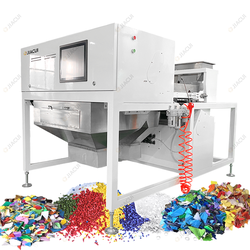


A Vietnamese robusta processor running 2-6 t/h of green bean should size a chute sorter from the peak intake, usually 160 to 384 channels, or a belt unit such as the CS-LA600 when lots are sticky or throughput is high, and must control humidity and dust to hold export-grade consistency.
What Vietnamese robusta brings to the machine
Most robusta comes from the Central Highlands - Dak Lak, Gia Lai, Dak Nong and Lam Dong - and is harvested between November and January. Natural, dry-processed cherry dominates, so the green bean arrives with more defect load than a fully washed arabica: black beans, sour beans, husk, sticks and stones travel together through the huller and the polisher.
Ambient humidity in the Central Highlands sits at 70-85% for much of the year, and many mills run at night when the air is dampest. Green bean should reach the sorter at 12-13% moisture. Above that, static and bridging increase, dust sticks to the chute glass and the optical box can fog when the machine warms up.
Scale matters too. A processor with a 2 t/h huller and an exporter with a 6 t/h line are different purchases, and the sorter must be sized on the busiest hour of the harvest, not the annual average.
Defects that decide the export price
- Black beans. Full or partial blackening from over-ripe cherry or fermentation. A colour task.
- Sour and over-fermented beans. Often brownish or dull; colour plus texture.
- Fungus and mould damage. Grey or powdery patches, sometimes visible only under good lighting.
- Quakers and immature beans. Pale, thin and light; shape and colour together.
- Stones, glass and metal. Not a camera job. Protect with a de-stoner and a magnet, and use X-ray only if a contract requires it.
- Husk, sticks and parchment. Large and light, easy for the camera but they clog the feed if not screened first.
Buyers judge on a defect count per 300 g, so the sorter has to hit a number, not a feeling. Write that number into the acceptance test.
Sizing a 2-6 t/h line and picking the platform
Convert peak intake to rated capacity with rated t/h = peak t/h / utilisation. On coffee use 0.85-0.90 only if your huller delivers a steady flow; most processors with manual bag feeding should plan at 0.80. A 2.5 t/h peak then asks for about 3 t/h rated.
| Configuration | Platform | Planning throughput, green robusta | Product handling | When to choose it |
|---|---|---|---|---|
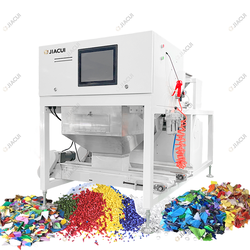
| CS-2C160 | Chute, 160 channels | 2-3 t/h | Free-fall, gentle for a chute | 2-3 t/h processor with clean, dry bean |
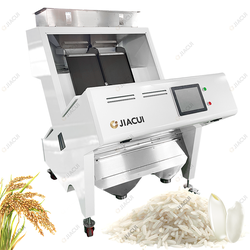
| CS-LA600 | Belt, 600 mm, 2.5 kW, 750 kg | 2.5-6 t/h | Stable single layer, lowest breakage | Sticky lots, mixed grades, higher throughput |
| CS-LA1200 | Belt, 1,200 mm, 6 kW, 1,150 kg | 5-12 t/h | Wide layer, high capacity | Exporter above 6 t/h, or multi-product use |
For a 2-6 t/h green bean line the practical choice sits between the 160-channel chute and the CS-LA600. The chute wins on cost per tonne when the bean is dry and free-flowing; the belt wins when lots vary, when the same machine must also run pepper, cashew or rice, or when whole-bean appearance matters.
Green robusta free-flows well, so a chute is efficient and inexpensive to run. It also handles a high reject rate without slowing the line. Belt machines cost more per tonne but present the bean in a single stable layer, which improves detection on dull or dark defects and reduces mechanical damage to the bean surface.
Many Vietnamese exporters run a chute for the first pass and keep a belt machine for a second pass on the reject stream, or for parchment and other products across the season. X-ray belongs at the end of the line only if your buyer specifies stone or foreign-material control; a de-stoner and a metal detector cover most of that risk for less money.
Humidity, dust and the optical box
Two failures cause most coffee sorter complaints in Vietnam: dust on the window and moisture in the air line. Peel dust, husk fibre and chaff rise from the feed and settle on the glass within a shift, and a dirty window reads like a bad camera.
- Ask for a positive-pressure air purge on the optical box, not just a wiper.
- Dry the compressed air: a refrigerated dryer plus a coalescing filter, with the dew point stated rather than assumed.
- Clean the window every four hours in peak season and record it; a laminated checklist beats a reminder on a phone.
- Check the IP rating of the optical enclosure and the sealing on the feed chute, because damp dust is worse than dry dust.
Export-grade consistency
Consistency is a systems question, not a settings question. Store one recipe per grade and per supplier lot, name it, and lock it so a shift change cannot drift the machine. Sample the accepts every hour, weigh the reject stream, and log the defect count per 300 g next to the recipe name.
A second pass on rejects usually earns its keep on robusta: the first pass removes the obvious black and sour beans at high speed, and a slower second pass lifts the last few percent without touching the good bean. That two-pass structure is often cheaper than buying a bigger single machine.
For contract work, agree the defect spec, the sampling method and the pass criteria before shipment, and keep the written test report with the machine. CE M.2025.206.C125724 and ISO 9001 NOA2105037 are the certificates most European buyers request with the quotation.
Payback
Take a 3 t/h line running 8 hours and 250 days at 85% utilisation: about 5,100 tonnes of green bean a year. If sorting lifts the share that meets a premium contract from 60% to 72% and the price gap is USD 60 per tonne, the gain is roughly 5,100 x 0.12 x 60, or USD 36,700 a year, before any yield saving from a tighter carryover ratio.
Most coffee lines at this scale reach payback within one to two harvests when the premium contract exists. If you sell only to a local trader at a flat price, the payback comes from labour, re-sort cost and yield, and the horizon is longer; be honest about which case you are in before you sign.
Frequently asked questions
What capacity do I need for a 2-6 t/h coffee line?
Size on peak intake divided by 0.80-0.85 utilisation. A 3 t/h peak suggests 3.5-3.8 t/h rated, which fits the CS-LA600 belt or a 160-channel chute. Above a 5 t/h peak, compare the CS-LA1200. Always confirm the figure on your own green bean, because defect load and moisture change the effective rate.
Can one machine sort both coffee and pepper?
Yes, if the platform stores recipes and the feed is adjustable. A chute suits both free-flowing products; a belt such as the CS-LA600 handles pepper, cashew and coffee across one season. Change-over is a recipe plus a feed setting, not a mechanical rebuild, so ask for the change-over time in writing.
How do I stop dust from spoiling accuracy?
Control it at three points: a positive-pressure purge on the optical box, dry filtered compressed air, and a window clean every four hours in peak season. Damp dust is the real enemy, so specify a dryer and check the dew point rather than trusting the compressor alone.
Do I need X-ray for coffee?
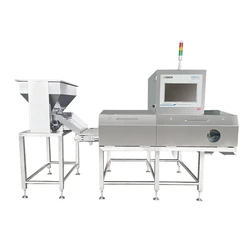
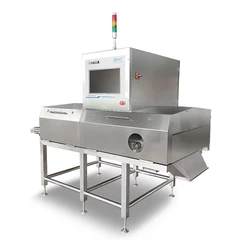
Only if a buyer requires documented stone or foreign-material control. A de-stoner and a metal detector remove most of that risk at lower cost. The CS-XCA60 dual-energy X-ray sorter is the option when the contract names X-ray, or when glass and dense plastic are a real risk in the lot.
Related guides: read the coffee bean color sorting guide for defect-by-defect settings, compare models on the coffee bean color sorter page, and review measured results in our case studies.
Request a free sample test and quotation for your coffee line →
How the free sample test works
Send 2-5 kg of your material and we return a written report with before and after photos, measured defect removal and a recommended model. No cost, no obligation.
- Send your sample - 2-5 kg of production material, sealed in a bag or tin.
- Tell us the target - the defects you must remove and the purity or grade you sell against.
- State the line - tonnes per hour, power supply and available floor space.
- We run the test - typically 3-5 working days on a machine matched to your material.
- You get the report - removal rate, carryover, reject ratio, photos and a model recommendation.
- Decide with data - quotation, lead time and spare-parts list follow only if the numbers work for you.