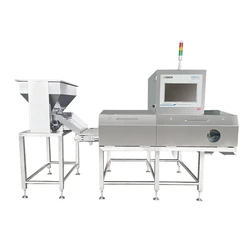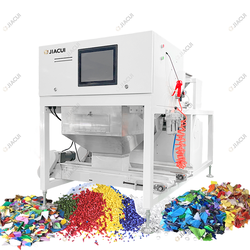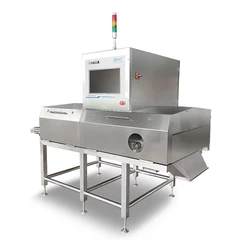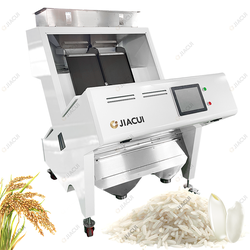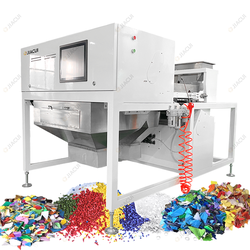


Turkish hazelnut processors should run in-shell stock on a belt sorter and kernels on a chute sorter. In-shell nuts need a wide, stable belt so shell fragments and blank nuts are ejected without cracking sound nuts, while kernels flow freely and run faster on a high-channel chute. Size for 1-5 t/h of peak intake and test your own lot before ordering.
The Turkish crop calendar and why it sets your sizing
Ordu, Giresun, Samsun and Trabzon supply most of the in-shell crop, with a second belt of orchards around Sakarya and Duzce. Harvest runs from late August into September. In-shell nuts are dried, then cracking plants work through autumn, winter and spring, so a line is sized for four to six months of heavy use rather than one short week.
That calendar drives sizing. Intake peaks in the first eight weeks after harvest, when fresh lots and stored stock arrive together. Buy for the average and trucks queue in October; buy for the peak and the line runs at 70-80% of rated capacity afterwards, which is the correct outcome.
Turkish in-shell export grades run from roughly 9-11 mm to 14-16 mm, and accuracy must hold across the range. Kernels are graded separately after cracking, each grade with its own recipe.
The defect map for in-shell and kernel lines
In-shell streams carry loose shell and shell fragments, empty or blank nuts, twin kernels, stained and mould-damaged shells, husk and fibre, plus stones, glass, plastic, wood and string. Kernel streams carry shrivelled and spotted kernels, dark and mould-affected kernels, insect damage, broken pieces and the occasional foreign seed.
Write the defect list before you open a specification sheet. Colour cameras handle shell fragments, stained shells, dark kernels and most foreign plastic well. Stones and glass are visible but often close in tone to the product, so shape and texture channels earn their keep; if the buyer's specification names glass or metal, an X-ray unit such as the CS-XCA60 adds density inspection at a dose below 1 uSv/h.
Mould needs careful language. A camera can reject a dark or stained shell, but it cannot measure aflatoxin, and internal mould in a sound kernel is invisible. Sorting removes the visible fraction; it never replaces laboratory testing on the finished lot.
Belt or chute: the platform decision for hazelnuts
For in-shell nuts, choose a belt. A wide belt spreads the nuts in a single layer and carries them under the cameras at a steady speed, so the ejector sees a predictable target and the accepts leave uncracked. A chute makes large, round shells tumble and change speed, and the impact of free fall creates the loose shell you are trying to remove.
For kernels, choose a chute. Kernels flow freely, present a stable face to the cameras, and a high-channel chute delivers more tonnes per square metre of floor and per kilowatt than a belt. Most serious Turkish plants run both: a belt for in-shell and a chute for kernels, sharing compressed air but not dust extraction.
| Configuration | Model | Rated throughput | Where it fits | What to watch |
|---|---|---|---|---|
| In-shell, small to mid plant | CS-LA600 | 2.5-6 t/h | One-pass in-shell cleaning at 1-3 t/h intake, with margin for a reject re-run | Single 600 mm belt; the feeder must be steady |
| In-shell, export volume | CS-LA1200 | 5-12 t/h | 4-8 t/h intake, two shifts, rejects re-sorted in line | 6 kW draw, longer footprint and higher air demand |
| Kernel line after cracking | CS-2C160 | 160 channels | Whole and split kernels at 1-5 t/h depending on grade | Needs dry, de-dusted feed and clean windows |
If one plant handles both streams at volume, the CS-LA1200D dual-layer belt runs two passes in one frame at 9 kW, but it needs a stronger floor, a taller ceiling and more air, so ask for a layout drawing first.
Sizing the line in tonnes per hour
The rating on a specification sheet is measured on clean, uniform, freely flowing product. Your plant will not run under those conditions every shift, so plan on a utilisation factor: shift output = rated t/h x hours x 0.85, where 0.85 covers changeovers, grade switches, cleaning stops and short interruptions.
A worked example. A plant takes 2.2 t/h of in-shell nuts across an eight-hour shift for about 300 days. At 85% utilisation the planning figure is 2.2 x 8 x 0.85 = 15 t per shift, or roughly 4,500 t a season. If rejects are re-run at 10-15% of the main flow, that pass competes for the same hours, so add capacity or accept a longer day.
Check the whole line, not only the sorter. A vibratory feeder that cannot deliver a steady single layer caps the machine below its rating.
Power, air, dust and humidity in an Anatolian plant
Turkish industrial supply is typically 380-400 V, 50 Hz, three phase. Rural plants around the Black Sea see voltage sag in the evening and during irrigation season, so fit a stabiliser and give the sorter its own circuit with a clean earth. Nameplate draw is modest at 2.5-9 kW depending on model, but the compressor can double the site load, so size the electrical room for both.
Compressed air has to be dry and oil-free at 6-8 bar. Fit a refrigerated dryer and coalescing filters, and drain the receiver daily. Water in the air line is the most common cause of valve failure, and it appears in the busiest week.
Shell dust is abrasive. Extract at the feed point and at discharge, keep the optical cabinet at slight positive pressure, and clean windows every two to four hours on in-shell and more often on kernels, because oil film forms quickly. Use a food-grade cleaner and a lint-free cloth: a scratched window costs accuracy permanently.
Moisture matters too. In-shell stock at 6-8% flows well and kernels at 4-5% are stable. Wet lots bridge in the hopper and trigger false rejects, so dry before sorting, not during.
Operators, spares and payback
A new line needs about two days of commissioning and training. The practical test is whether the operator can save a recipe per supplier and grade, recall it next week, and explain why a sensitivity was changed. One trained lead per shift and a written recipe log prevent the slow drift that surfaces later as an accuracy complaint.
Keep a season of consumables on site: ejector nozzles, air filters, window glass, belts and sensors. JIACUI machines are CE marked under CE M.2025.206.C125724 and built to ISO 9001 under NOA2105037, which matters when a European buyer asks for documents. With 21 patents and customers in more than 50 countries since 2005, remote support is a realistic first line, but local spares decide how fast a line restarts.
Build the payback on the premium you protect. Take a plant handling 2,000 t of in-shell nuts a season. If sorting lifts 5% of output from domestic to export grade at a 0.50 USD/kg premium, the gain is about 100 t x 0.50 = 50,000 USD per season, and a well matched machine usually pays back within one to two seasons at that scale.
Carryover is the other half. On a 2% reject stream of 40 t, a 10:1 machine loses about 3.6 t of good nuts and a 20:1 machine about 1.9 t. At 3.00 USD/kg that gap is roughly 5,100 USD a season, which can exceed the annual service cost. Ask for accuracy and carryover on your own sample, not on a brochure.
Frequently asked questions
Can a color sorter remove mould from hazelnuts?
It removes the visible part of the problem. Stained and mould-damaged shells, dark kernels and shrivelled nuts are rejected reliably by colour and shape. Internal mould is invisible, and no optical sorter measures aflatoxin. Treat sorting as risk reduction that supports your laboratory testing and your buyer's specification, not as a replacement for either.
What capacity do I need for 2 t/h of in-shell hazelnuts?
Size above the peak intake, not the average. A CS-LA600 is rated 2.5-6 t/h, so a 2 t/h line runs with comfortable margin at 85% utilisation and still has room for a reject re-run. If you run two shifts and re-sort rejects in line, plan the nominal rating at least 30% above the target flow.
Should kernels and in-shell nuts run on the same machine?
Not on the same platform. In-shell nuts need a belt to avoid cracking and to spread bulky shells in one layer. Kernels need a chute for speed, stable presentation and a lower cost per tonne. Two dedicated machines give better accuracy than one compromise trying to do both jobs.
What sample should I send for a sorting test?
Send 5-10 kg per stream, with the defects you actually see left in the sample. In-shell and kernels should be sent separately, and each sample should state moisture, grade and origin. A clean, hand-picked sample flatters every machine and predicts nothing. The test report should give measured accuracy, reject rate and carryover so you can compare offers on equal terms.
Related guides: see the nut color sorter range, read kernel sorting without damage for belt settings, and use the cashew yield guide to apply the same carryover logic to another nut line.
Request a free sample test and quotation for your hazelnut line →
How the free sample test works
Send 2-5 kg of your material and we return a written report with before and after photos, measured defect removal and a recommended model. No cost, no obligation.
- Send your sample - 2-5 kg of production material, sealed in a bag or tin.
- Tell us the target - the defects you must remove and the purity or grade you sell against.
- State the line - tonnes per hour, power supply and available floor space.
- We run the test - typically 3-5 working days on a machine matched to your material.
- You get the report - removal rate, carryover, reject ratio, photos and a model recommendation.
- Decide with data - quotation, lead time and spare-parts list follow only if the numbers work for you.