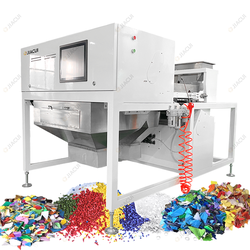


A color sorter for a Pakistani rice, wheat or pulse mill usually costs US$5,000 to US$38,000 FOB China, before freight, duty and installation. Entry chute machines start near US$5,000, a mid-chute 2–5 t/h unit runs US$7,000–12,000, and a 5–10 t/h basmati line reaches US$17,000–24,000. Landed cost at Karachi adds freight, insurance, duty, tax, inland haulage and commissioning.
Indicative machine prices delivered to Pakistan
These are indicative FOB China prices for 2026, excluding freight, insurance, duty, taxes and installation. Channel count, camera and ejector configuration and options such as dust extraction move the final figure.
| Machine family | Typical capacity | Indicative price (US$, FOB China) |
|---|---|---|
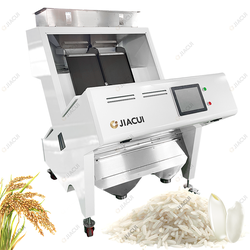
| Entry chute, CS-1A64 / CS-1C80 | 0.8–2 t/h | 5,000–8,000 |
| Small chute, CS-1C96 / CS-2C160 | 2–3 t/h | 6,500–8,500 |
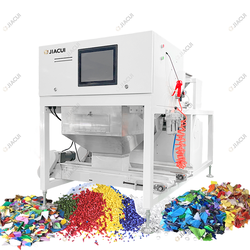
| Mid chute, CS-3A-192 to CS-5C | 3–6 t/h | 10,500–16,500 |
| Large chute, CS-6A-384 to CS-12C-768 | 6–20 t/h | 17,000–37,000 |
| Belt, CS-LA300 | 1.2–3 t/h | 9,000–13,000 |
| Belt, CS-LA600 | 2.5–6 t/h | 13,000–20,000 |
| Belt, CS-LA1200 / CS-LA1800 | 5–12 t/h | 26,000–38,000 |
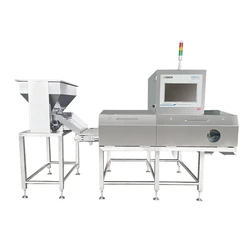
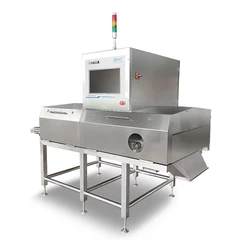
| X-ray, CS-XCA40 to CS-XCB30 | Density inspection | 25,000–38,000 |
Two offers for the same tonnage can differ by 40% and both be honest. Fix the platform first, then compare models on identical scope.
What the landed cost includes
Landed cost starts at the machine price and adds every step between the factory gate and a running line. Most Pakistani imports clear at Karachi; the variable is inland haulage to Punjab or Sindh and site work at the other end.
Customs duty and local taxes depend on HS classification, declared value and current policy, and they change between budget cycles. Ask your customs broker to confirm the rate and documents before you compare offers.
- Machine, FOB China: 55–70% of landed cost; larger frames take the higher share.
- Sea freight and marine insurance: 3–7%, by volume, route and season.
- Customs duty and local taxes: set by HS code, valuation and policy — confirm with your broker.
- Port handling and inland transport: 2–5%; Karachi to Lahore costs more than a Sindh delivery.
- Installation, commissioning and training: 2–5% for a single machine.
- Air compressor, dryer and piping: 3–6%; the sorter needs dry air.
- First spares kit and contingency: 2–4% for nozzles, filters and a window.
The shares shift with machine size and destination, but equipment dominates in every case.
Power and site requirements
Machines for Pakistan are built to order for 220/230 V 50 Hz; many industrial estates also run 400 V three-phase, so confirm the build against your own supply. Compressed air must be dry and oil-free at 0.6–0.8 MPa, and consumption scales with nozzle count and reject rate.
Plan floor space by frame, not tonnage: roughly 2–3 m² for a 64–96 channel chute and 4–6 m² for a 192–384 channel frame, plus 1.5 m of clear service space. A level concrete floor, a 3 m ceiling and a 1.2 m door are the practical minimum; belt and X-ray frames need longer infeed and outfeed runs.
Dust and summer heat both affect accuracy: keep the air intake away from bagging points and check the room against the machine's ambient range in the hottest week.
The materials that matter in Pakistan
Rice dominates, but the same mill often handles wheat, pulses and oilseeds, so choose the platform from the material and size it from the peak hour.
- Basmati rice: chalky kernels, discoloured grain, red and black grains, stones and foreign matter; a chute sorter, with export lots re-sorted to protect head rice.
- Wheat: ergot, black point, shrivelled kernels and stone; high tonnage and low margin, so throughput and air efficiency decide payback.
- Pulses: split, spotted and damaged chana and masoor plus foreign seed; colour and shape sorting together.
- Sesame: dark and damaged seed, stones and husk, at low tonnage and high value.
- Chilli: mould, stems, discoloured pods and plastic; dust control and wash-down design matter more than tonnage.
Grain and pulse buyers can start from the grain color sorter range; sample testing remains the only reliable check on a specific lot.
Sourcing options: local trader or direct import
A local trader sells in rupees, may hold spares and can reach the mill quickly. That convenience has a price: the machine is often a rebadged import, the model is hard to identify, and the warranty depends on the trader's relationship with the factory.
Direct import usually gives a lower unit price, the exact configuration you ordered and the factory warranty, but you manage payment, freight, clearance and the first spares stock. On a single machine the difference is often 15–30% of the equipment price.
Read the warranty in three parts: what is covered and for how long, the response time, and who pays for travel and parts. We support overseas machines with remote diagnostics and a spares list with lead times.
How to verify a quotation
Four checks separate a serious offer from a catalogue price.
- Sample test. Send 5–10 kg of your real lot with the defects you see, and ask for measured reject rate, contamination in the accepts and good-product loss in the rejects.
- Video inspection. Ask for a live or dated video of your sample running on the exact model, with settings visible. A stock clip proves nothing.
- Spare parts list with prices. Nozzles, filters, valves, LED modules and the optical window should carry part numbers, prices and lead times.
- Lead time in writing. Get the ship date, export port and Incoterm on the order, not in an email.
For a longer checklist, read the 2026 color sorter buying guide.
Frequently asked questions
Is a Chinese color sorter cheaper than a locally made one in Pakistan?
Usually yes on equipment price, often by 20–40% for comparable capacity, because the Chinese supply chain is larger and more specialised. The gap narrows once you add freight, duty, inland transport and commissioning, and a local trader's rupee invoice can look competitive on small machines. Compare landed cost and measured performance on your own sample.
How long does shipping to Pakistan take?
Production of a standard chute model usually takes two to four weeks after the order is confirmed. Sea freight from China to Karachi is typically two to four weeks, plus clearance and inland haulage to Punjab or Sindh. Custom voltage builds, wide belts and X-ray systems take longer. Ask for the ship date in writing and plan installation after clearance.
What documents are needed to import a color sorter into Pakistan?
Expect a commercial invoice, packing list, bill of lading, certificate of origin and the technical documents your clearing agent requests, such as a product description and HS code. Your agent will also confirm the importer registration and tax documents required at the time of shipment. Ask the supplier to prepare the paperwork in the importing company's name before the goods leave China.
Can the machine be installed and supported remotely?
Mechanical installation follows a drawing and is normally done by your own team or a local rigging contractor. Commissioning, recipe teaching and most fault-finding can be handled remotely over a video call with factory access to the machine log. Keep one trained operator on site and stock the consumables list sent with the machine.
Next step
Start with the hub page for color sorter machine price by country, review the full model range, or send a sample for an itemised landed-cost quotation for Karachi.