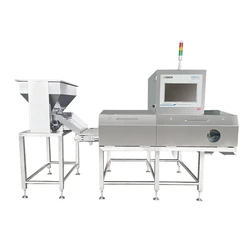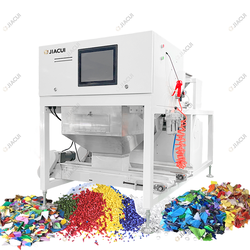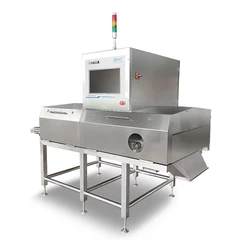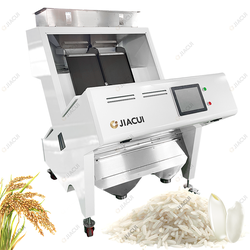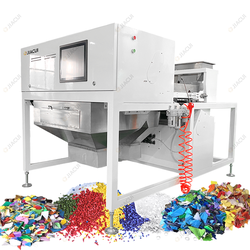


Most grain and seed color sorters are declared under HS 8437.10 — the heading for machines used to clean, sort or grade seed, grain or dried leguminous vegetables. Rice, wheat, maize, pulses and sesame sorters normally fit that wording. Plastic, recycling, ore and other industrial sorters usually do not: they are classified by the material processed and the work performed. The final code is the one your customs broker and the destination customs authority accept.
Which HS heading applies
HS 8437.10 is a product-specific heading, not a technology heading. It describes what the machine does — cleaning, sorting or grading seed, grain or dried leguminous vegetables — not how it does it. A chute color sorter removing discoloured rice, broken wheat, damaged maize, stones from pulses or off-colour sesame fits the wording, because its task is sorting an agricultural grain or seed. Brokers usually declare these machines in 8437.10 whether detection is by colour camera, near-infrared sensor or laser.
Confusion starts when the material is not grain or seed in the tariff sense. Coffee beans, nuts, tea, dried fruit and spices sit closer to other agricultural machinery, and a broker may argue 8436 instead. Plastic flake, regrind, glass cullet, ore and minerals are industrial material, and 8479 — machines with individual functions not specified elsewhere — is the usual home for an optical sorter in a recycling or mining line. 8543, electrical machines with individual functions, is occasionally proposed but is a weaker argument.
Two machines can leave the same factory on the same frame and still carry different codes: one goes to a rice mill to grade grain, the other to a recycler to sort plastic. Classification follows the objective characteristics and the stated use at import — material, purpose and working principle — not the catalogue page.
What customs ask for
Customs is testing whether the declared code and value match the machine in the box. A clean pack answers that question before it is asked:
- Commercial invoice — full description (color sorter, model, channel count or belt width, capacity, voltage), HS code, unit price, Incoterm and country of origin.
- Packing list — packages, dimensions, gross and net weight, serial numbers.
- Bill of lading or airway bill — consignee, port and package count matching the invoice.
- Certificate of origin — required when a preferential tariff is claimed.
- Product manual and statement of use — material sorted, capacity, working principle, photographs, and whether an X-ray or radiation source is fitted.
- Certificates and test reports — copies of CE or other declarations when the destination or the buyer's tender asks for them.
Consistency matters more than volume: the invoice, manual, broker's declaration and photographs should say the same. Mismatched documents are the most common reason a shipment is pulled for inspection.
Why the code matters
The code is not a formality. It sets the duty rate and tax treatment, decides whether an import licence or permit is required, and determines which agency inspects the goods. The same sorter declared as agricultural machinery and as general industrial machinery can face different duty, VAT handling and documentary requirements in one country. The code also controls whether a preferential trade agreement can be used.
No article can give a rate valid across destinations. Duty and internal taxes are set by the importing country, the code, the origin and the policy in force on the day of entry, and they change. The practical question is therefore which code your broker will declare, and what that code triggers at your destination. Ask in writing before the machine ships.
Common mistakes
- Declaring a complete machine as parts. Splitting a sorter across valve, camera and frame lines to reach a lower rate invites reclassification and penalties. Genuine spares ship separately and have their own classification.
- Declaring a plastic sorter under 8437. The heading is written for seed, grain and dried leguminous vegetables; using it for a recycling line is a mismatch a document check exposes quickly.
- Under-invoicing. A value far below the market for a comparable machine — standard CS- series sorters generally fall in a rough FOB range of US$5,000 to US$38,000 depending on platform and channel count — is a valuation risk, and the adjustment usually costs more than the duty saved.
- Describing something other than the machine. A rice sorter on the invoice and a plastic sorter in the manual is the easiest discrepancy to find.
- Copying another company's code. A code that fits one supplier's product mix may not fit your machine, and the importer carries the liability.
How to confirm your code
Give the broker enough information to classify the machine rather than guess. A short technical file is usually enough:
- Material to be sorted, its form and the defect being removed.
- Capacity in tonnes per hour and the number of shifts.
- Platform, model and channel count or belt width.
- Electrical parameters: voltage, phase, frequency and installed kW.
- Whether an X-ray generator or any radiation source is included.
- Dimensions, weight and packing method.
- Photographs, manual extract and previous shipment documents.
- Country of origin and country of destination.
Ask for a written classification opinion and, where the destination allows it, a binding ruling before shipment. Classification belongs to the importing country, so a code that clears in one market proves nothing for another.
Frequently asked questions
Is HS 8437.10 always the correct code for a color sorter?
No. It is the usual heading for machines sorting or grading grain, seed and dried leguminous vegetables, which covers most rice, wheat, maize, pulse and seed sorters. A machine handling plastic, ore or another industrial material normally falls outside 8437, and the destination customs authority makes the final call.
Does a plastic recycling color sorter use the same code?
Usually not. HS 8437.10 is written for seed, grain and dried leguminous vegetables, so a sorter for plastic flake, regrind or cullet is classified by its industrial function, often under 8479, with the subheading set by the material and the working principle.
Are spare parts classified with the machine?
No. Ejector valves, cameras, nozzles, belts and boards are declared separately, with their own descriptions and codes. Declaring a whole machine as parts to lower the duty is a classification risk, not a saving.
Can the HS code change between shipments?
The machine does not change, so the code should stay stable once agreed in writing. It can differ between destinations, because classification is decided by the importing country. Keep a written opinion or binding ruling on file.
Get the paperwork right before the machine ships
Classification is cheap to do early and expensive to fix later. Settle the code with your broker before the order is packed, and write the invoice description to match the manual. If you are still choosing the platform, the selection guide and the applications overview explain which machine suits which material, while the model range shows capacities by platform.
We can provide the model, a statement of use, a manual extract, packing data and the certificate copies your broker needs. Send your destination and material through the contact page and we will return the document pack with the quotation. For a rough budget, standard models generally fall in a US$5,000 to US$38,000 FOB range on the color sorter price page.