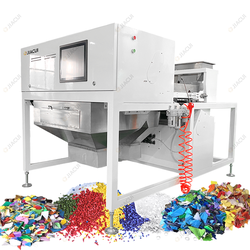


Most of the world's optical sorters are built in one Chinese city. Hefei, in Anhui province, is home to Meyer, AMD, Anysort, Taiho, Wenyao and dozens of smaller factories, plus the suppliers that make their cameras, ejectors and frames. If you are sourcing a color sorter from China in 2026, understanding this cluster is more useful than memorising a brand ranking.
This list covers the ten Chinese manufacturers that matter most for export buyers, ranked on manufacturing depth, export experience, published specifications and the ability to support a machine after it leaves the factory. It is not a paid list, and price is discussed separately, because in China the same factory can quote two very different numbers depending on configuration.
How this list was built
We included companies that own a factory and build sorters as a core product, sell to export markets with English documentation, and can show a model range with published channel counts and capacities. Trading companies that rebrand machines were excluded, even when they have strong websites. That distinction matters more in China than anywhere else, because a professional-looking site tells you nothing about who actually assembles the machine.
1. Hefei Meyer Optoelectronic (China)
Meyer is the largest sorter manufacturer in China and the one most often compared with Bühler and Satake. It builds chute and belt machines across grain, nut, tea, plastic and mineral applications, and its scale gives it advantages in component purchasing, spare-parts stock and dealer coverage.
For an export buyer, Meyer means a mature product and a brand premium. The machines are well documented and the range is easy to compare, but a quote from a large brand is not automatically the best value for a single-machine purchase. Ask for the configuration behind the price and a test on your material.
2. Anhui Zhongke Optic-Electronic (AMD, China)
AMD is Meyer's closest domestic competitor, with a broad portfolio and a strong position in rice, seeds, tea and plastics. It typically competes on specification at a lower price than Meyer and is a common second quote in Chinese tenders.
Export documentation is generally solid, and the company has experience in Southeast Asia, Africa and Latin America. For buyers who want a large-brand alternative without the top-tier premium, AMD is a rational shortlist entry.
3. Anhui Jiexun Optoelectronic (ANYSORT, China)
Anysort builds sorters for rice, tea, beans, nuts and plastics, and markets heavily on camera resolution and AI classification. It is an original manufacturer with its own production and a wide model range.
The practical question with any AI claim is whether it holds on your material. Ask for a sample test and for the measured carryover, not a demonstration video. Anysort's export presence is growing, which means spare-parts logistics are improving but still worth confirming.
4. Hefei Taiho (TAIHO, China)
Taiho is one of the established Hefei manufacturers, positioned below Meyer and AMD on price. Its range covers standard chute machines for grains, seeds and rice, aimed at small and medium mills.
For a buyer who needs a dependable single machine and does not need the newest feature set, Taiho is worth a quotation. Verify valve brand and count, air consumption and warranty scope, as with any mid-market machine.
5. Wesort (China)
Wesort has built a strong English-language presence around rice, coffee, nuts and plastic sorting, and its machines are aimed squarely at export buyers. The range covers small chute units through larger multi-chute configurations.
The advantage for a first-time importer is accessibility: clear product pages, English enquiries and a range that is easy to compare. The caution is the same as with any export-focused brand: confirm you are buying from the factory, and put the exact configuration in the contract.
6. Shanghai Techik Instrument (China)
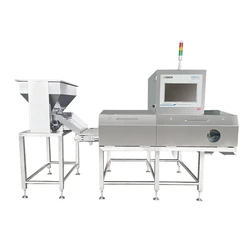
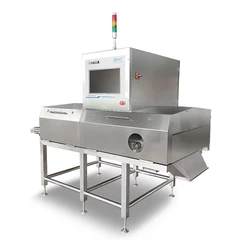
Techik is known for X-ray inspection and metal detection as well as optical sorting, and its combination machines are used where a buyer needs to remove stones, glass or metal as well as colour defects. That makes it relevant for processed food, seafood and some mineral applications.
For a pure colour-sorting job, a specialist sorter manufacturer is usually cheaper. Techik's value appears when the contamination problem is physical as well as visual, and one machine can replace two inspection steps.
7. Anhui Wenyao Intelligent Photoelectronic (China)
Wenyao is a Hefei manufacturer focused on export markets, with rice, grains, tea and plastic sorters. It is smaller than Meyer or AMD, which often means more flexibility on frame height, voltage, discharge layout and sample testing.
For a buyer ordering one or two machines, that flexibility is worth something. The trade-off is a smaller service footprint, so the spare-parts kit and remote support arrangements matter more than they would with a global brand.
8. JIACUI Machinery (China)
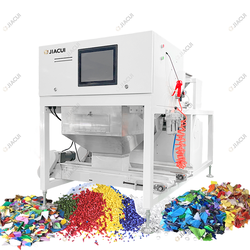
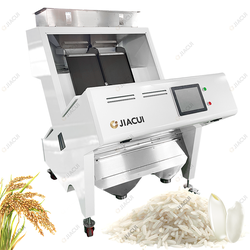
JIACUI is a Hefei manufacturer of chute and belt optical sorters for grains, nuts, tea, plastics and minerals, with channel counts from 64 to 768 and belt widths from 300 mm to 1,800 mm.
We are last on this list on purpose. We do not have Meyer's scale, and we are not the right supplier for every tender. What we offer is a transparent specification, a sample test before payment, and a price that reflects the configuration. The product range lists the models, and the price guide shows the bands.
9. Anhui Ruiyue Optoelectronic (Realtech, China)
Ruiyue is a smaller Hefei manufacturer that builds optical sorting equipment for food and industrial materials. Companies at this scale often compete on price and on willingness to customise, and they can be good value for a buyer who does the verification work.
The checks are the same as for any smaller factory: visit or video-audit the workshop, confirm which components are bought in, ask for two references in your country, and insist on a sample test.
10. Hefei Youshi Optic-electronic (CoreProgram, China)
Youshi builds colour sorters under the CoreProgram brand and sells mainly to export and OEM buyers. Like other second-tier Hefei factories, it offers standard platforms at competitive prices and depends on configuration discipline to compete.
For OEM buyers, this tier can be interesting. For end users, the deciding factors are the same: tested performance, spare-parts availability and a contract that names the exact valves, cameras and warranty terms.
Why Hefei became the center
The cluster formed around the local optical-instrument industry and the nearby agricultural machinery base. Today a sorter factory in Hefei can source cameras, lenses, ejector valves, air systems, sheet-metal frames and control boards within a short drive, which shortens development cycles and keeps component costs low. It also means many factories share suppliers, so two brands that look different in a brochure may use the same camera module and valves.
For buyers, that is good news and a warning. The good news is competitive pricing and fast customisation. The warning is that brand names alone do not tell you the component level; the specification does.
Factory or trading company?
China's export ecosystem includes many trading companies that present themselves as manufacturers. Some add real value: they consolidate orders, handle documentation and manage shipping. Others simply forward your enquiry to a factory and add margin.
To tell the difference, ask for the business licence and check whether the registered scope includes manufacturing. Ask for a live video walk-through of the workshop, including the assembly line and the test bay, not a photo gallery. Ask which components are made in-house and which are bought in. And ask for the name of the person who will sign the test report; a trader usually cannot answer technical questions without forwarding them.
How a Chinese quote is built
A sorter quotation is assembled from the platform, the channel count, the camera set, the valve count and brand, the air system, the frame and finish, the voltage, the spare-parts kit and the warranty. Two quotes for "a 256-channel sorter" can differ by 40 percent because one includes a refrigerated dryer and a full spare kit and the other does not.
Ask for a line-item breakdown. A supplier who cannot break down the price cannot be compared, and a supplier who will not put the component list in the contract is leaving you the risk.
Documents, shipping and duties
Most grain and seed sorters are declared under HS 8437.10, with related classifications depending on the material and function; the final code is your customs broker's call. You will need the commercial invoice, packing list, bill of lading, certificate of origin and, for some destinations, a CE declaration or test report. The HSN code guide explains the paperwork in more detail.
Typical lead time for a standard chute machine is 15-30 days after deposit, plus 20-40 days of sea freight depending on destination. Belt and X-ray machines take longer. Confirm the ship date in the contract and inspect the machine before it is packed, either in person or by video.
What to verify before you wire the deposit
- Sample test report on your own material, with carryover and purity numbers.
- Business licence with manufacturing scope, and a live video audit of the workshop.
- Component list: camera, valve brand and count, air system, control board.
- Spare-parts price list and lead time for valves, nozzles, filters and camera glass.
- Warranty scope in writing, including who pays courier costs.
- Payment terms: avoid paying 100 percent up front; 30/70 against a pre-shipment video is standard.
At a glance: the ten Chinese manufacturers
| Manufacturer | Base | Core applications | Typical buyer | Price level |
|---|---|---|---|---|
| Meyer | Hefei | Rice, nuts, tea, plastic, minerals | Large mills, distributors | Upper mid |
| AMD | Hefei | Rice, seeds, tea, plastic | Mills, export buyers | Mid |
| Anysort | Hefei | Rice, tea, beans, plastic | Mills, processors | Mid |
| Taiho | Hefei | Grains, seeds, rice | Small and medium mills | Value |
| Wesort | China | Rice, coffee, nuts, plastic | Export buyers | Value to mid |
| Techik | Shanghai | X-ray and optical inspection | Food processors, seafood | Mid to upper |
| Wenyao | Hefei | Rice, grains, tea, plastic | Export buyers, small mills | Value |
| JIACUI | Hefei | Grains, nuts, tea, plastic, minerals | Export buyers | Value to mid |
| Realtech (Ruiyue) | Hefei | Food and industrial sorting | Niche buyers | Value |
| CoreProgram (Youshi) | Hefei | OEM and export machines | OEM, distributors | Value |
EXW, FOB or CIF: what you are actually agreeing to
EXW (Ex Works) means the price ends at the factory gate. You arrange pickup, export clearance and freight. It gives the lowest headline number and the most work, and it is a poor choice for a first import.
FOB (Free On Board) means the supplier delivers to the named port and clears export. You pay ocean freight and insurance. This is the most common structure for a single-machine purchase and the easiest to compare between suppliers, because everyone quotes to the same port.
CIF (Cost, Insurance, Freight) means the supplier arranges freight and insurance to your port. It is convenient but opaque: the freight margin is often hidden inside the price, and you cannot tell whether the machine or the shipping got more expensive.
Ask every supplier to quote FOB Shanghai or Ningbo on the same specification. If a quote is EXW, add an estimate for trucking and export clearance before comparing. Never compare a CIF price with an EXW price.
Negotiation points that actually move a Chinese quote
Configuration, not discount. The largest savings come from removing options you do not need: a smaller air system if your mill already has one, a standard frame, no spare kit if you stock parts locally. Ask for two configurations rather than a percentage off.
Payment terms. Thirty percent deposit and seventy percent before shipment is standard. A supplier who insists on 100 percent up front is telling you something about their cash position. A letter of credit is possible for larger orders but adds cost.
Spare-parts bundle. Instead of pushing the machine price down, ask for a two-year consumables kit at cost. It protects uptime and usually costs the supplier less than the discount you are requesting.
Delivery date. A firm ship date with a penalty clause is worth more than another percentage point of discount. Peak season before Chinese New Year is the main risk to schedule.
Warranty scope. Clarify whether valves, cameras and control boards are covered and who pays courier costs. A one-year warranty that excludes the expensive parts is not a warranty.
Frequently asked questions
Are Chinese color sorters reliable?
A well-specified Chinese machine with good valves, cameras and air preparation is reliable in daily use. The failures usually come from thin configurations and wet air, not from the country of origin.
How much cheaper is a Chinese sorter than a European one?
For comparable capacity, a Chinese machine typically costs 30-60 percent less than a European or Japanese brand. Part of the gap is labour and scale, part is specification; compare component lists before assuming the saving is like for like.
Can I visit the factory before ordering?
Yes, and you should for orders above a few machines. For single-machine orders, a live video walk-through plus a sample test is a reasonable substitute.
What is the typical lead time?
15-30 days for a standard chute machine, longer for belt and X-ray units, plus sea freight. Peak season before Chinese New Year adds delay.
Do Chinese manufacturers provide English manuals and support?
The larger exporters do. Confirm that the manual, wiring diagram and touch-screen interface are in English, and that remote support can be scheduled in your working hours.
If you are comparing Chinese suppliers, start with a sample. Send 2-5 kg of your material, tell us the defect you need to remove, and we will return the sorted sample, the measured carryout and a line-item quotation. Begin with the product range, the price guide, or the global manufacturer ranking.