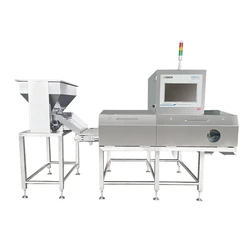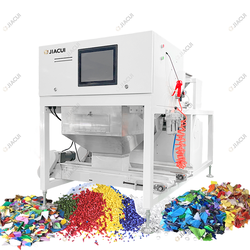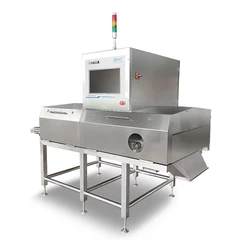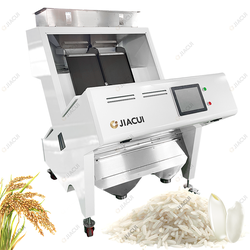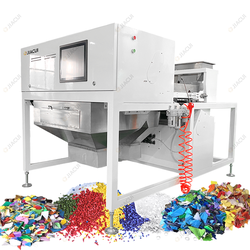


Coimbatore is an engineering city, not a color sorter factory town. The district is built on textile machinery, pumps, foundries and food processing equipment, and it has a deep bench of workshops, dealers and agents who sell and service processing machinery. Color sorters are part of that trade, but the complete machine is mostly imported from China or assembled locally from imported optical and pneumatic components. Buyers here usually choose between a local dealer who holds stock and a Chinese factory that builds to order.
What the Coimbatore cluster actually offers
The local advantage is proximity, not manufacture. A dealer in Coimbatore or nearby can visit a mill the same day, speak Tamil, hold a few spare nozzles and handle the invoice in rupees. Several engineering workshops in the region build frames, conveyors and stainless steel contact parts, and some of them integrate imported sorting heads into a locally built line. That capability is real, and it has value for a mill that needs a machine quickly.
What the cluster generally does not offer is control over the optical core: cameras, LED lighting, ejector valves and the sorting algorithm. Those come from a small number of suppliers, mostly in China. So a local quotation usually contains an imported machine, an imported module inside a local frame, or a rebadged unit whose original factory is not named. Asking which of the three it is tells you more about the offer than the price does.
Local purchase compared with direct import
The table sets out the trade-offs honestly; neither route wins on every line.
| Factor | Local dealer or assembler | Direct from a Chinese factory |
|---|---|---|
| Equipment price | Higher for the same performance; carries local margin and duty | Lower, typically 15–30% on comparable capacity, before freight and duty |
| Lead time | Days to weeks if the unit is in stock; longer if it must be imported anyway | Two to four weeks production plus three to five weeks sea freight |
| Spare parts | Fast for common consumables, if the dealer stocks them | Slower but priced and documented; air freight closes most of the gap |
| Service | Site visit possible, quality depends on the individual technician | Remote commissioning and diagnosis; engineer travel arranged per project |
| Customisation | Limited to what the dealer can source | Voltage, chute or belt platform, channel count and options built to order |
| Paperwork | Handled by the dealer | Buyer owns the IEC, broker and clearance process |
A mill that values a same-day visit should price that convenience into the comparison. A mill with an engineer on staff often finds direct import cheaper over five years.
Where sorters are used around Coimbatore
The surrounding districts process far more than textiles, and each material asks something different of a sorter.
- Rice. Mills in Coimbatore, Erode and Tirupur run parboiled and raw rice and need discolored grain, chalky kernels and stones removed at 3–8 t/h. A chute machine in the 256–448 channel range is the usual fit; the rice mill color sorter page covers layout and reject handling.
- Pulses. Black gram, Bengal gram and red gram are sorted for split, spotted and damaged dal, often on the same platform as rice with a different recipe and a slower feed.
- Groundnut and oilseeds. Kernels are checked for mould, discoloration and shell; a belt platform handles the fragile product with less breakage.
- Coffee. Estates in the Nilgiris and the nearby Wayanad belt send parchment and green beans for removal of black, sour and insect-damaged beans, usually on a belt machine at low tonnage and high value.
- Nuts, coconut and spices. Cashew pieces, copra and spice blends need gentle handling and washdown-friendly construction more than raw tonnage.
One plant often runs two or three of these across a season, which is an argument for a platform that can be re-recipe rather than a single-purpose machine. The uses overview maps materials to chute, belt and X-ray platforms.
Service model without a local office
JIACUI is a manufacturer in Zhengzhou, China. We have no office, warehouse or resident engineer in Coimbatore or anywhere else in India, and we do not claim a local presence. Service is built around three channels: remote commissioning and diagnosis over video with access to the machine log, spare parts shipped by air from the factory, and engineers who travel for installation support, training and larger projects when the job justifies it. We do not promise a fixed response time, because flights, visas and site access are not ours to control.
In practice this means the mill should nominate one trained operator, keep the recommended consumables kit on site, and agree in writing who performs mechanical installation. Most faults on a well-installed machine are settings, air quality or a worn nozzle, and those are resolved on a call. The remote support article explains what the factory can read from a machine log.
Price ranges and what is excluded
Machines for this region run from about US$5,000 to US$38,000 FOB China, with a typical rice or pulse mill buying in the US$12,000–24,000 band for a 256–448 channel chute unit at 3–8 t/h. Every figure excludes tax, sea freight, duty, insurance and installation, and moves with camera count, ejector configuration, voltage build and options.
See the India price page for the model-by-model band, the price hub for the method, and the CS- series product range for specifications. If you are still deciding between a local dealer and a factory, the guide to vetting Indian suppliers covers the checks in detail.
Frequently asked questions
Are color sorters made in Coimbatore?
Some are assembled there from imported optical and pneumatic modules, and local dealers resell imported machines. A fully local machine, with locally designed cameras, ejectors and software, is not the norm. Ask for the factory video, the calibration bench and the spare parts list, and check the port of loading on the bill of lading.
Is it better to buy locally for service?
It depends on what "service" has to cover. A dealer who can reach the mill in an hour is worth a premium if the operator is new. Once the line is commissioned and one operator is trained, most problems are remote or spare-part problems, and the local premium buys less.
What documents do I need to import a sorter into India?
A commercial invoice, packing list, bill of lading and certificate of origin, plus the technical description and HS code your broker requests. The importer name must match the IEC registration exactly. Sorters are usually discussed under HS 8437.10, but classification and duty are confirmed by your broker; the HSN code guide explains the reasoning and why no website should quote you a duty percentage.
Next step
Send 5–10 kg of the material you actually run, with the defects you want removed, and ask for a measured sorting test and an itemised FOB quotation. Compare that against the local offer on landed cost and measured performance.